
THEORETICAL OBSERVATORY
At the Root of the Possibility of Speaking, Ontological Determinations (Text from 1993 concerning works conceived in 1991©)
Preface
The ontological being is not an answer. It is a coordinate. A logical device, not a truth, not a certainty, but a tool constructed by humans to give name and form to what cannot be grasped. It works as a unit of measure not because it delimits the real, but because it allows one to orient oneself within what the real does not yet explain. Every conceptual system, religious or scientific, needs a fixed point from which to calculate the distance from the unknown. Being could perform this function: it does not reveal, it refers. It would be the way in which uncertainty is made sayable, if not understandable. Many philosophers have used the term “being” as if its existence were an established fact. But no one can say so. And this doubt is not a limit of human thought, it is the starting point. The philosophical reference from which the research departs is the Thomism of Thomas Aquinas, and in particular the distinction between being and essence, according to which the entity is not being but that which has being. From that tradition the research takes the structure, not the certainty. Being remains a coordinate, and the Thomist distinction is the scheme that makes it possible to use it, to think of every entity as a determination of that which is not exhausted by any determination.
Description
There is a gesture that humans perform without noticing, they look at things and see nothing. They classify them, measure them, buy and sell them, transform them into commodities or into instruments, but they do not see them. They do not see them because they do not stop long enough in front of them to pose the question, which would be inevitable if only we asked ourselves, why does this thing exist. It is not an academic question. It is the most radical question a human being can address to reality. And it is a question that remains open, because the answer is not in the things, it is in the relationship between the things and what makes them possible. It lies in the difference, which Heidegger called the ontological difference, between the entity and being. The entity is the concrete thing, the piece of wood, the nail, the wire, the stone. Being is what without which none of these entities could exist, not one thing among things, but the condition of possibility of everything. It cannot be seen, it cannot be touched, it cannot even be defined or put into discourse, it can only be intuited. Yet it is more real than any entity, because every entity presupposes it. The discourse on being is the simplest there is, and precisely for this reason it is the most difficult. Our intellect is equipped to manage complexity, to distinguish, classify, hold together millions of concepts and judgments. But here there is nothing to classify. There is only being. The paradox we must deal with is this. We always arrive at being only and exclusively through entities. There is no other way. Philosophy is not an activity that takes place in the abstract, it arises from contact with real things, those that are touched and seen. First comes the piece of wood, in the sequence of sensory experience, in the order of time. Being comes after, as an intuition that arises slowly, laboriously, from prolonged and obstinate familiarization with entities. But logically being comes first, it grounds every entity, precedes it, makes it intelligible. Without the possibility of affirming being, we could say nothing of anything, neither that this is a nail, nor that that is a wire, nor that this is a glass. We have arrived at the root of the possibility of speaking, at the point from which every affirmation, every judgment, every word becomes possible. This gap, between what comes first in experience and what comes first in logic, is exactly the space in which thought becomes necessary. Not useful, not comforting, necessary.
The series of installations, conceived in 1991, starts from here. A hand holding an object. A different entity for each work, a nail, a wire, a hair, a fragment of glass, a root, a coin, a bone. A stone is worth as much as any other entity. The project does not need rarity or particularity, it needs presence. It is precisely this indifference toward the type of object that makes the series potentially infinite. The choice not to intervene aesthetically on the structure is programmatic. The work aspires to neutrality. Any refinement exceeding the necessary would constitute a distraction, a shift of attention from the entity to the envelope that supports it. Imperfection is not a residue of the production process, it is a methodological condition. The hand does not interpret, does not valorize, does not hierarchize. It holds. It is a pure presentation device, reduced to the minimal function, to offer the thing to vision without mediation, without narrative frame, no commentary. Wittgenstein wrote that of that about which one cannot speak one must be silent. This series takes that proposition seriously and transforms it into plastic form. It is silent about everything except the presence of the entity. It leaves it there, exposed, irreducible to any interpretation that does not begin from the simple fact that it is. The title of each work coincides with the object the hand holds. Because every entity is a determination of being, being that has narrowed, that has become precise, that has assumed form, matter and duration, instead of remaining in the indifference of the undetermined. But attention, the entity is being, it is not being itself. Being manifests in entities without ever reducing itself to any one of them. This is the reason why the works do not have a defined number and cannot have one. Each work approaches without arriving. And this impossibility is not a failure. It is, if anything, the very condition of thought. The works do not resolve anything. They are not designed to reassure or to conclude, and they do not offer a coherent and comforting vision of the world. They are conceived to produce in the viewer that specific unease that arises when a simple thing is subtracted from the automatism of daily perception and returned to its absolute singularity. Looking long enough at a piece of wood without thinking what one can do with it is an almost impossible act for anyone living within a society that measures everything in terms of utility. Yet it is exactly from this impossible act that thought begins.
The same principle applies to painting. The artwork is not the painting but the object. What in the sculptures is entrusted to the hand is here entrusted to the painted surface. The support changes, the function does not. For this reason the presence or absence of the hand is immaterial, since the hand is one of the possible forms of support, the panel another. The painting is not an autonomous work to which the object is added as decoration or as collage. The relationship is reversed: the object does not adorn the painting, the painting sustains the object. The subsequent insertion is the gesture that separates the entity from the pictorial field and brings it forth as a presence rather than as an element of representation. The painting remains open until the object comes to remind us that there is something that cannot be painted, because it simply is.
V R
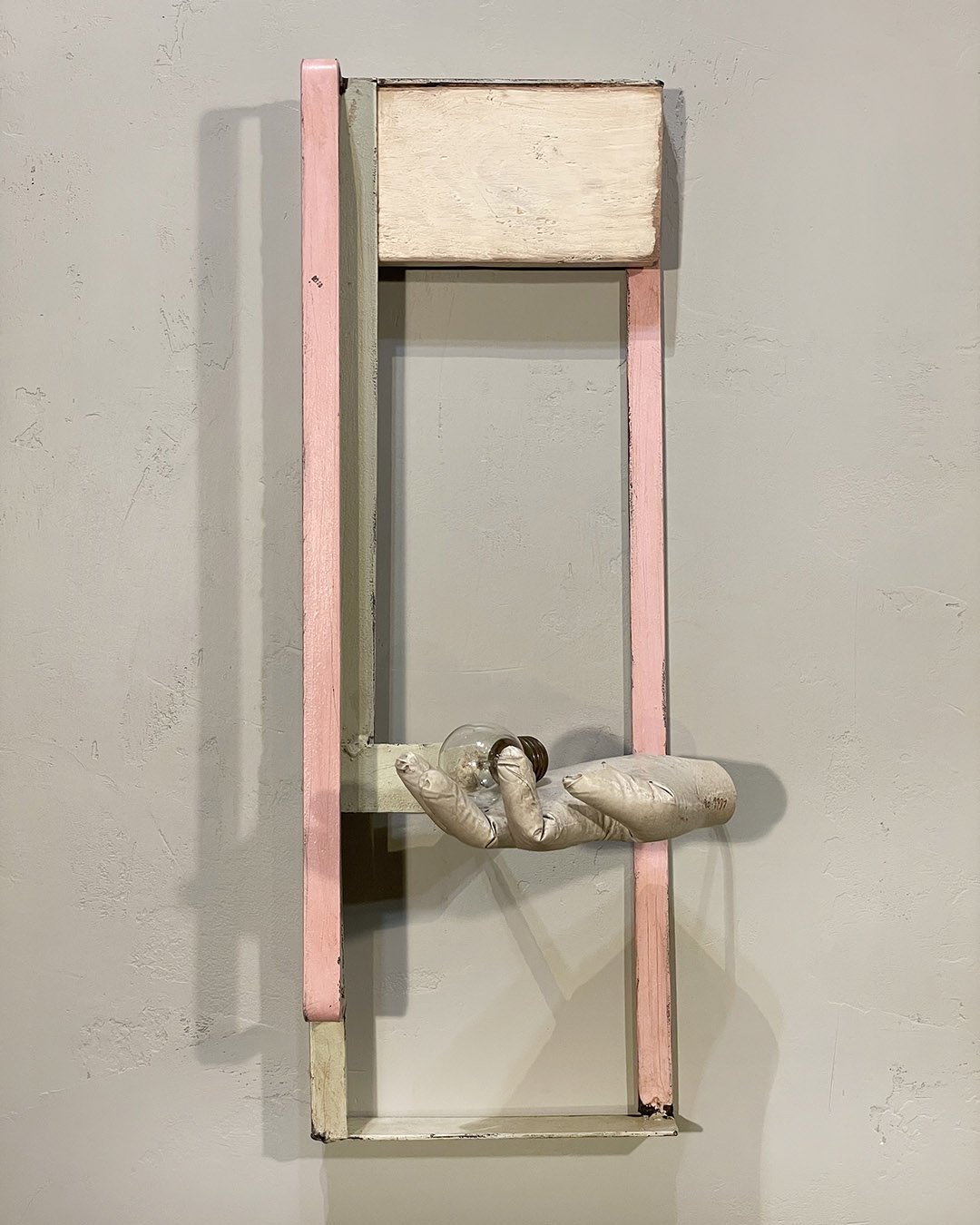
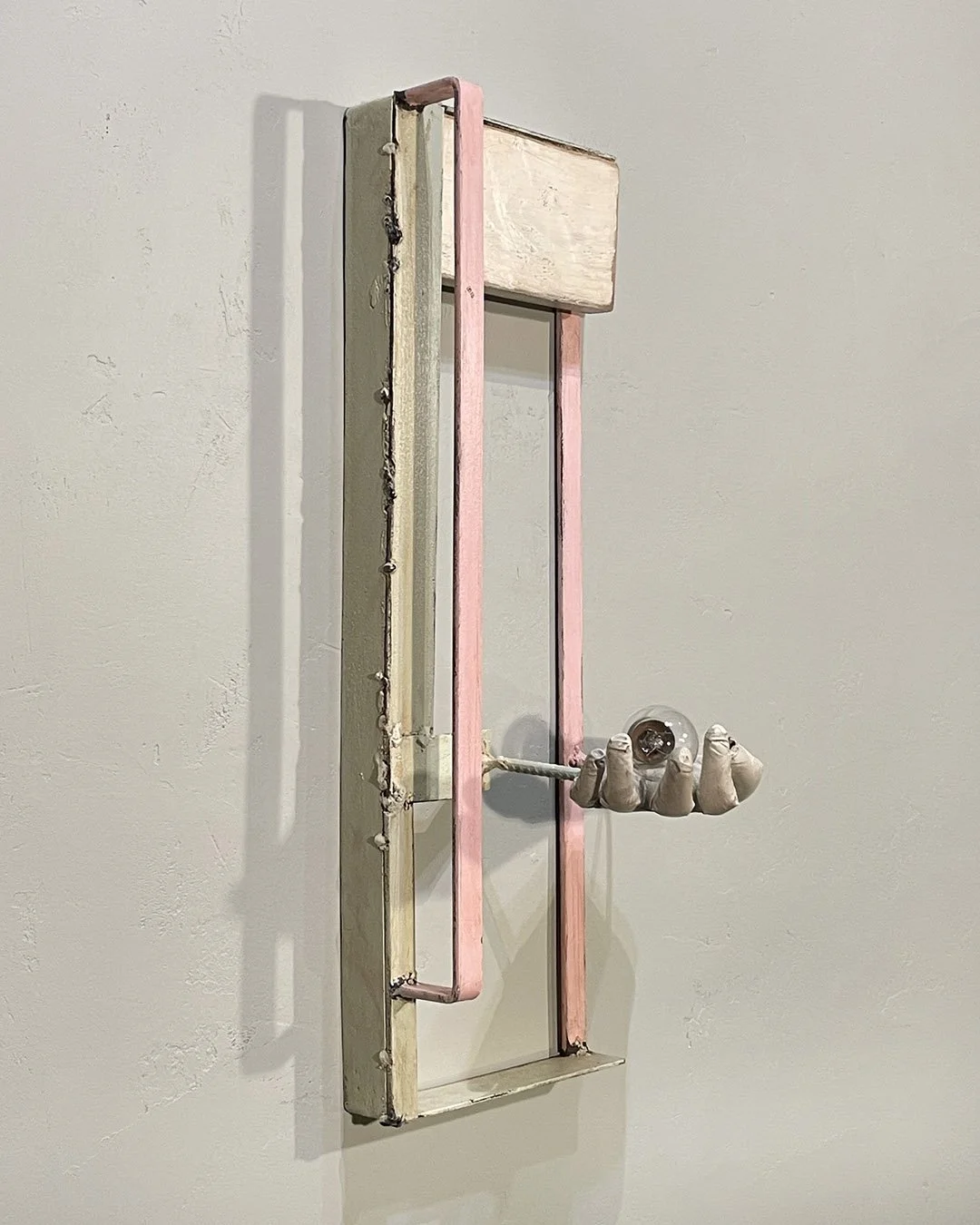
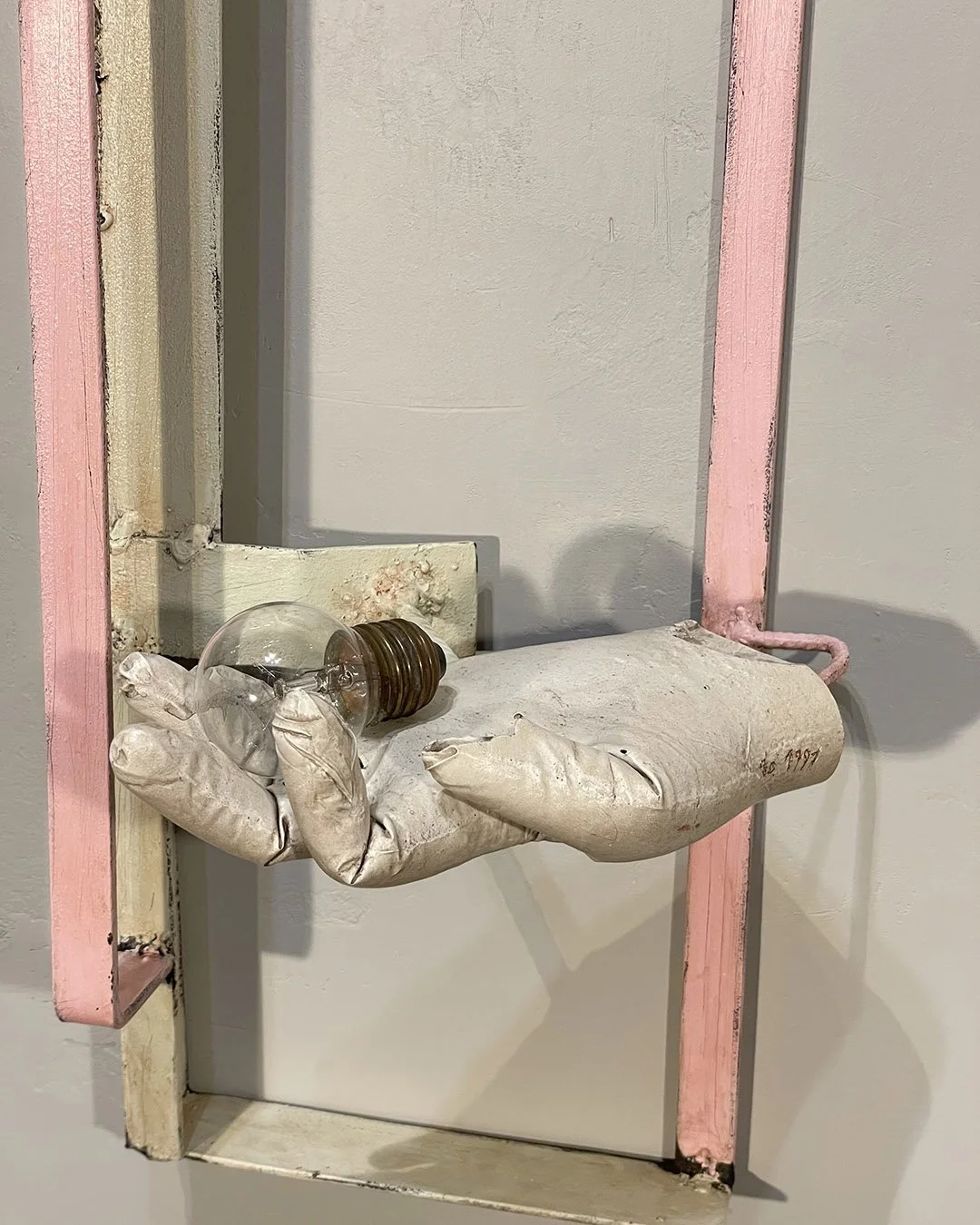
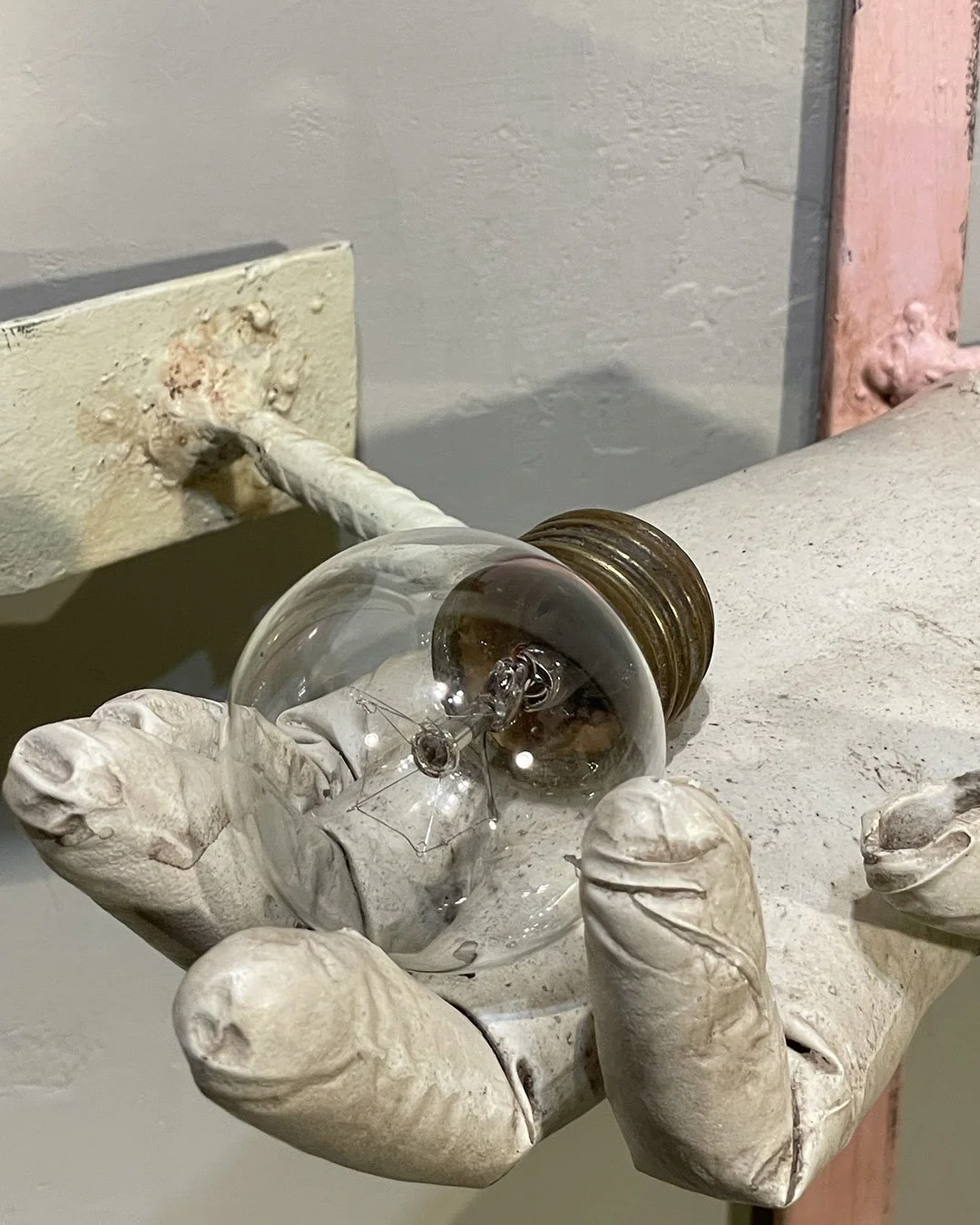
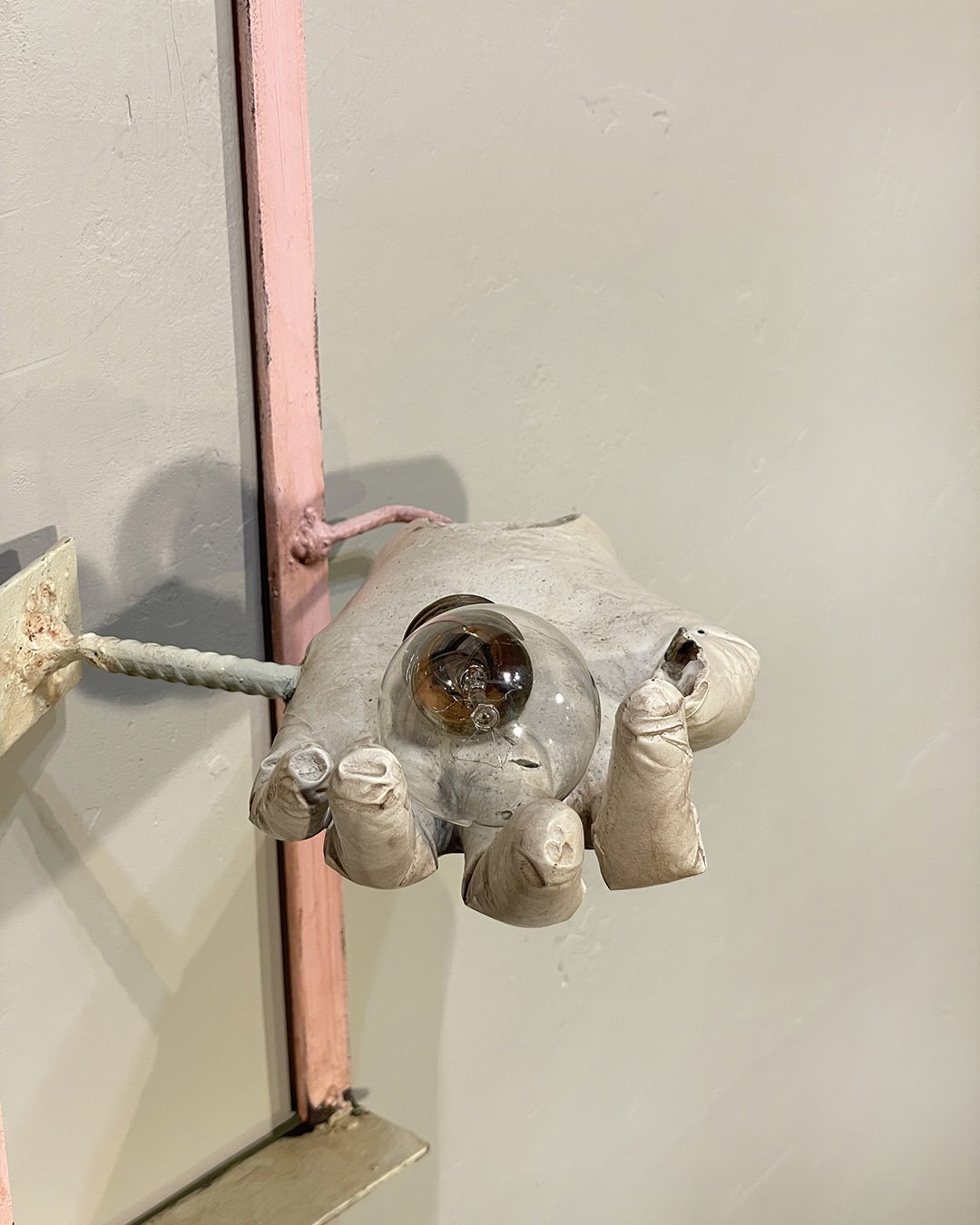
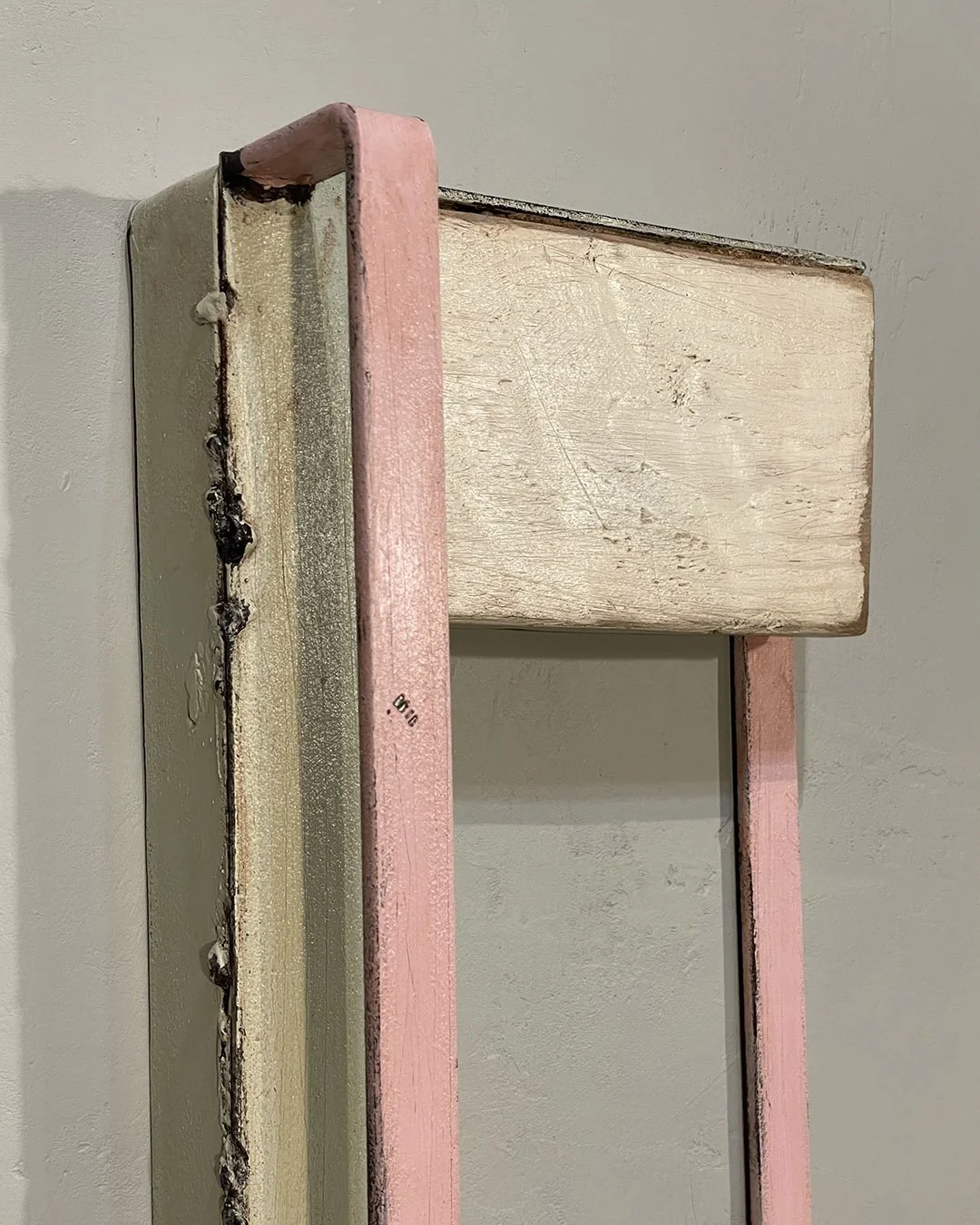
Lightbulb (Ontological Determination). 1991©. Reinforced concrete, iron, wood, lightbulb. Cm 60x20x22.
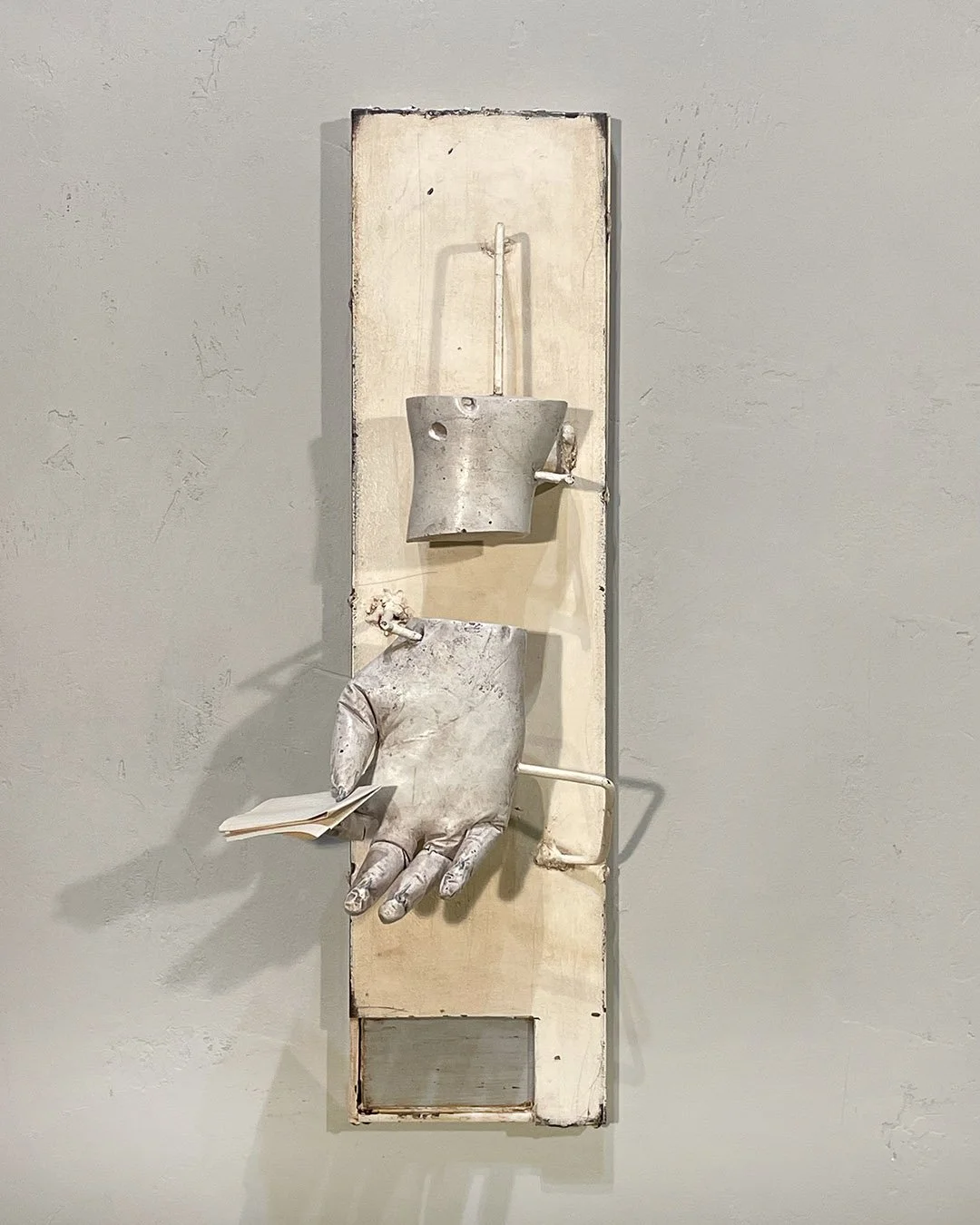
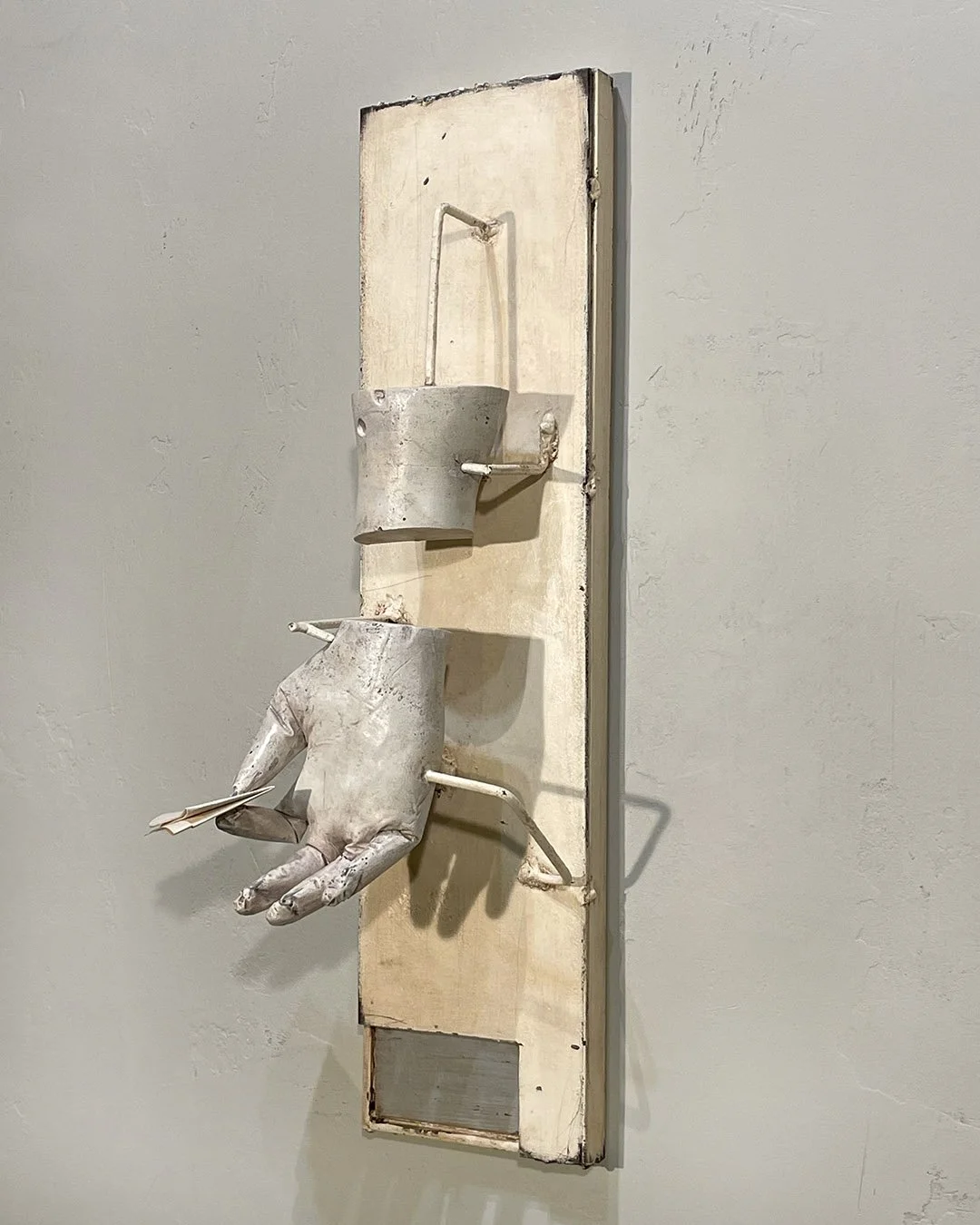
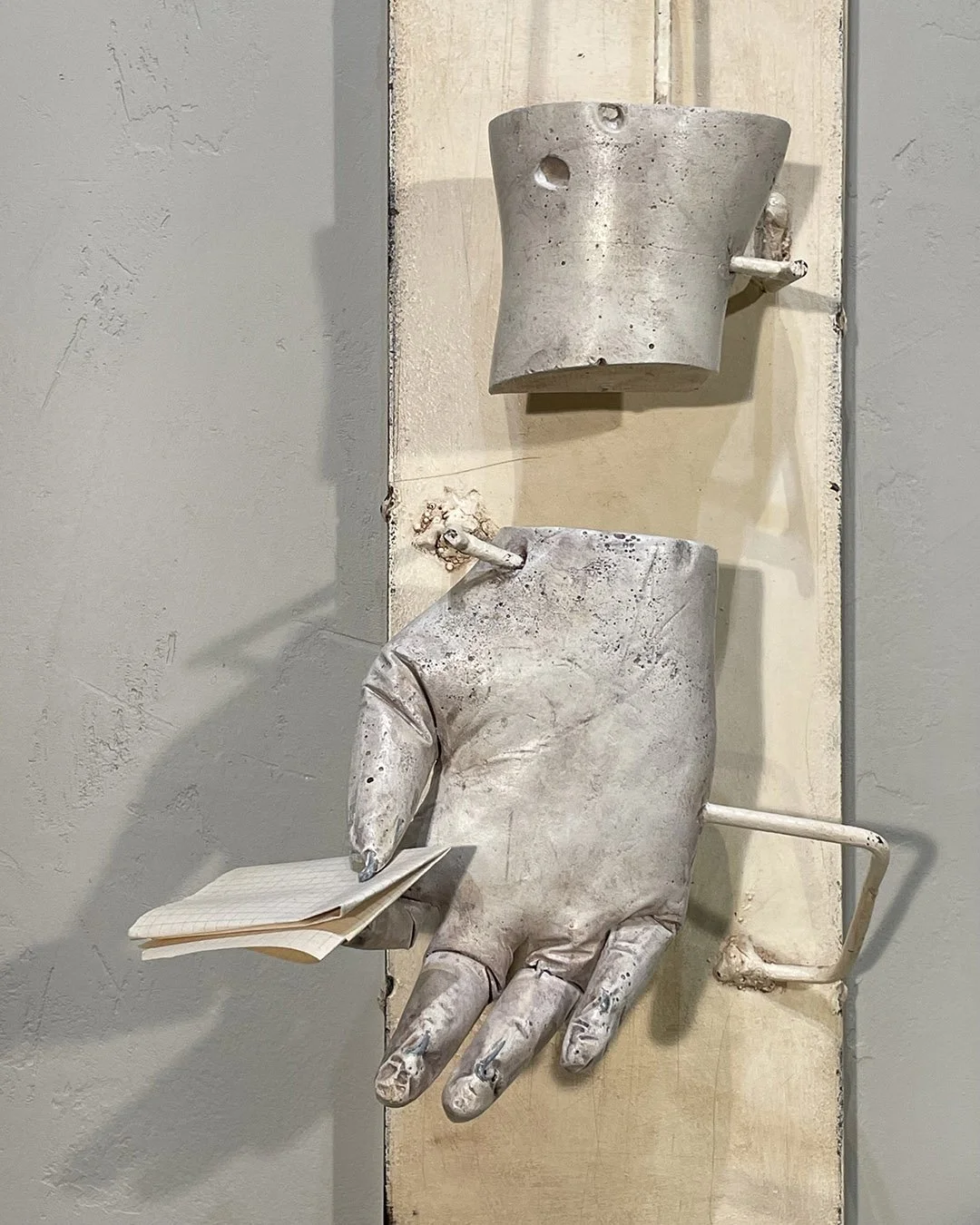
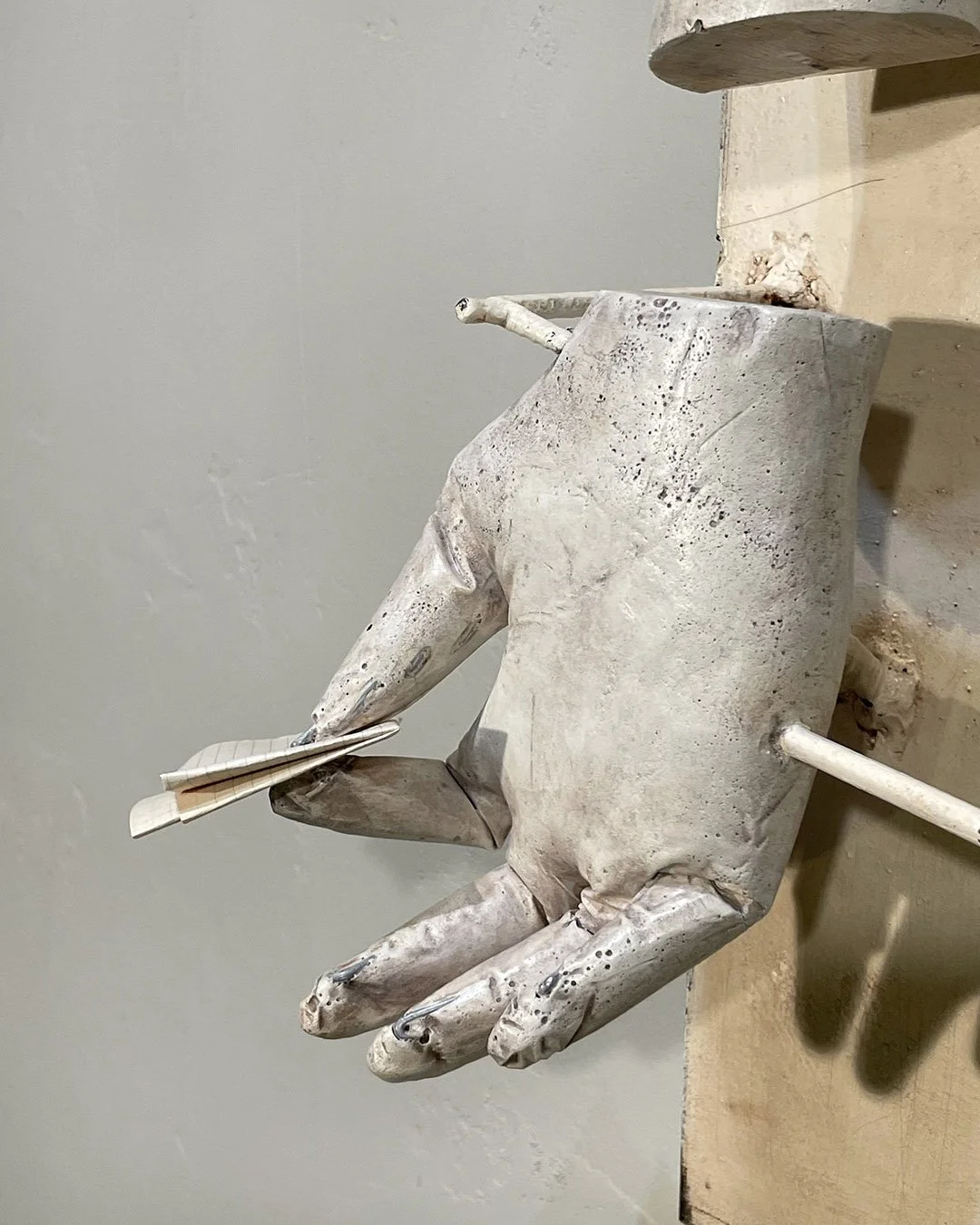
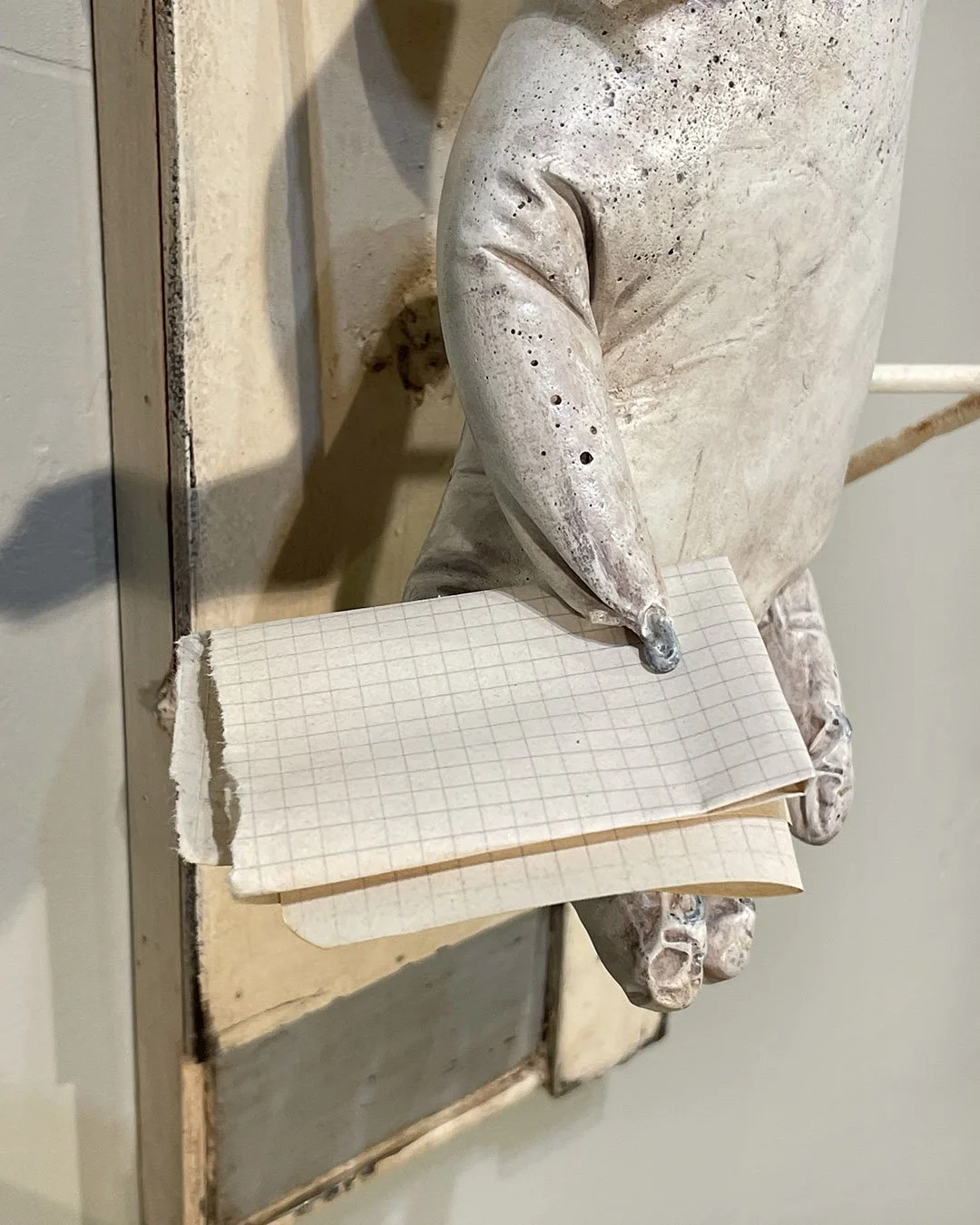
Sheet of paper (Ontological Determination). 1991©. Reinforced concrete, iron, wood, paper. Cm 59x17x15.
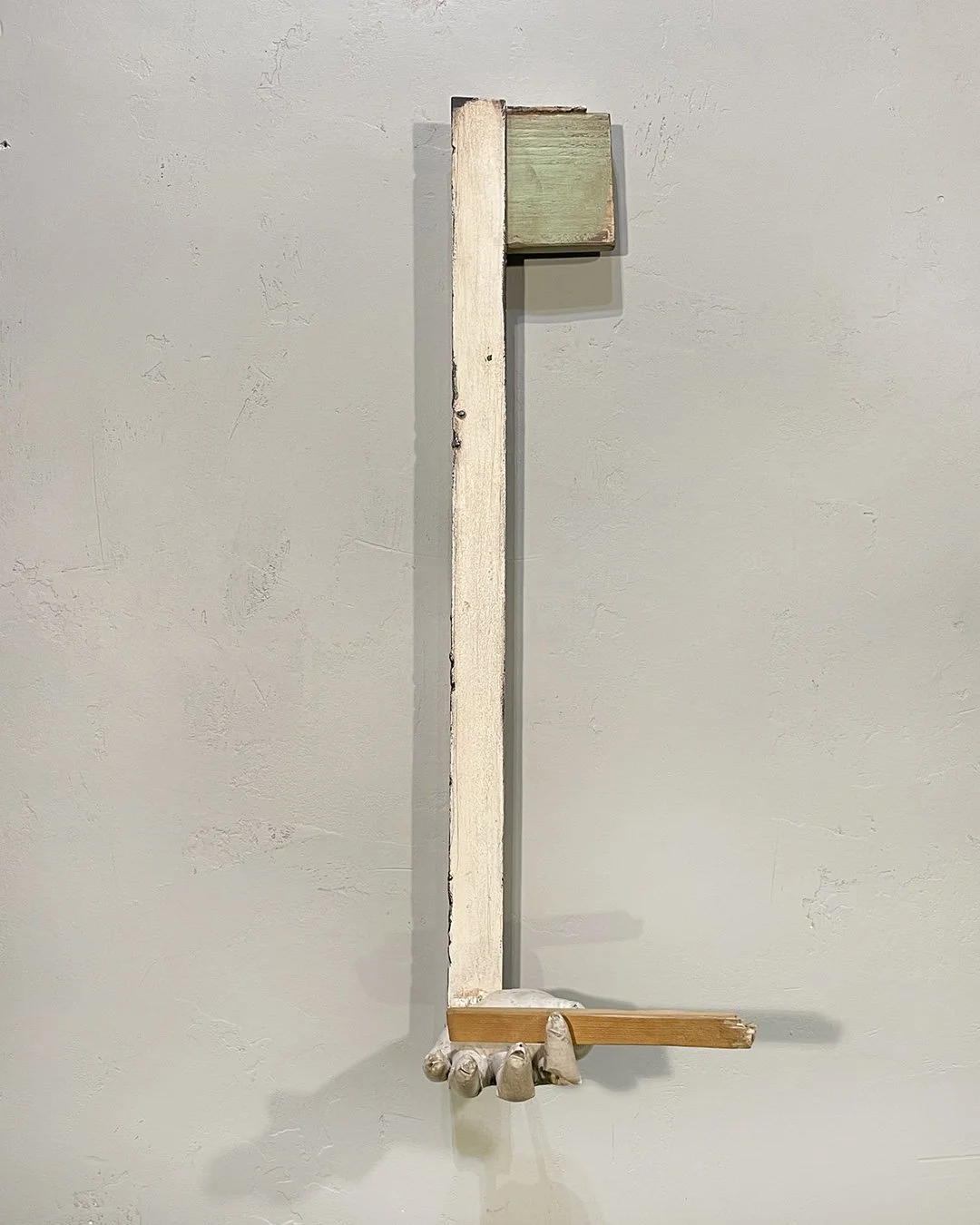
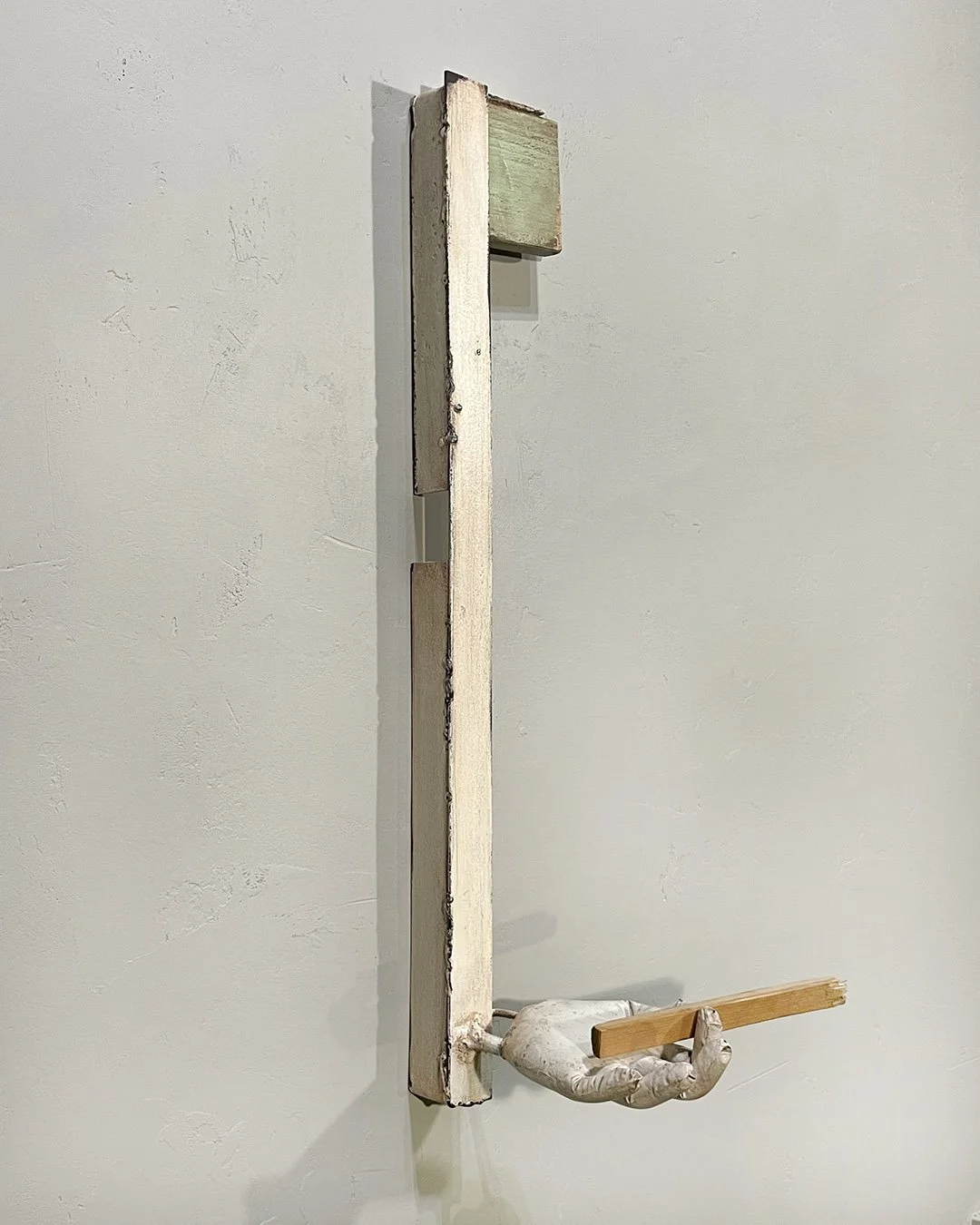
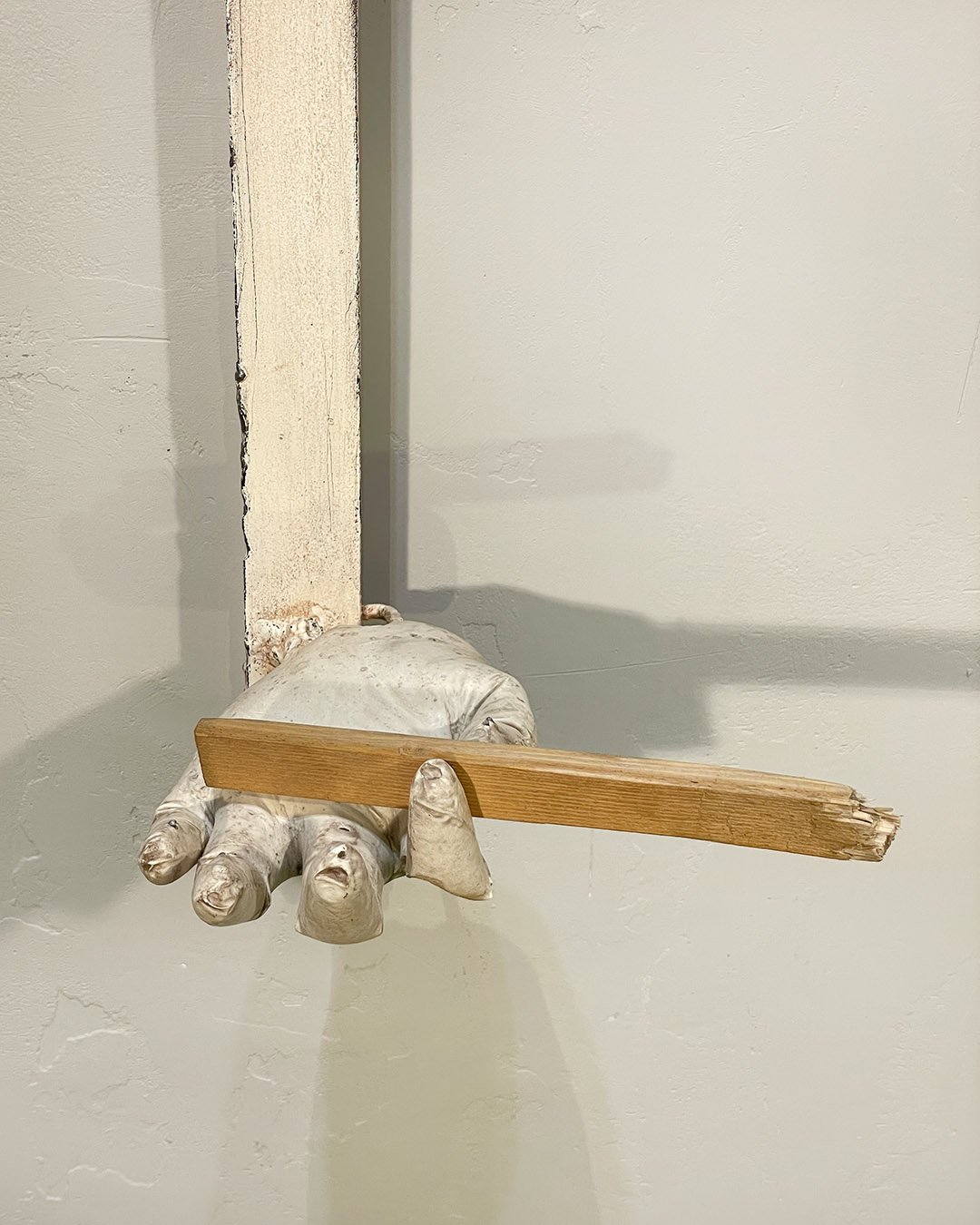
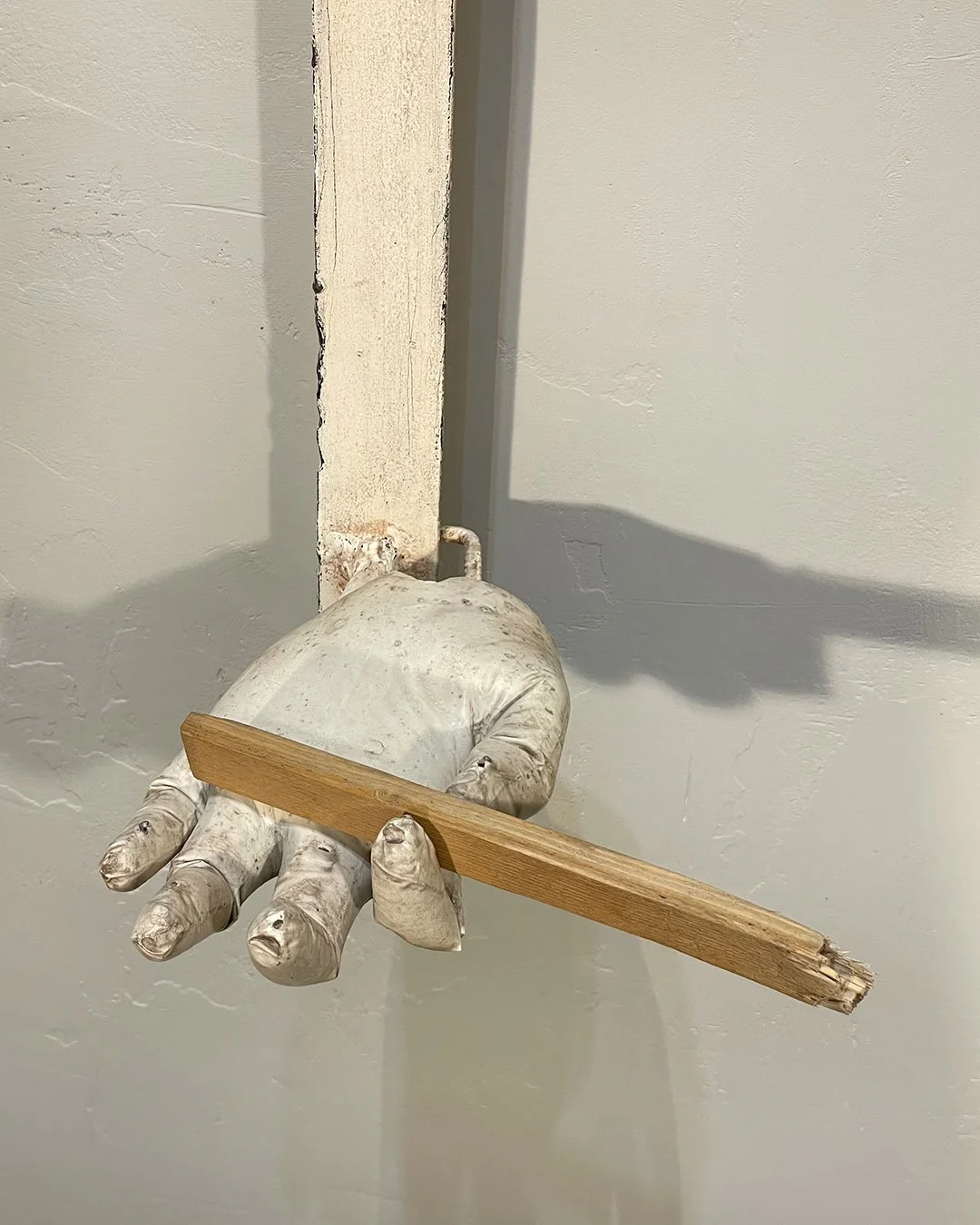
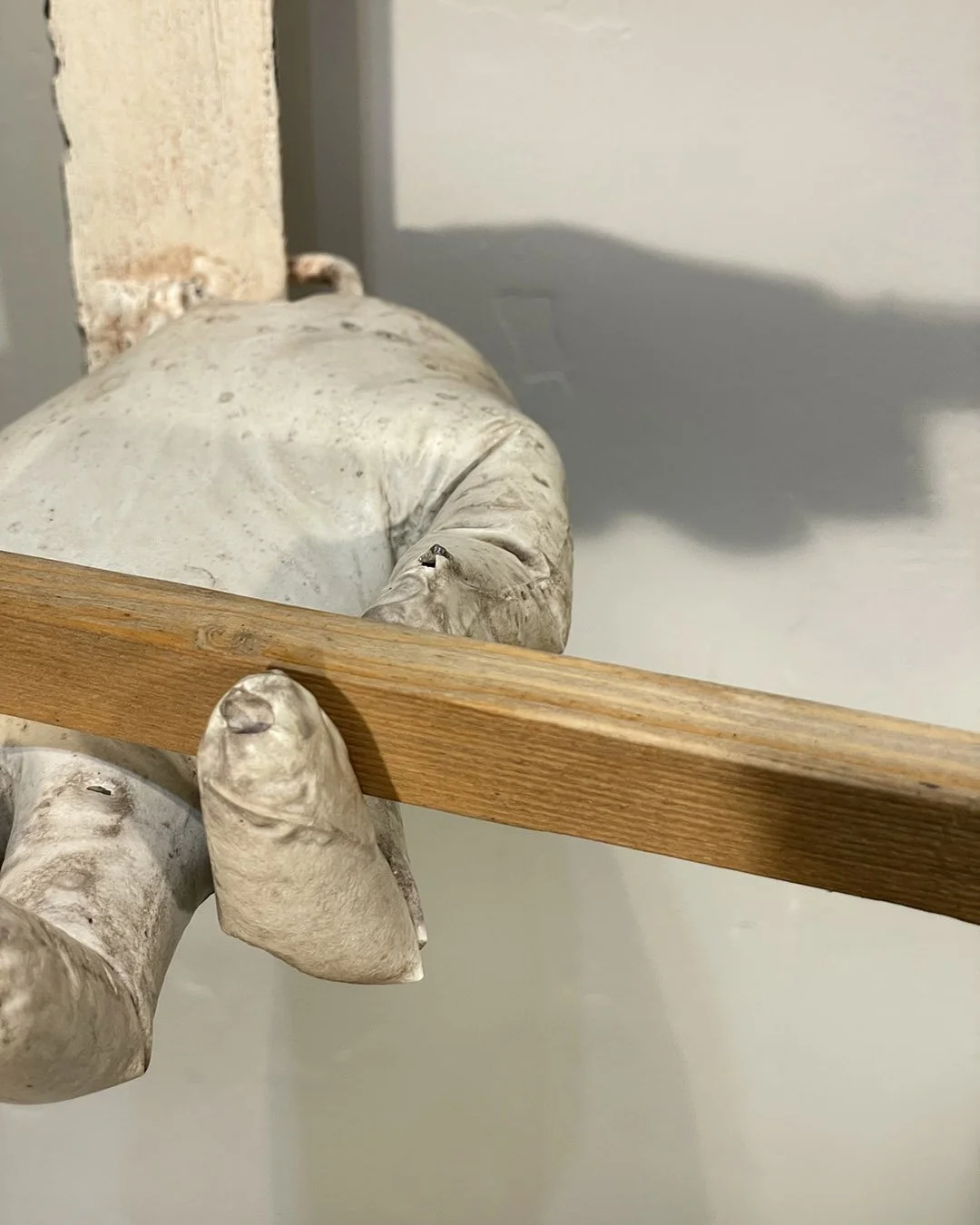
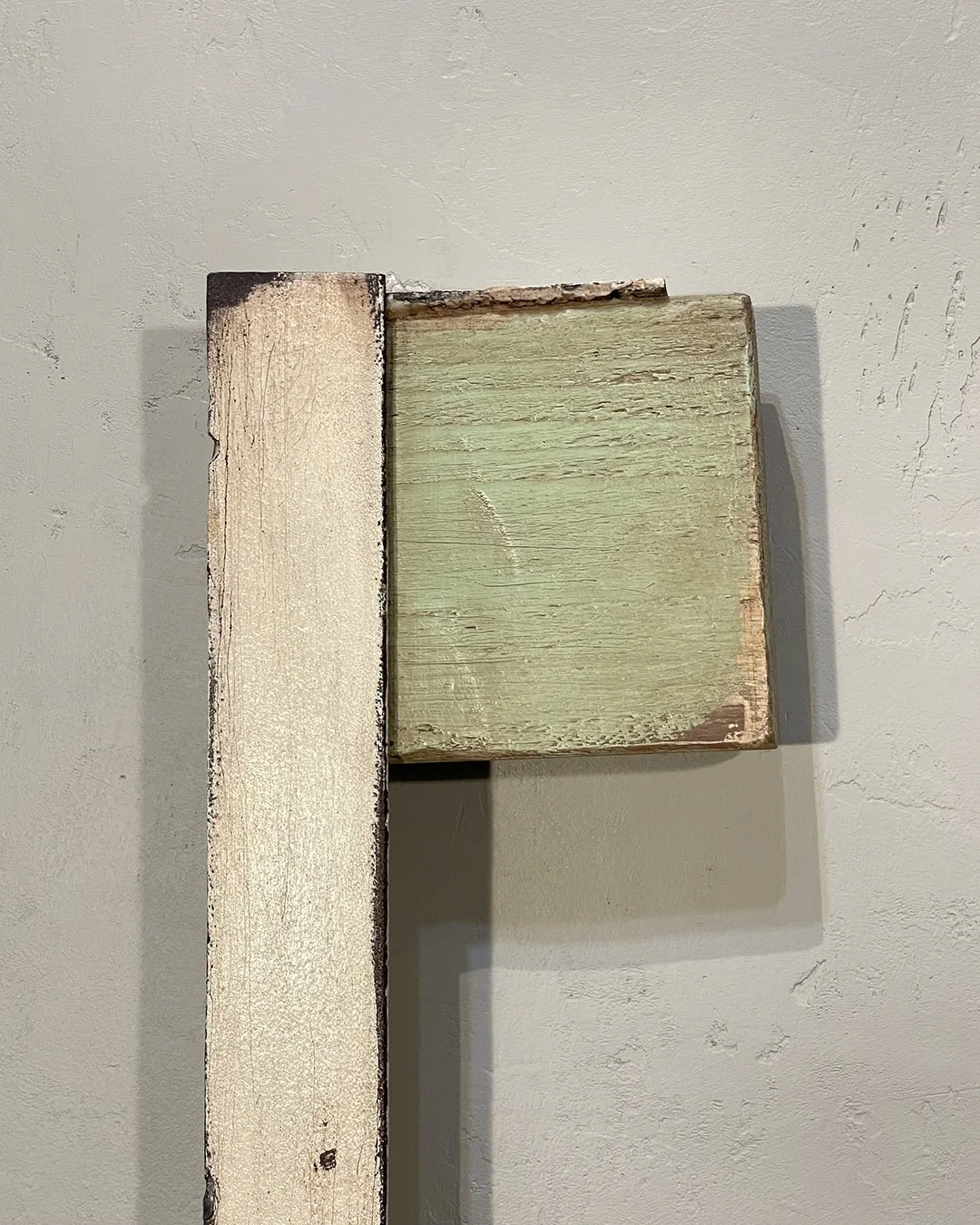
Strip of wood (Ontological Determination). 1993©. Reinforced concrete, iron, wood. Cm 70x12x27.
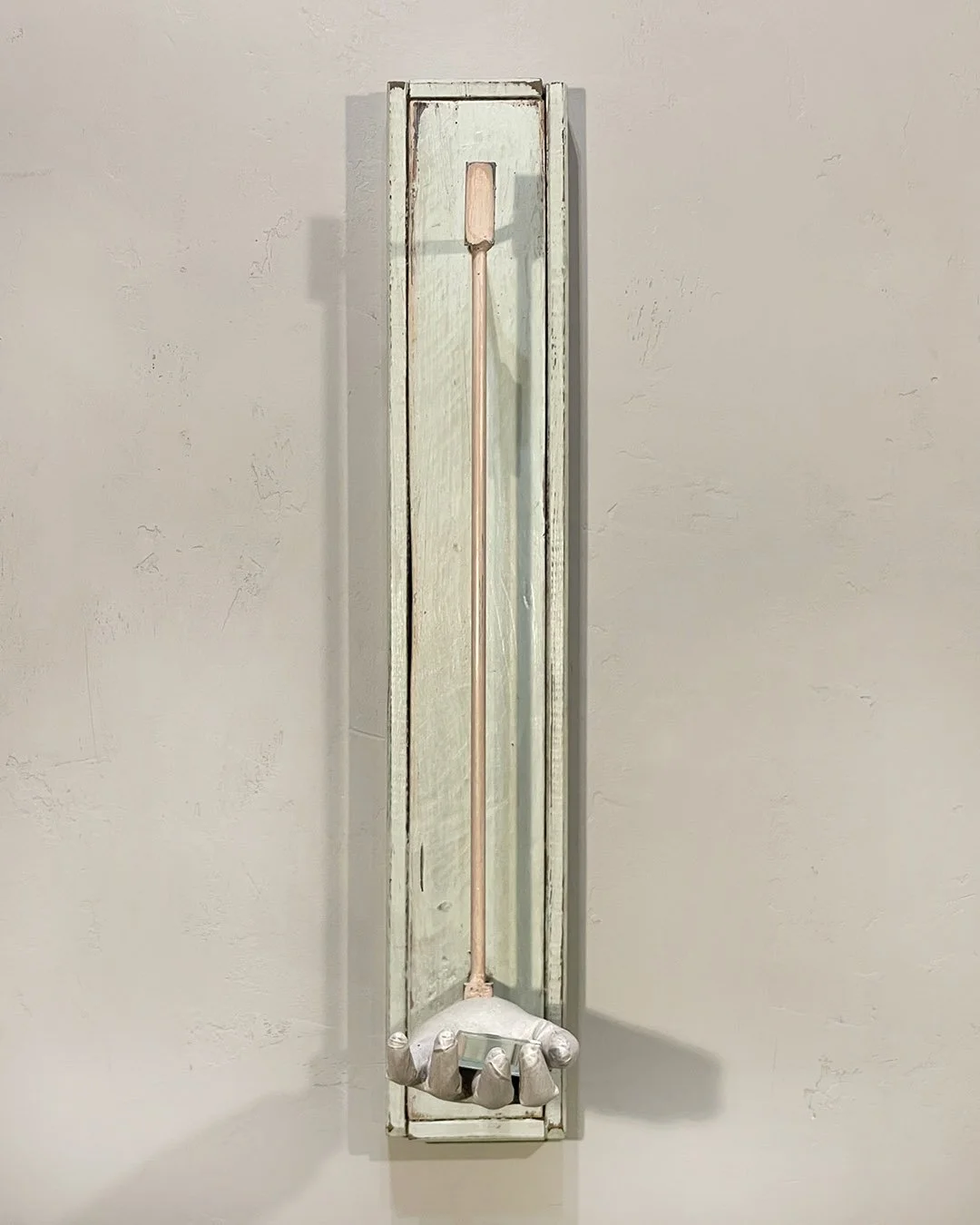
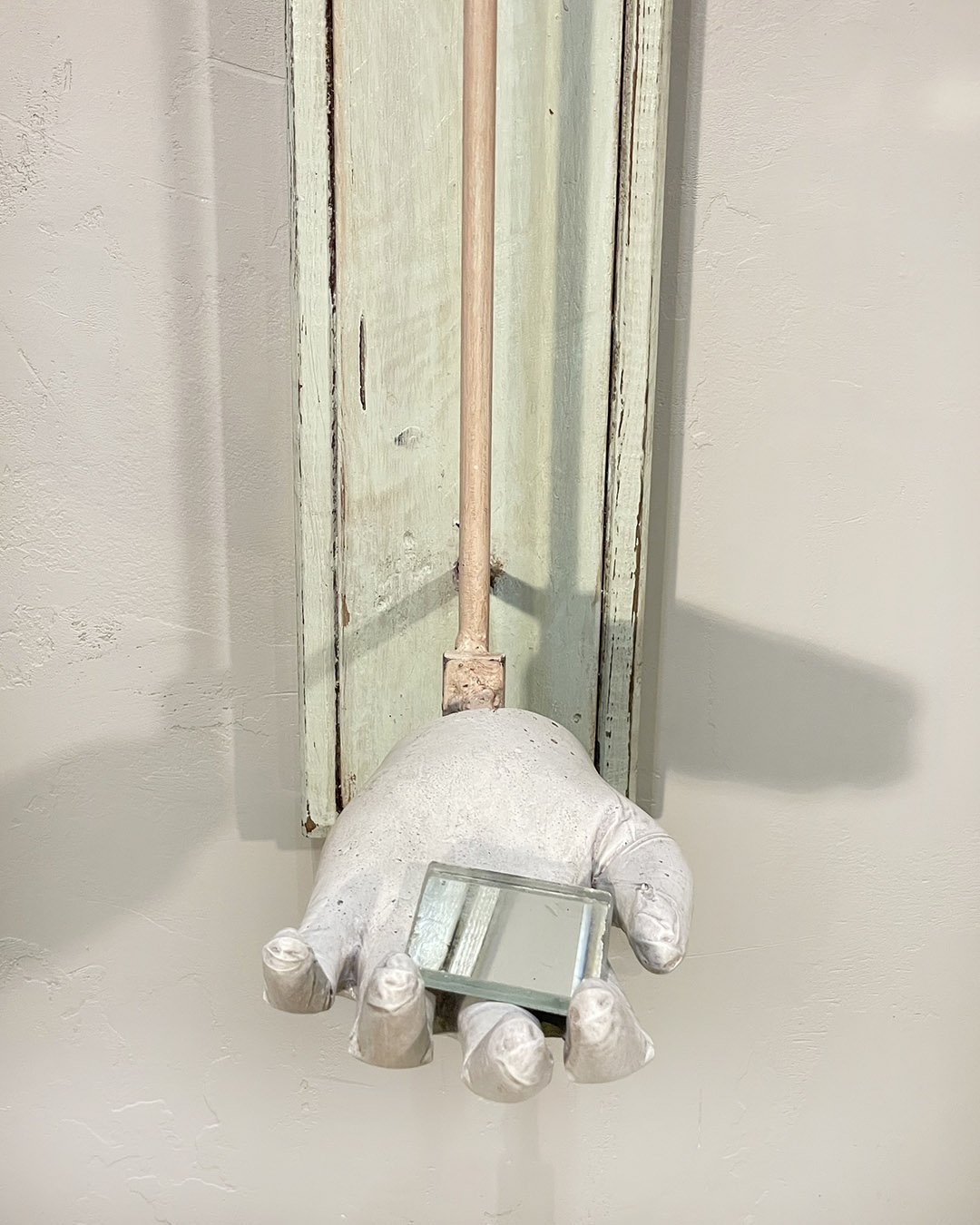
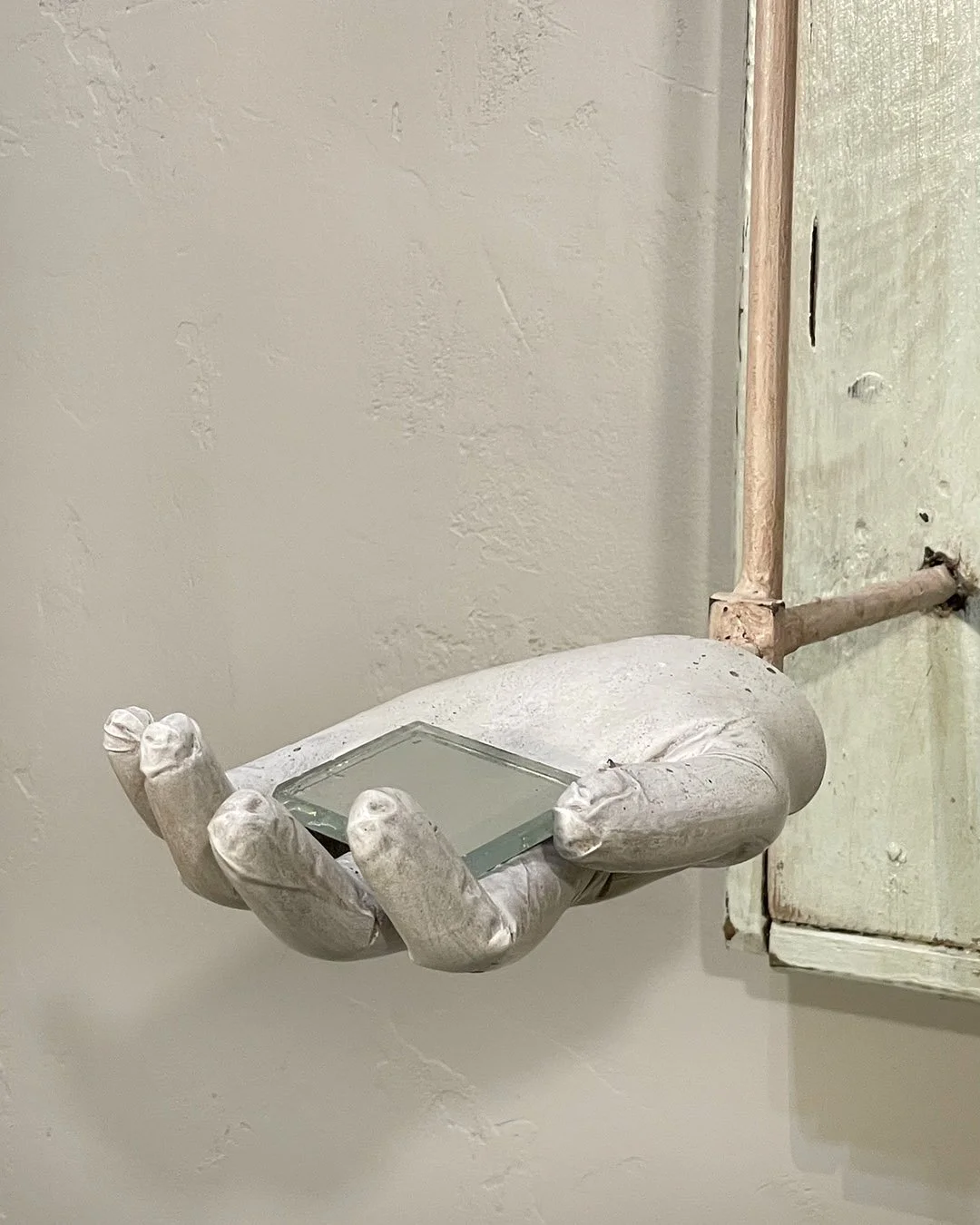
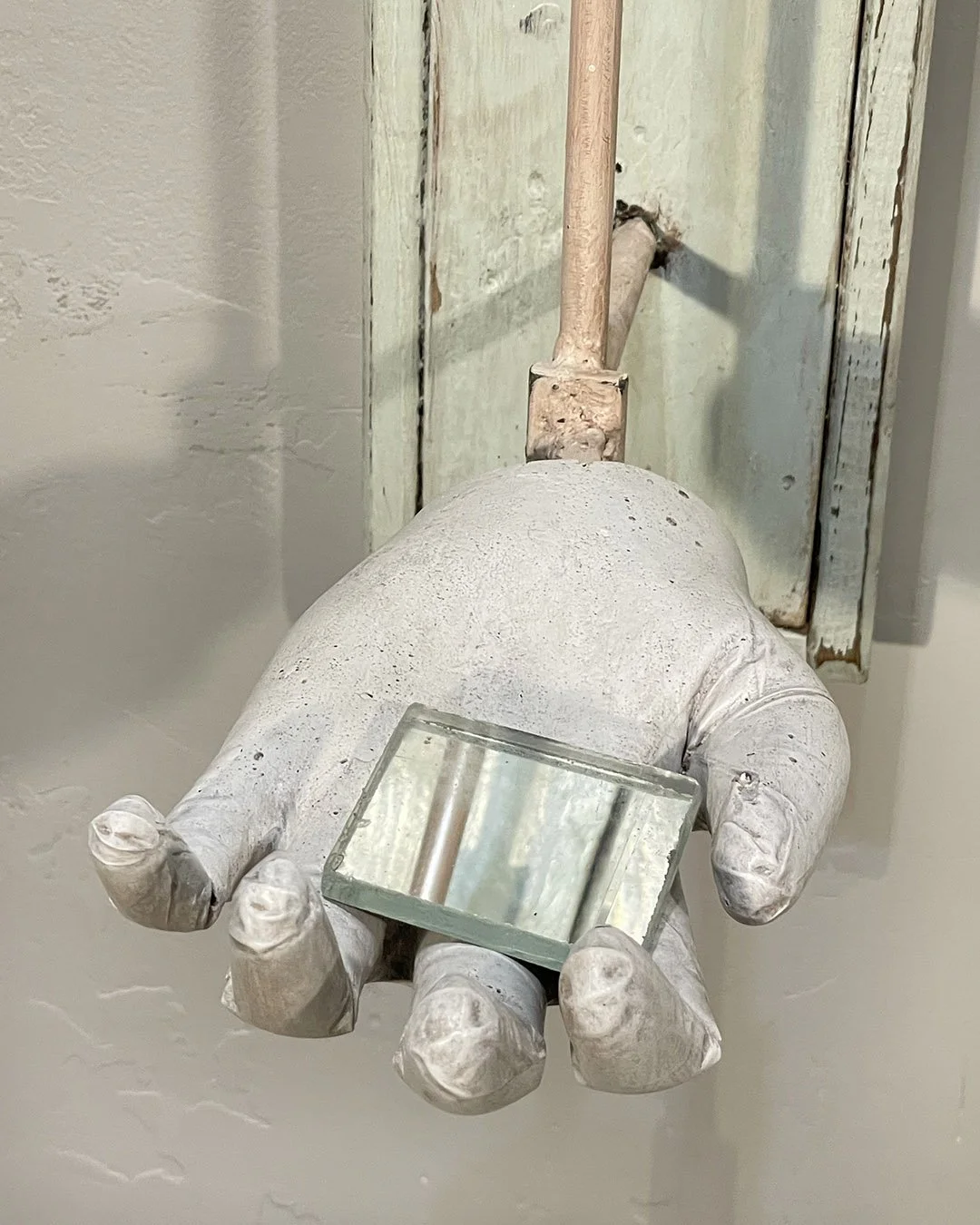
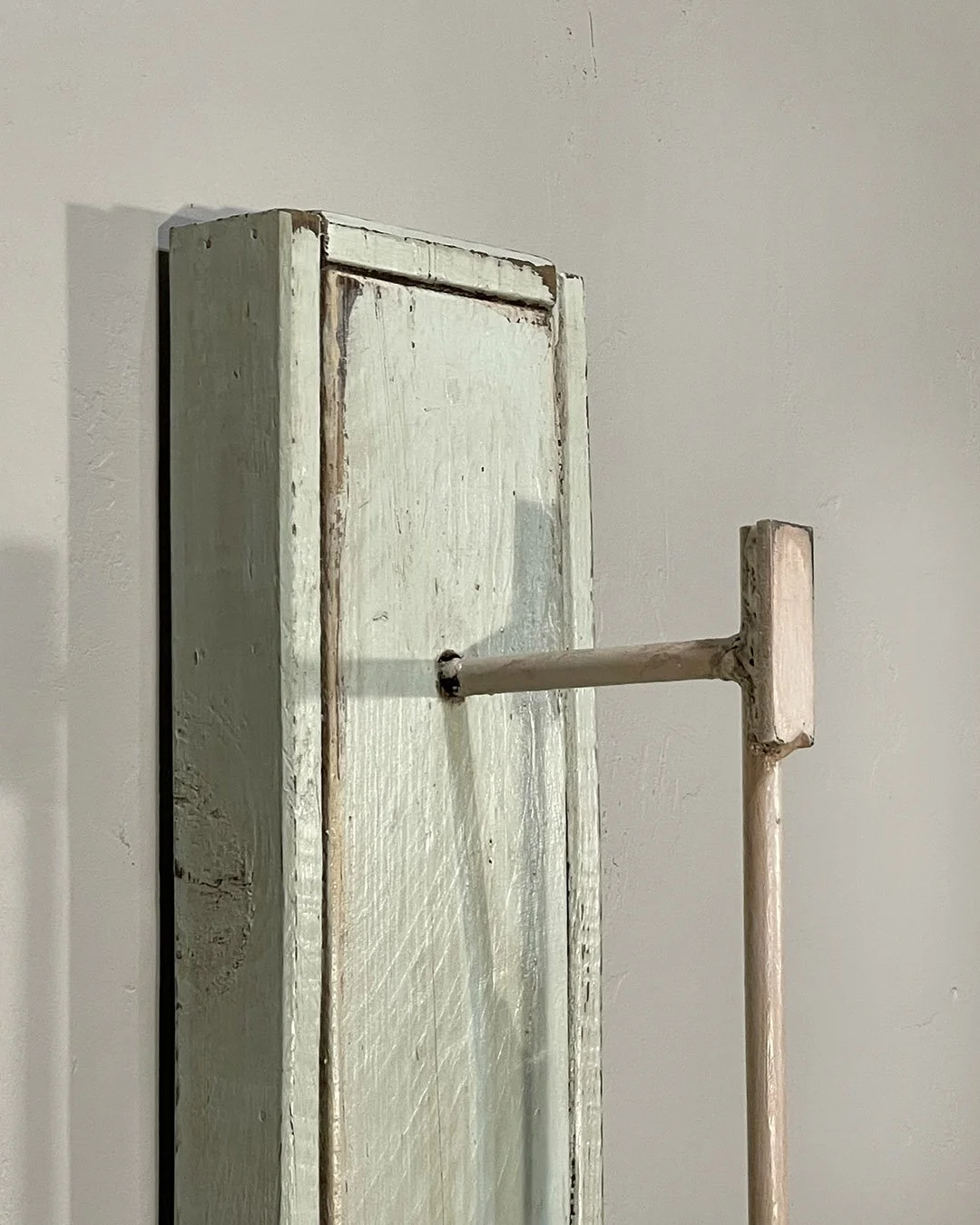
Fragment of mirror (Ontological Determination). 1999©. Reinforced concrete, iron, wood, mirror. Cm 60x20x22.
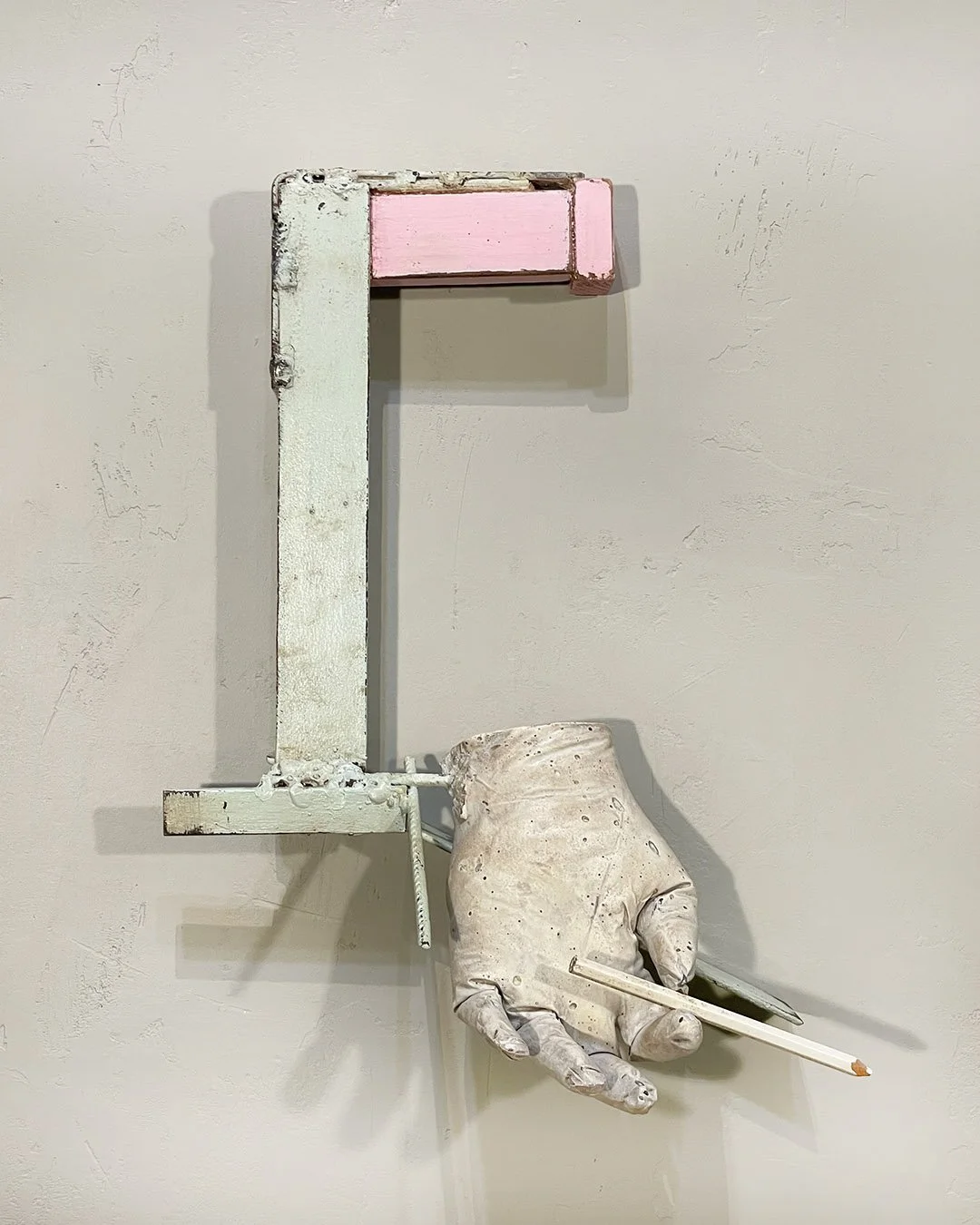
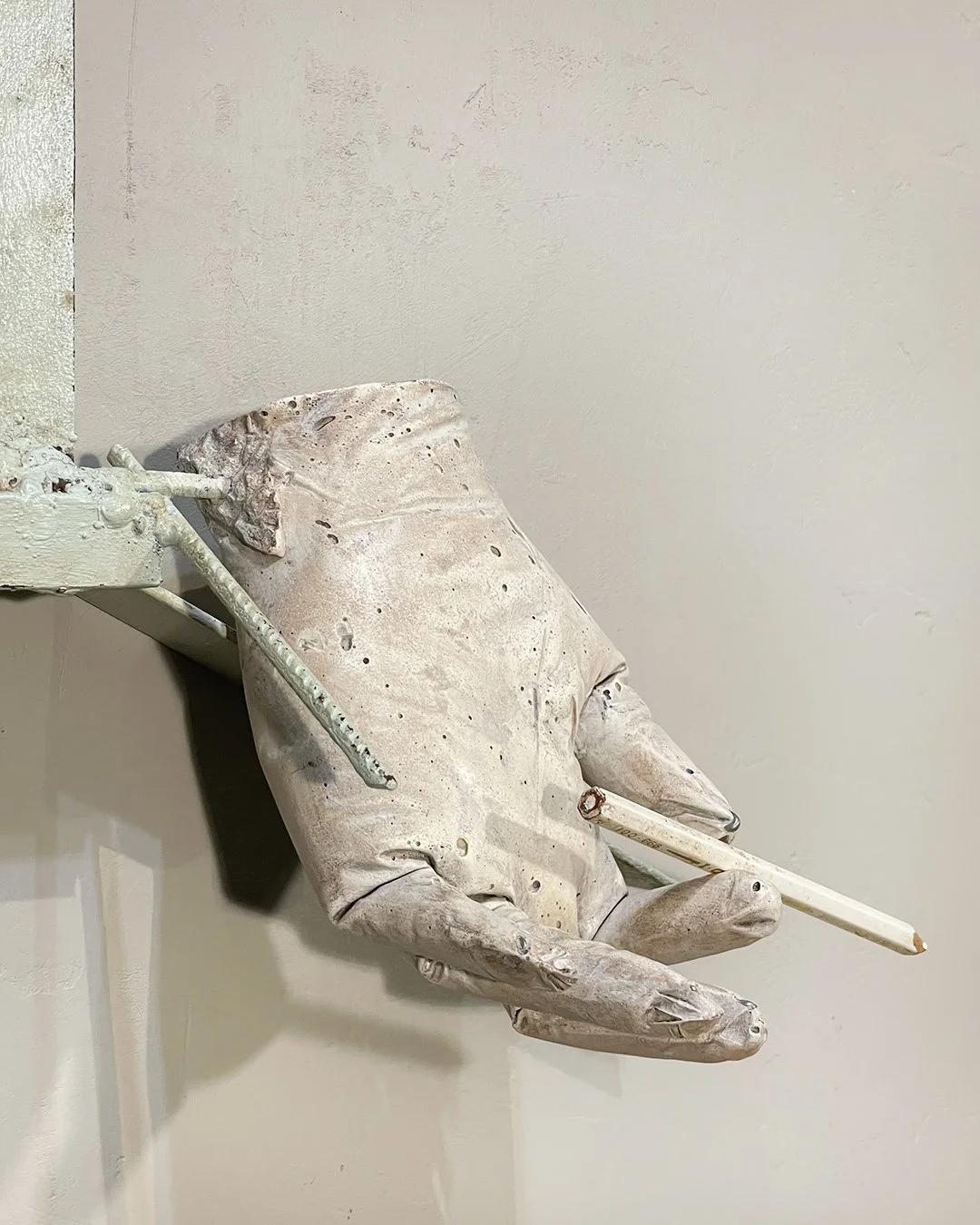
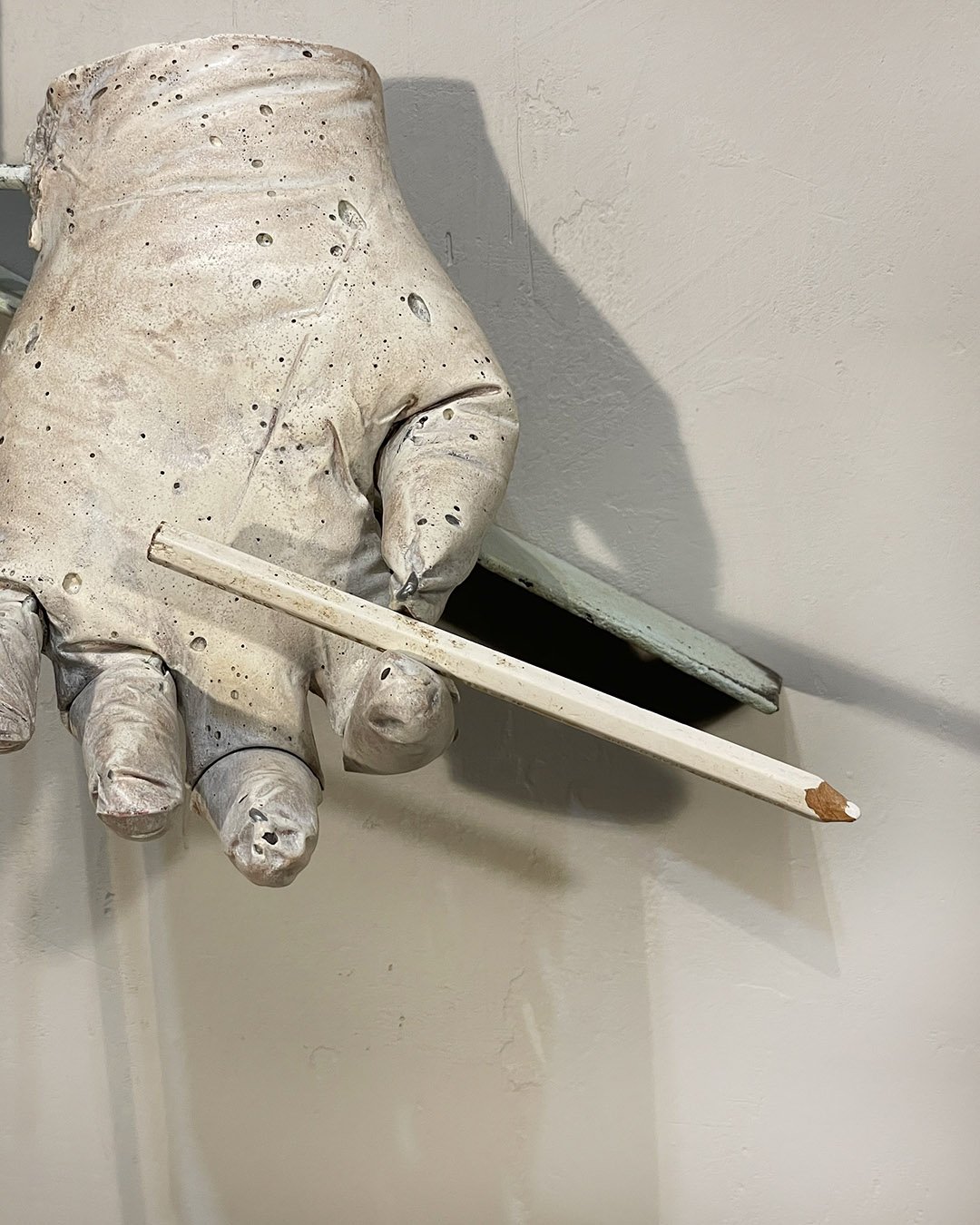
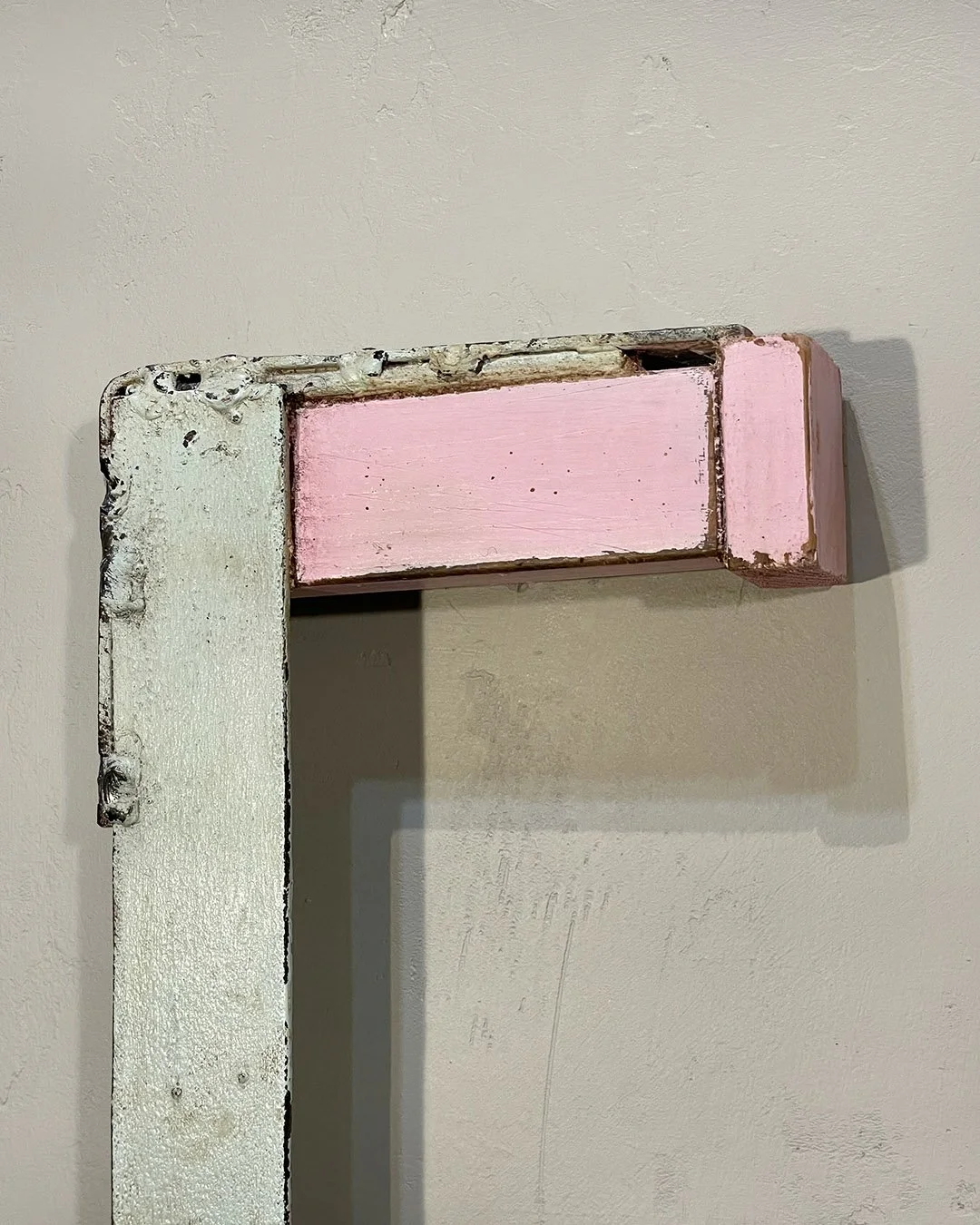
White pencil (Ontological Determination). 1991©. Reinforced concrete, iron, wood, white pencil. Cm 30x40x16.
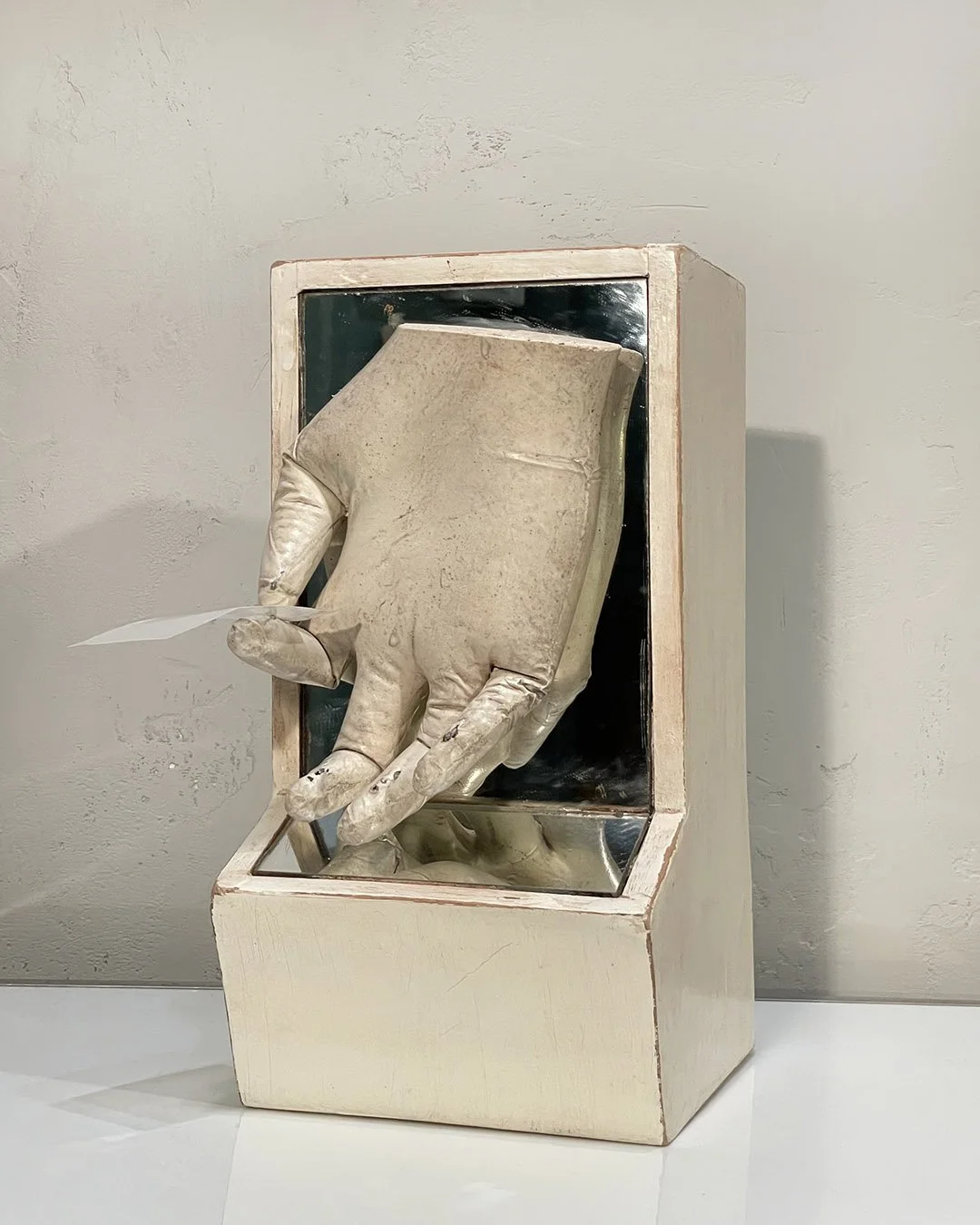
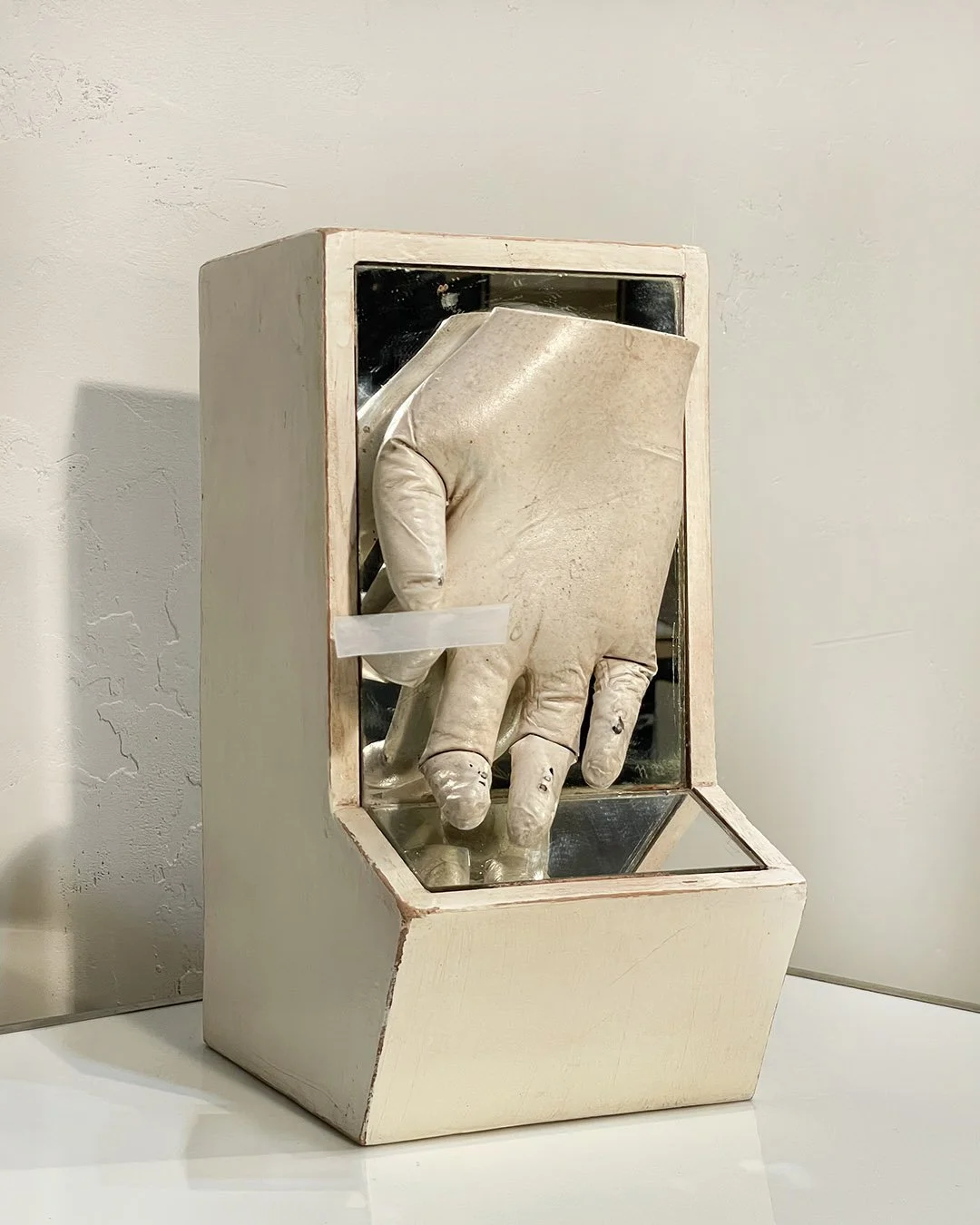
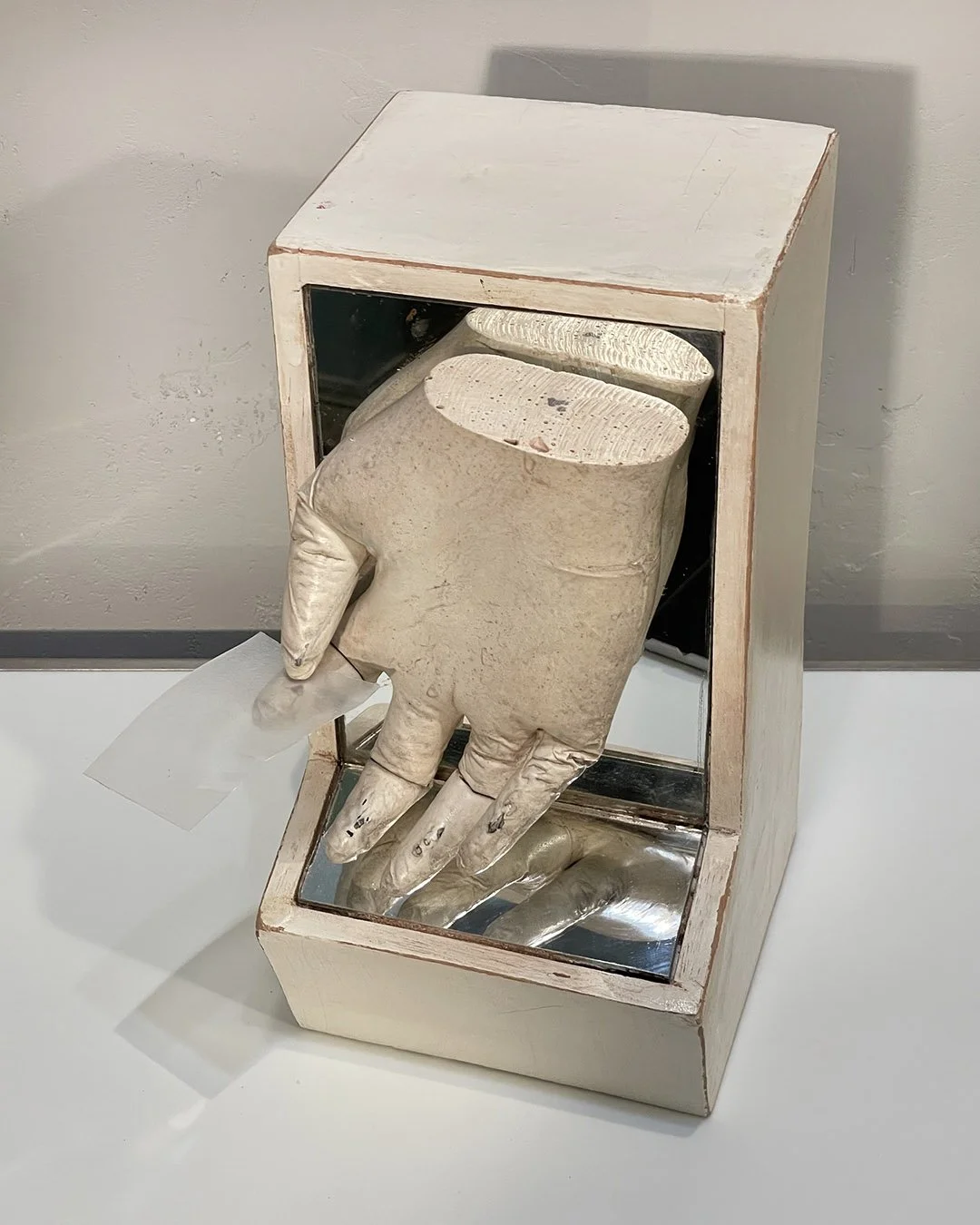
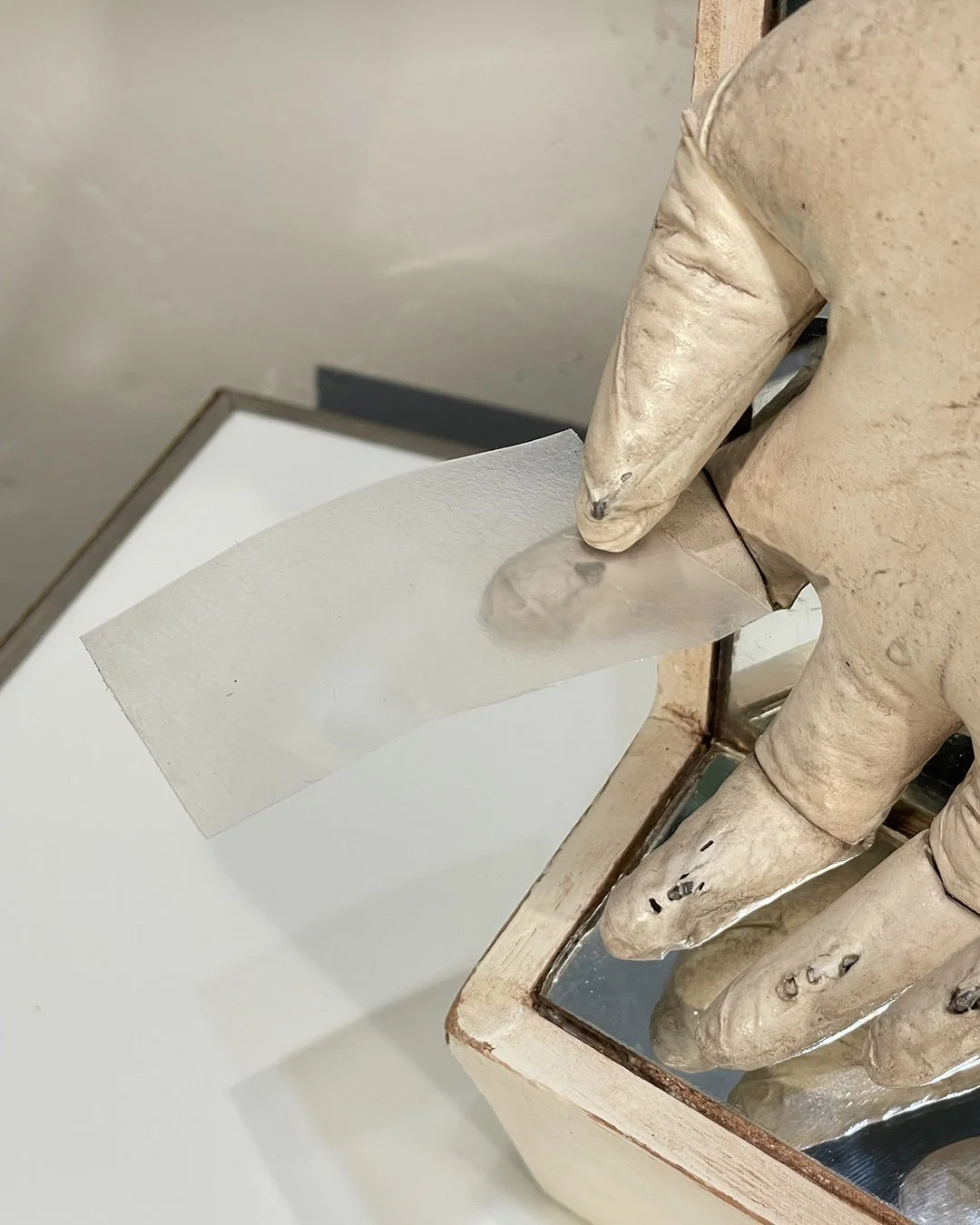
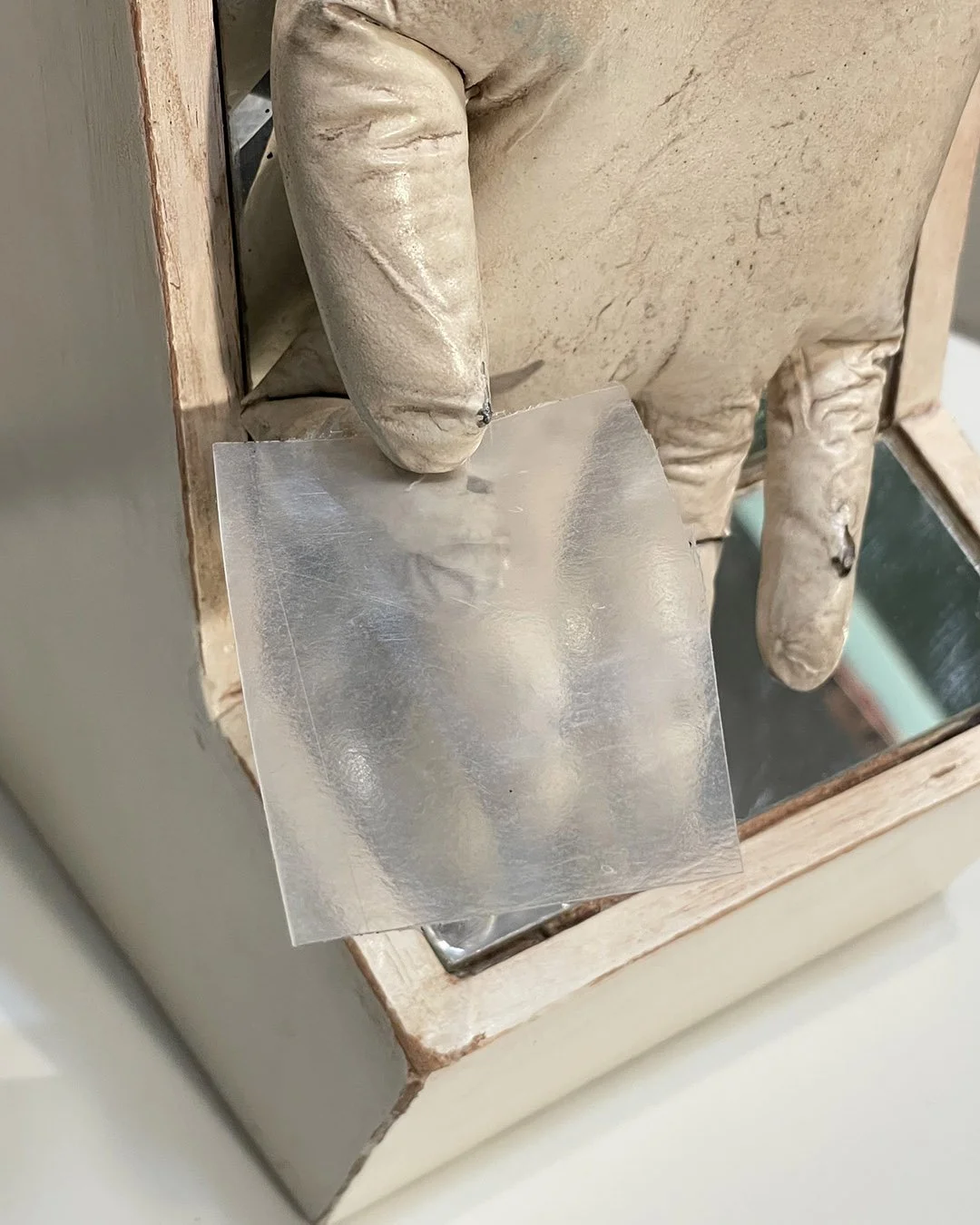
Piece of plastic (Ontological Determination). 1991©. Reinforced concrete, mirrors, wood, plastic. Cm 21x22x15.
Privacy Policy Image Licensing
All rights reserved Virgilio Rospigliosi 2023© Design by Lux Aeterna Multimedia