
THEORETICAL OBSERVATORY
Aporie - Apparent Contradictions (Text from 1990 relating to works conceived in 1987©)
Methodological notes on the reversal of perception
When we find ourselves before a work that represents identifiable objects, fabrics, geometric volumes, metallic surfaces, our brain automatically activates a recognition process. "I know this shape," we think. "I know what this is." And yet, something does not add up. The initial certainty wavers, and we find ourselves in a state of cognitive suspension, we see clearly what is represented, but we cannot grasp its overall meaning. This phenomenon, which we might define as "perceptual short-circuit", arises from a fundamental contradiction, the work shows us elements of the real world, but arranges them according to logics that contradict our everyday experience. The result is neither informal, where we abandon recognizable representation entirely, nor traditional realism, where the world is reproduced according to its physical laws. It is something different.
The research into the reversal of reality begins in the second half of the 1980s with a series of paintings, three-dimensional objects and photographs. Together with the "visual psychic archetypes" and the "defunctionalizations", they arise following an engagement with neuroscience and in particular with the studies of John C. Lilly on consciousness and perception. The experiments conducted in sensory deprivation tanks, an environment that completely isolates the subject from external stimuli, made it possible to observe directly the mechanisms by which the brain constructs reality in the absence of habitual sensory input. These experiences revealed how perception is not a passive process of recording the external world, but a constructive activity of the mind that organizes stimuli according to learned patterns. From this neuroscientific understanding emerges the possibility of an artistic practice that intervenes precisely on these mechanisms of perceptual construction. Unlike the defunctionalizations, which remove function from objects, here the function is reversed, contradicted, overturned. The work operates on the ontological plane, what is an object truly when we free it from what it "must" be? When we look at an object, our brain compares what it sees with images held in memory and returns a name to us. This process seems natural, but it is a learned cultural mechanism. The work intervenes here, it takes common elements, industrial materials, objects, fabrics, woods, porcelains, fragments and recomposes them following rules that contradict our expectations. Identifying the original materials is irrelevant, what matters is the state of perceptual suspension generated when we cannot name what we see. Finished objects are not displaced, as in decontextualizations. Components are assembled according to a coherent logic that runs contrary to conventions of use. Each work is a closed system, a new object. It is not a ready-made, it is a constructive project that generates visual forms endowed with strong aesthetic autonomy. By forcing materials outside their functional role, configurations emerge that belong neither to design nor to traditional sculpture, but to a hybrid territory where formal value coincides with perceptual experiment. The result? We may recognize the individual parts, but we cannot name the whole. When a metal cylinder is recomposed following a logic that denies its intended function, an aporia is produced, a dead end of thought that forces us to halt in uncertainty rather than closing with a reassuring definition. For example, a piece of fabric used as a base for a heavy iron plate. Or transparent glass placed to conceal something. Fabric normally covers, it does not support. Glass lets you see through, it does not hide. Each material retains its physical properties but loses its assigned social role. Objects continue to exist physically, but the brain cannot classify them. The work appears simultaneously finished and unstable, functional and useless, familiar and alien. These opposing pairs coexist, generating an irresolvable tension. And this is the point, the tension must be traversed as experience. By accepting the contradiction, we observe that the categories used to organize experience are arbitrary social constructions, not natural laws. Why must fabric cover and not construct? Why must metal support and not decorate? Confronted with works of this kind, the mind seeks answers that are continually contradicted. This failure produces a precise effect, the object ceases to be transparent to consciousness. In everyday life the objects we use are transparent, a chair is simply "where we sit", materiality disappears behind function. Here instead function disappears and only reorganized materiality remains. The object recovers its concrete presence, form, weight, colour, surface. It returns to being "thing" before being "tool". Uselessness is strategic. A useful object defines our field of action, it conditions us. A useless object leaves us free, but it is an uncomfortable freedom that requires us to decide what it means. Uselessness suspends the social destination of the object, allowing us to observe it as pure organization of matter in space. Our everyday experience of objects is entirely mediated by use. A hammer is "that with which I drive nails", a cup is "that in which I drink coffee". Identity coincides with function. But on the ontological plane this coincidence is a cultural illusion. The object exists independently of function, it has mass, space, temperature, composition, physical properties that exist regardless of human use. The works operate on the fracture between being and function. Objects are forced to reveal their pure ontological dimension, they continue to be present even when they no longer serve any purpose. Precisely by losing their social function, they become more visible as autonomous material entities. Each work is a perceptual experiment. The results are to be observed as data, and they emerge when material reality is dismantled and reassembled following rules different from those socially shared.
In conclusion, the apparently absurd configurations demonstrate that everyday reality is only one of the infinite possible organizations of matter. What we call "normality" is the version our culture has selected. These assemblages do not create imaginary worlds, they reveal that the world we inhabit is an arbitrary, historical, modifiable choice. The strength of this approach lies in its anticipation, while today we speak of multiple realities, augmented realities, post-truth, simulations, this work demonstrated already in the 1980s, with physical objects, that the perception of the real is never neutral but always constructed.
V R
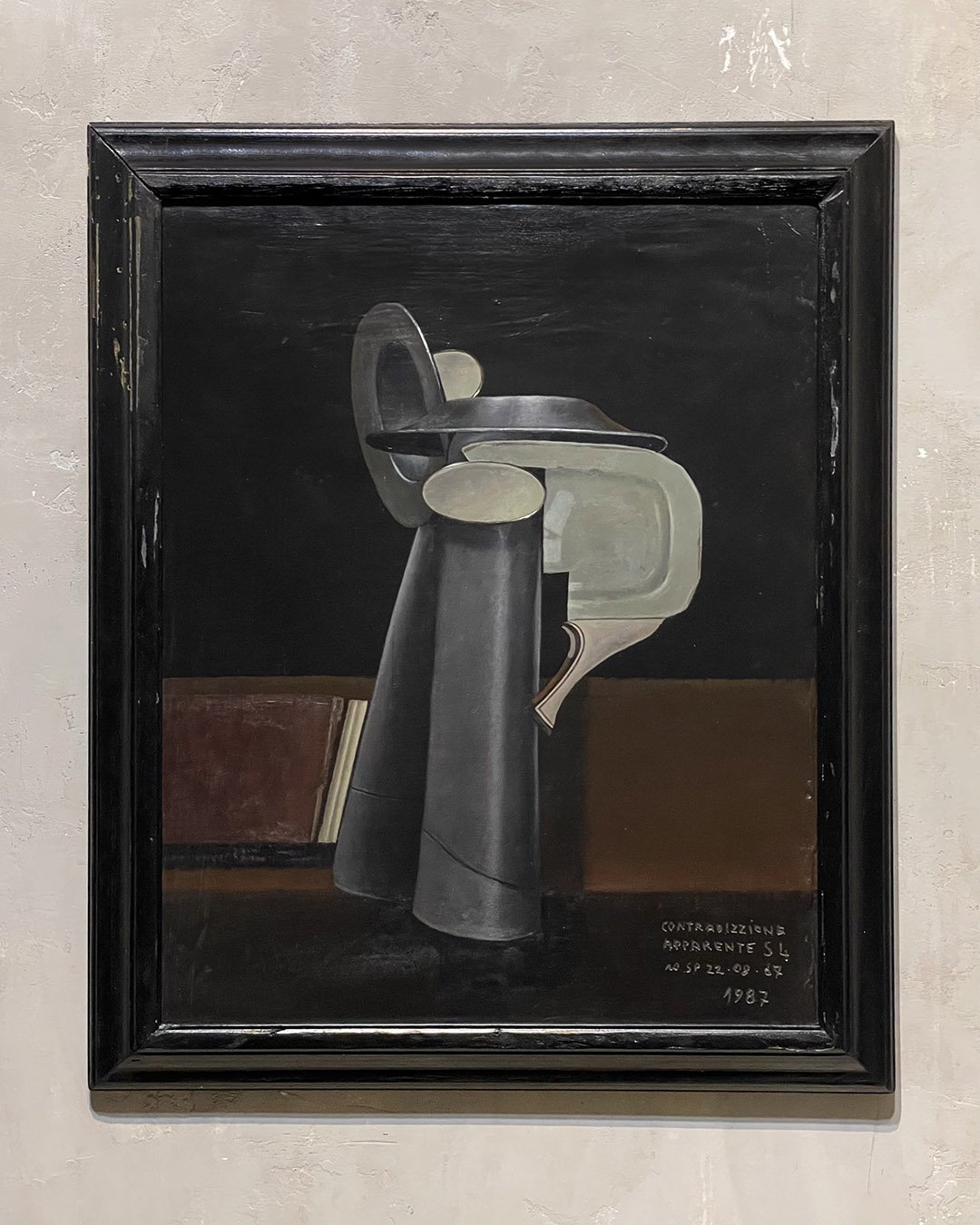
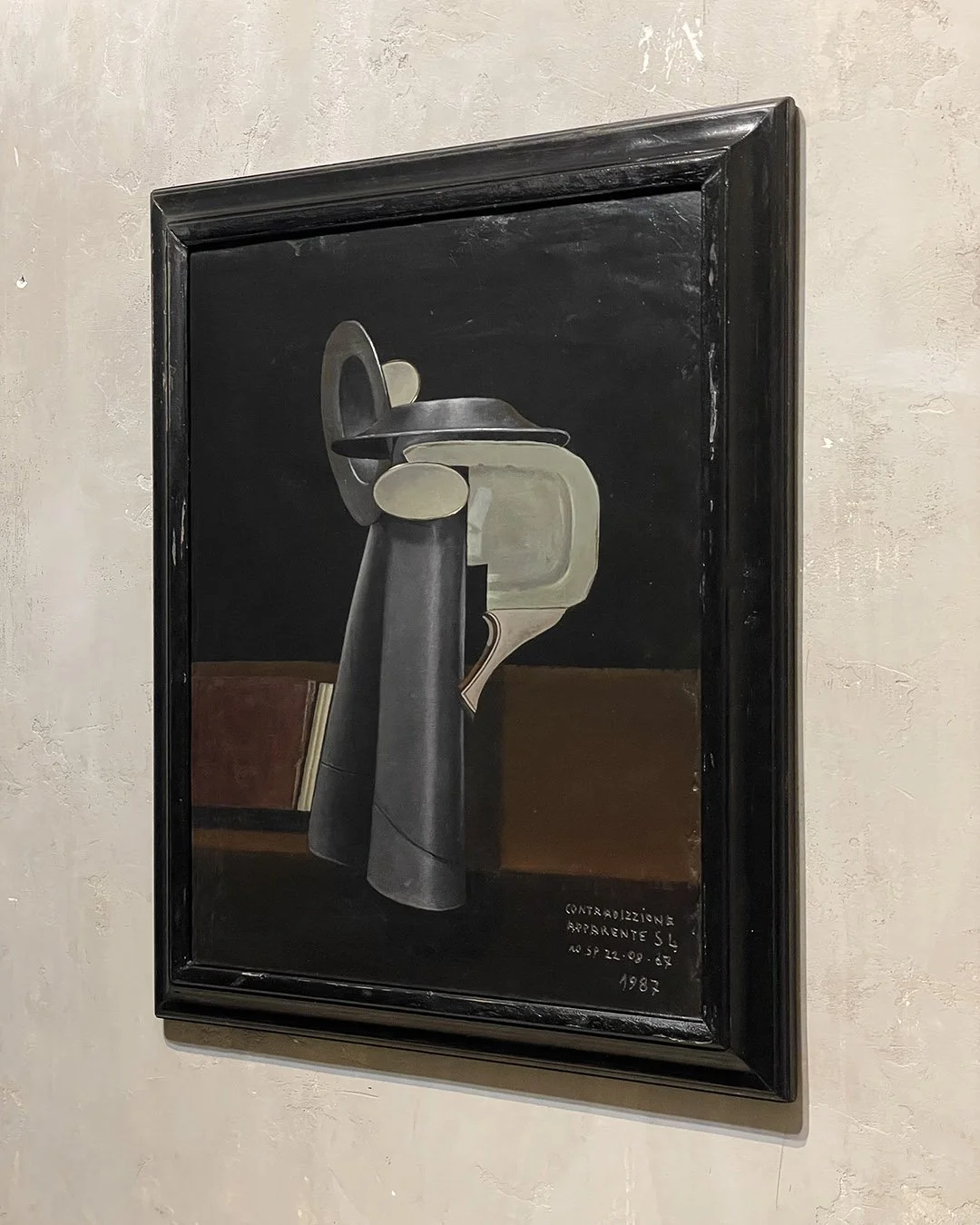
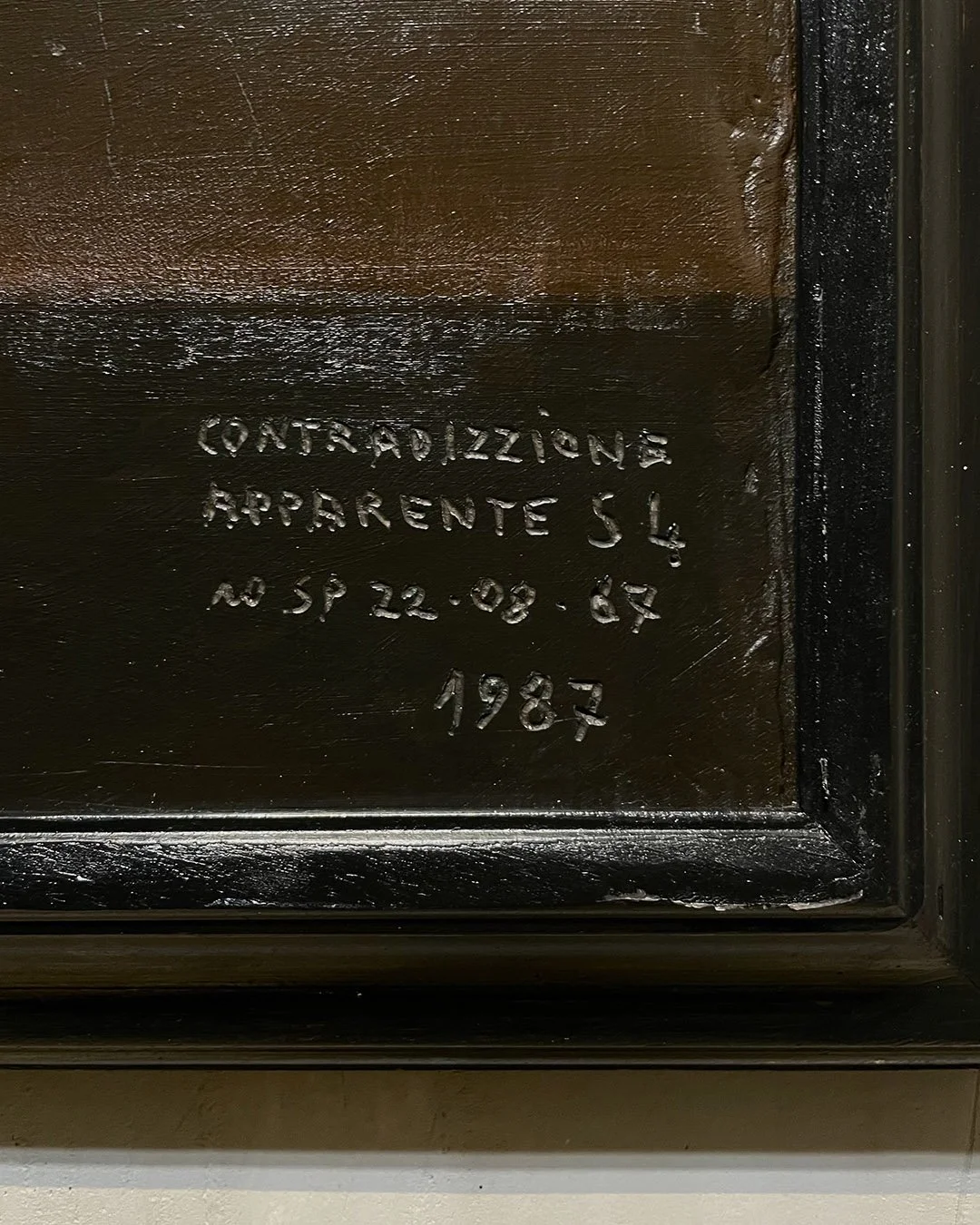
Apparent Contradiction S4. 1987©. 50x40 cm, tempera on wood.

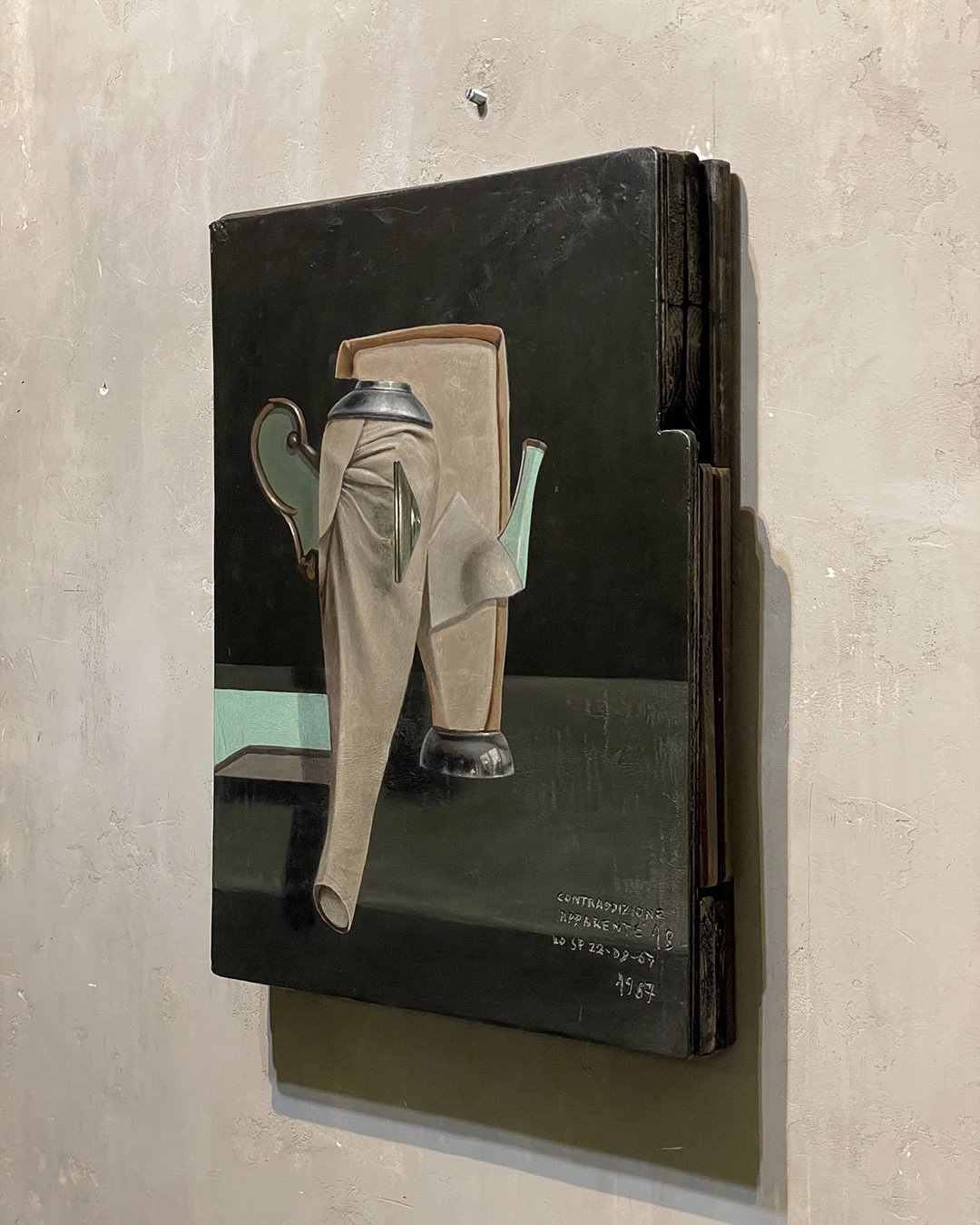
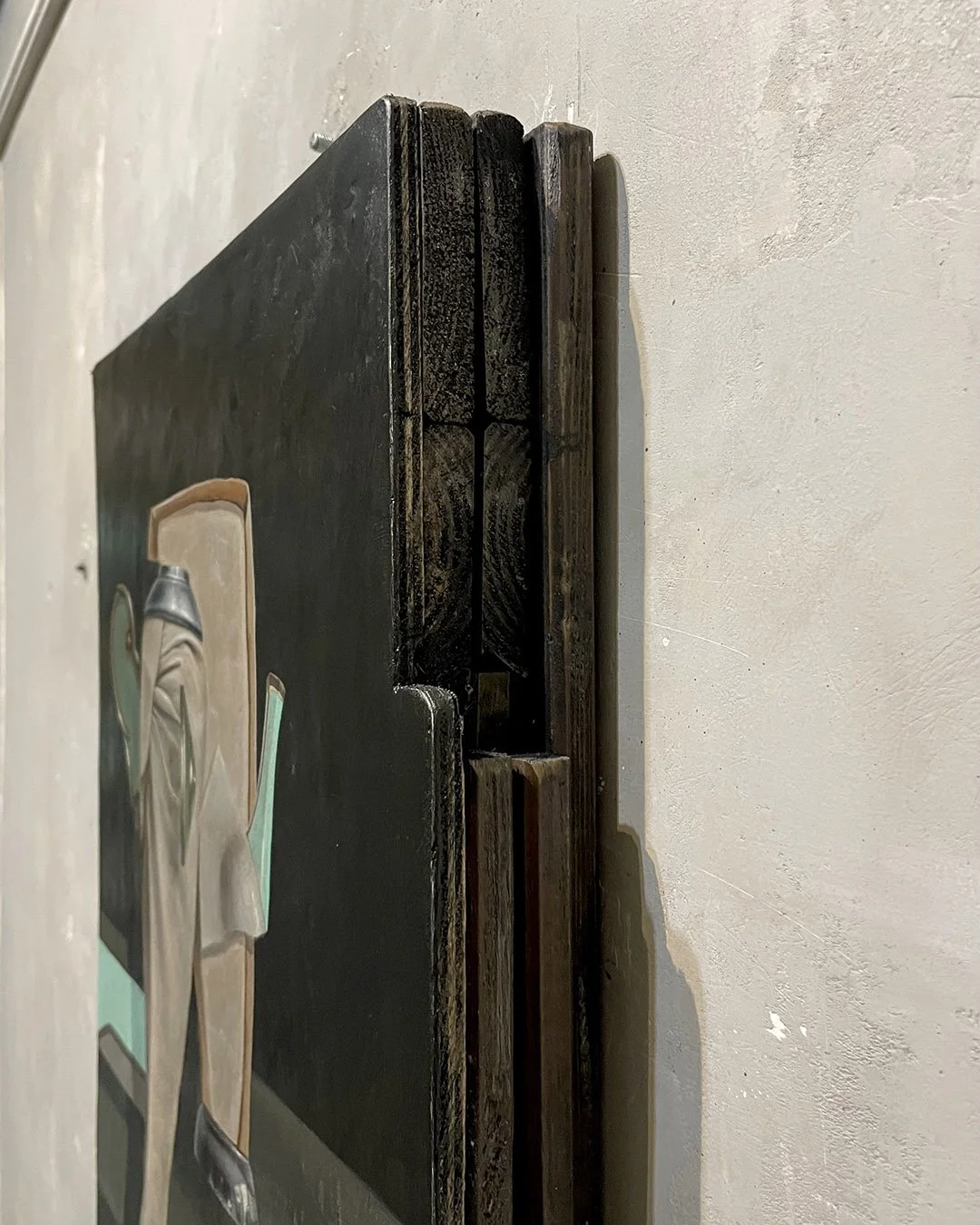
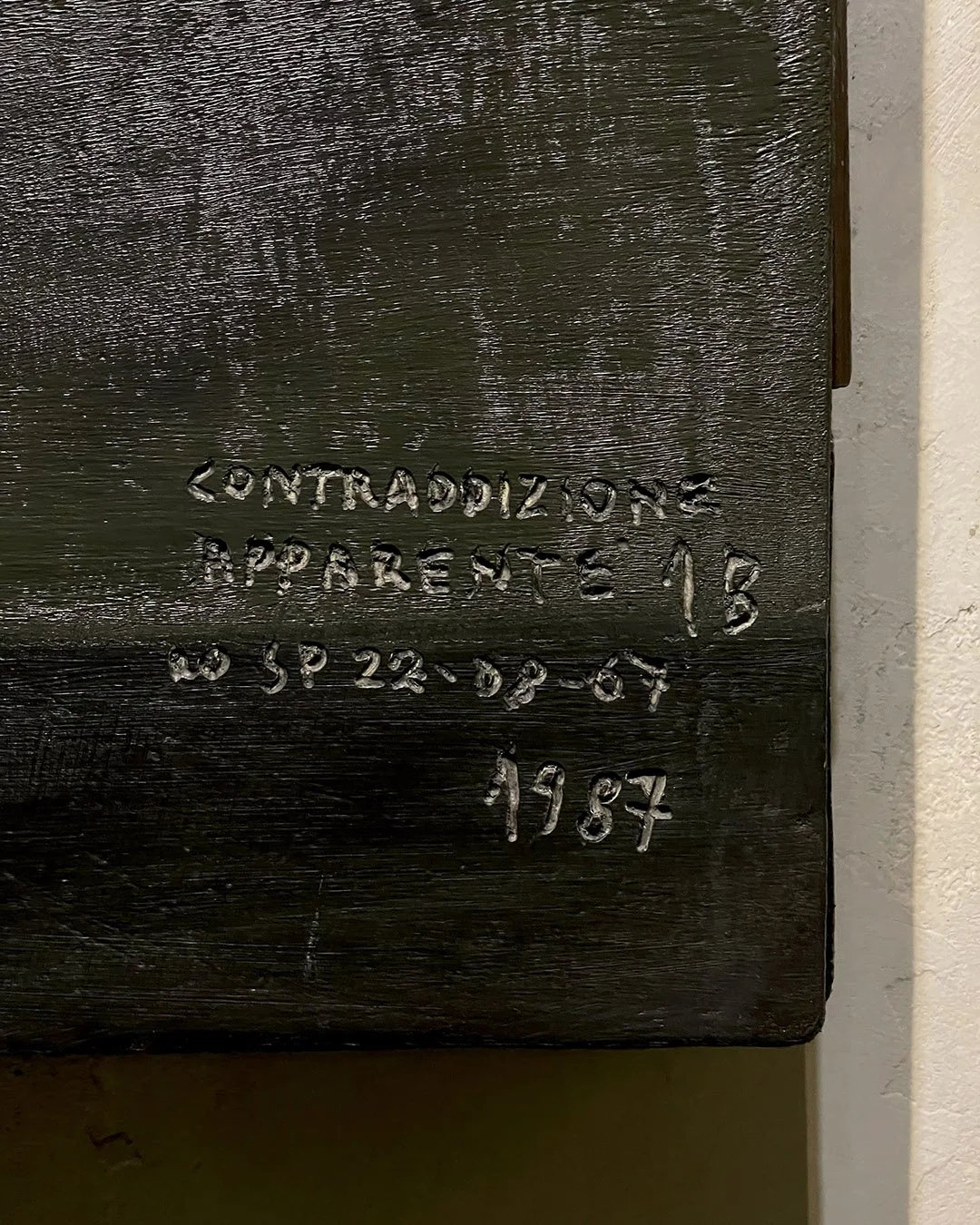
Apparent Contradiction 1b. 1987©. 50x40 cm, tempera on wood.


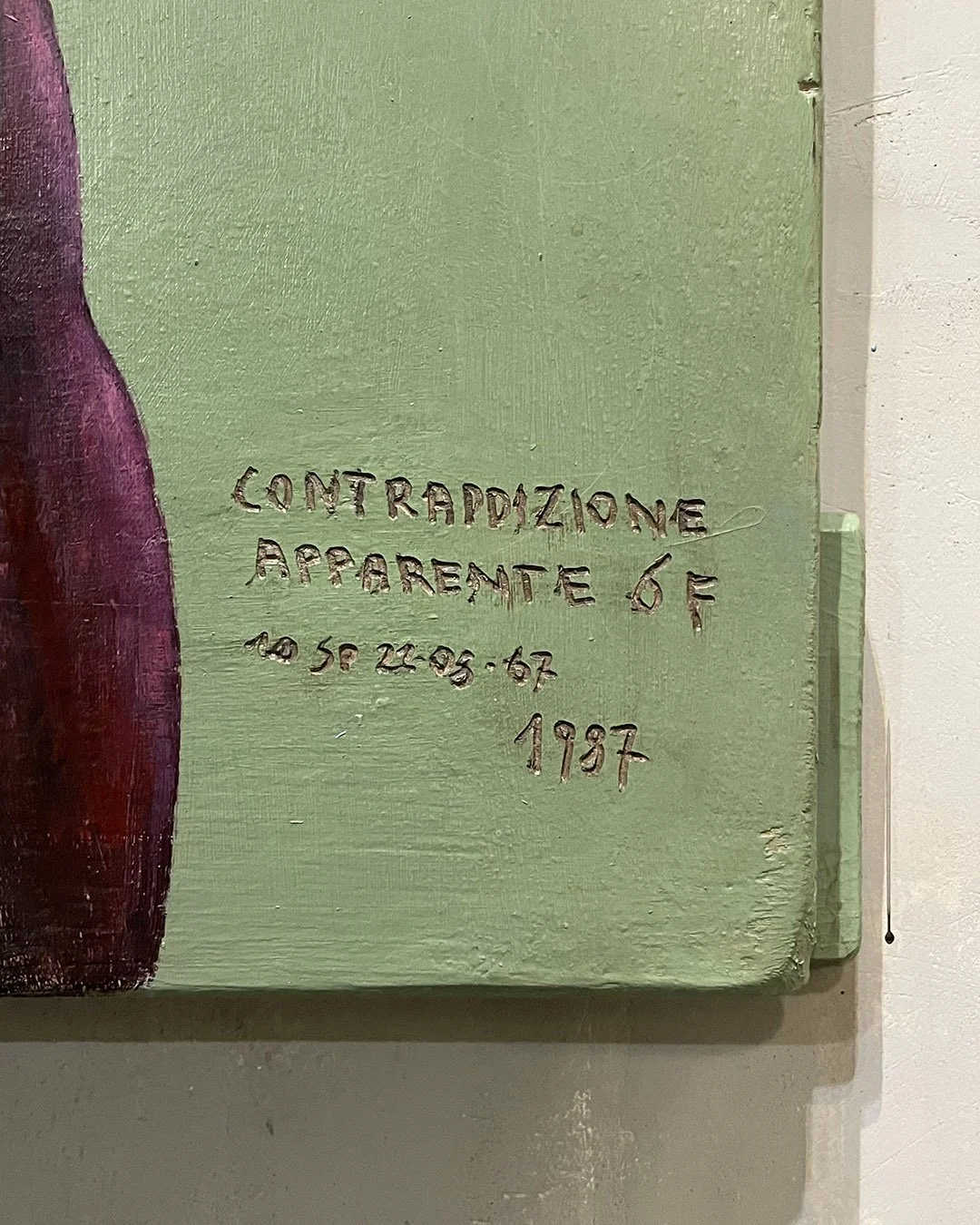
Apparent Contradiction 6F. 1987©. Tempera on wood, 83x56 cm.


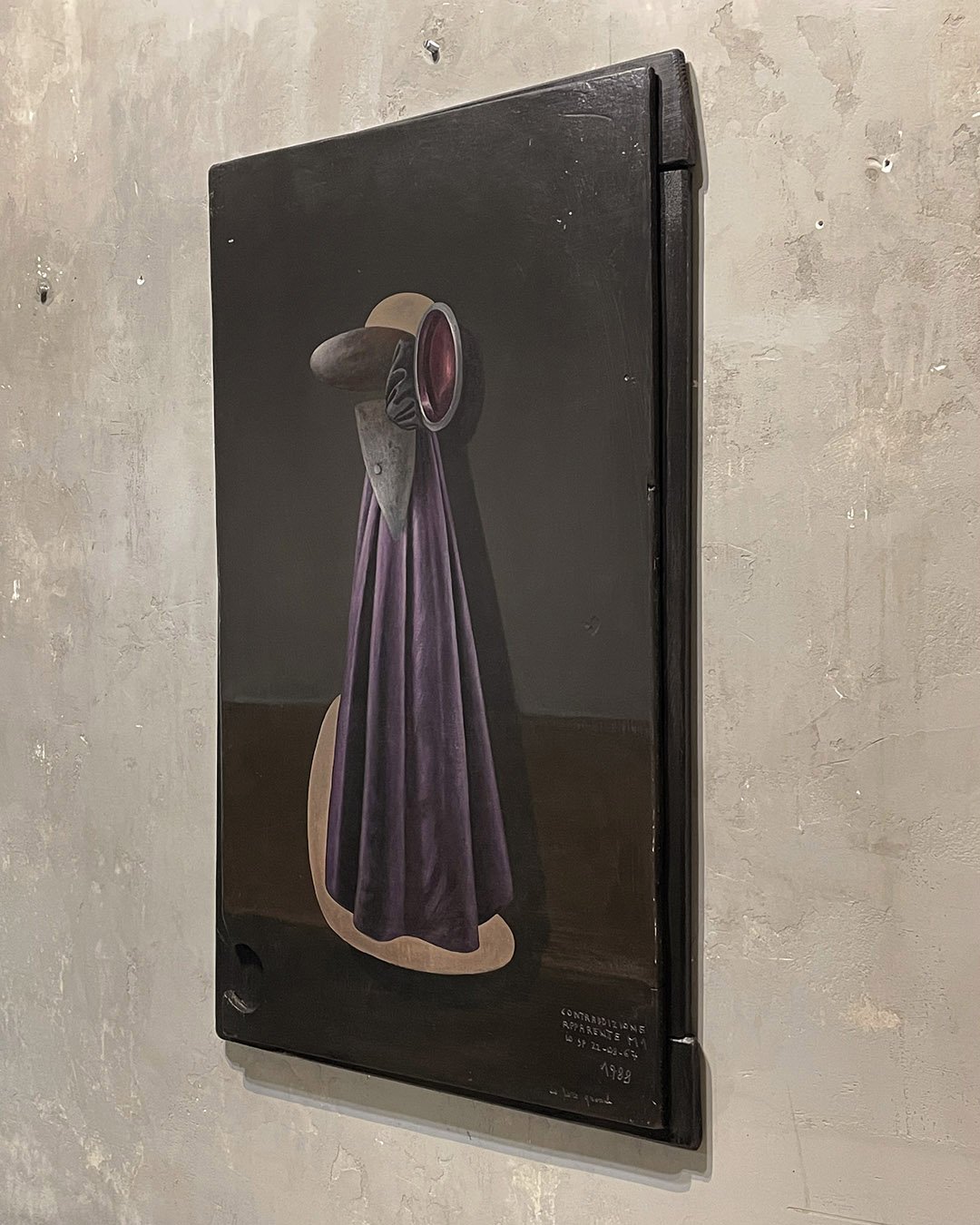


Apparent contradiction M1. 1988©. Cm 84x50, tempera on wood.
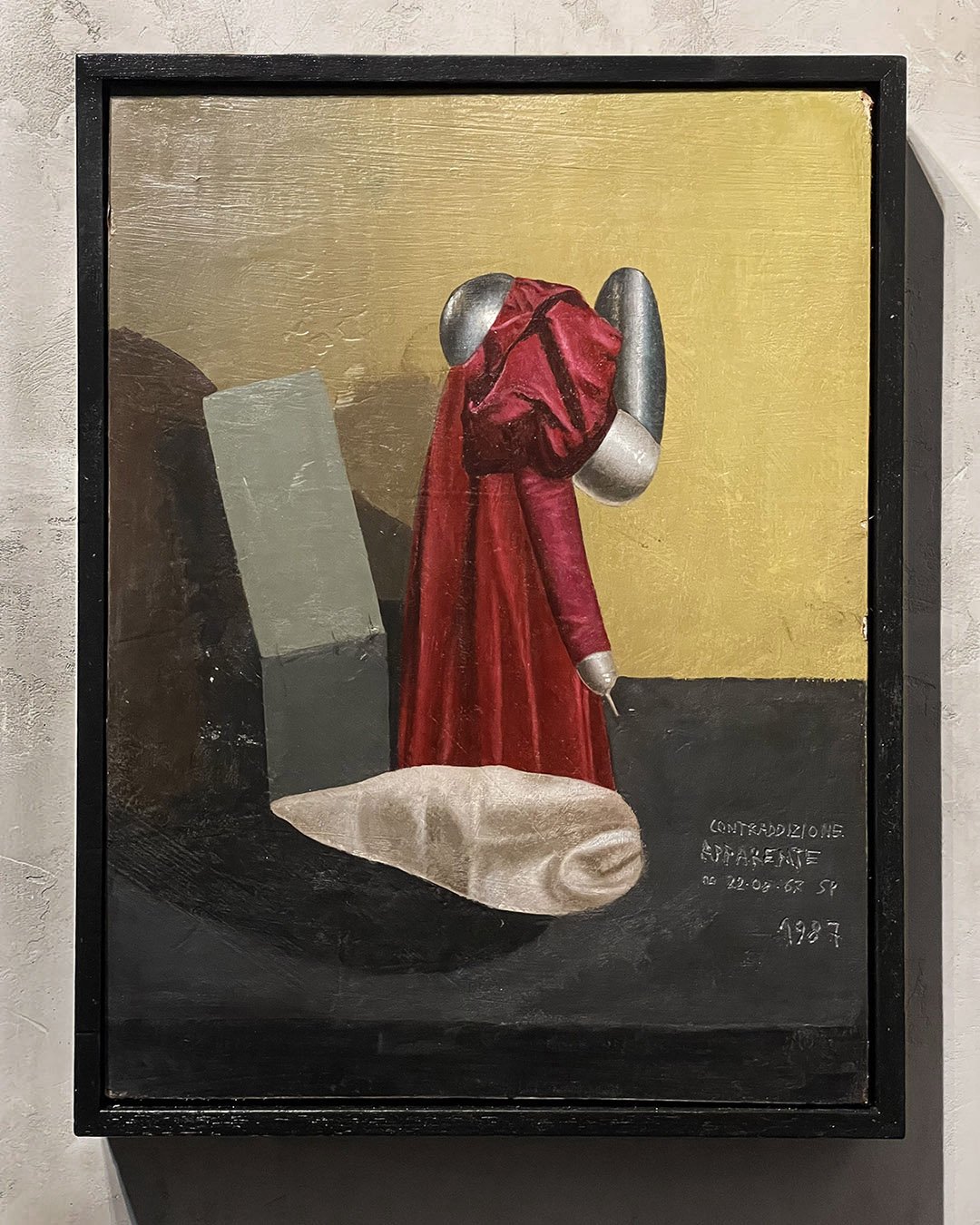
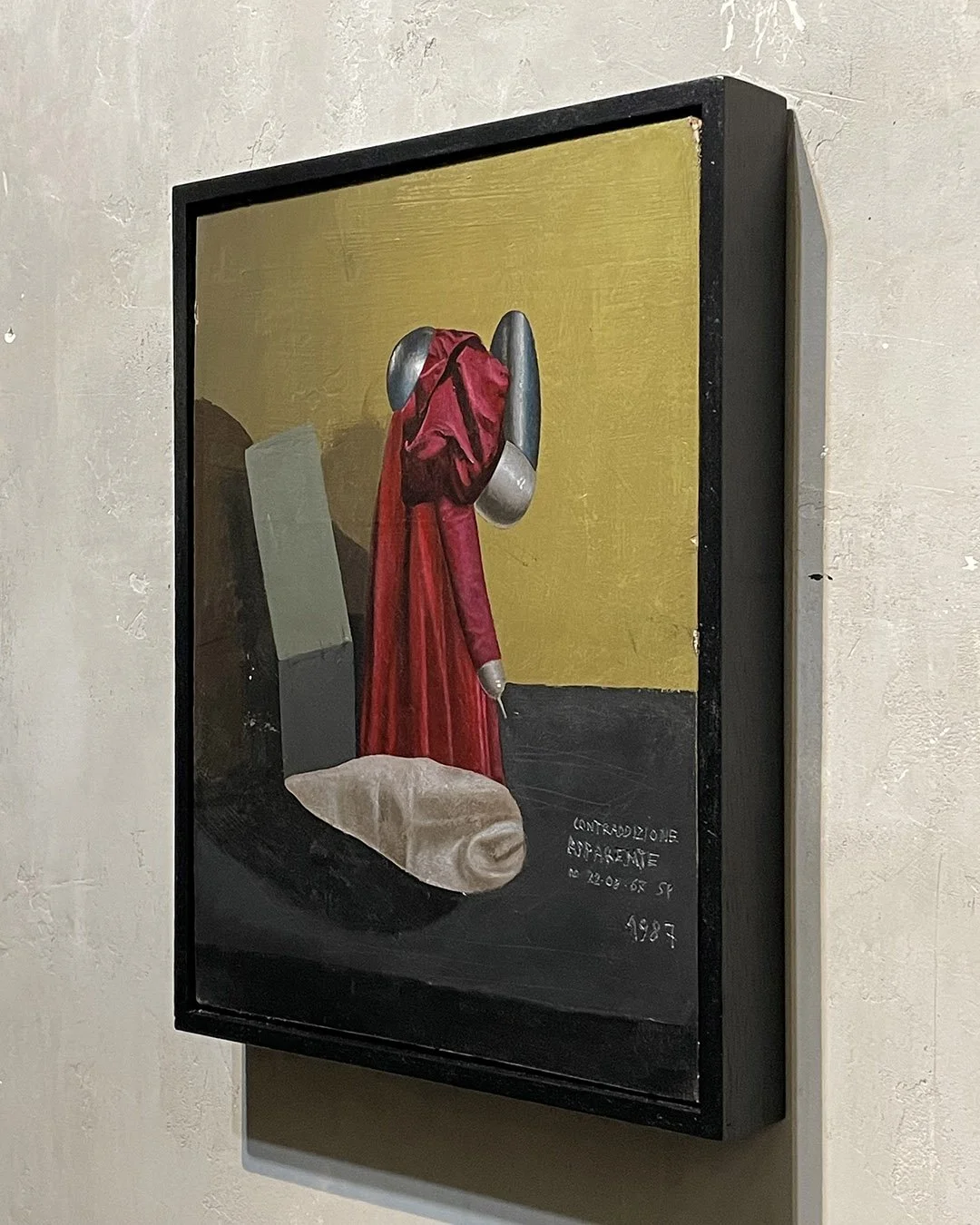
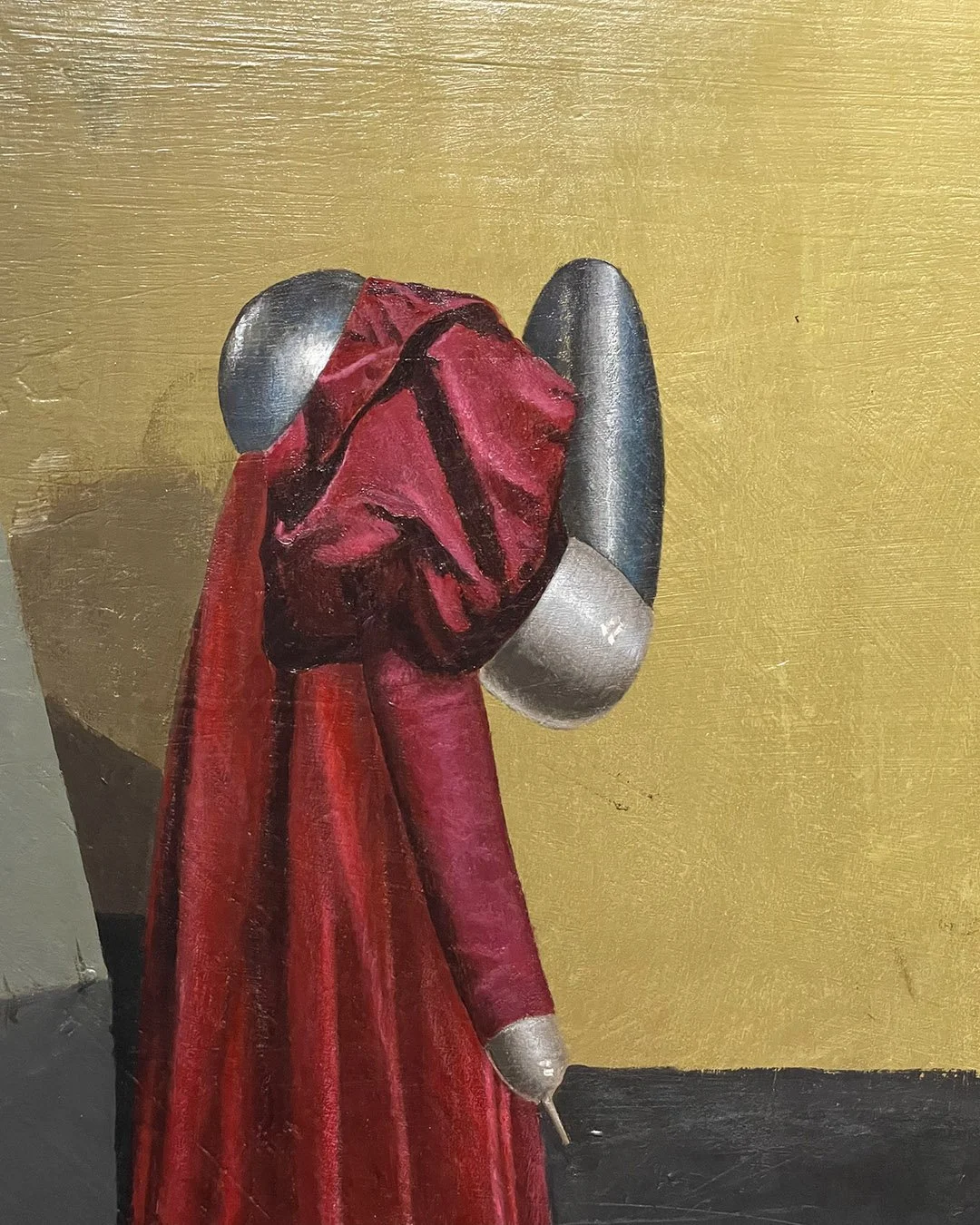
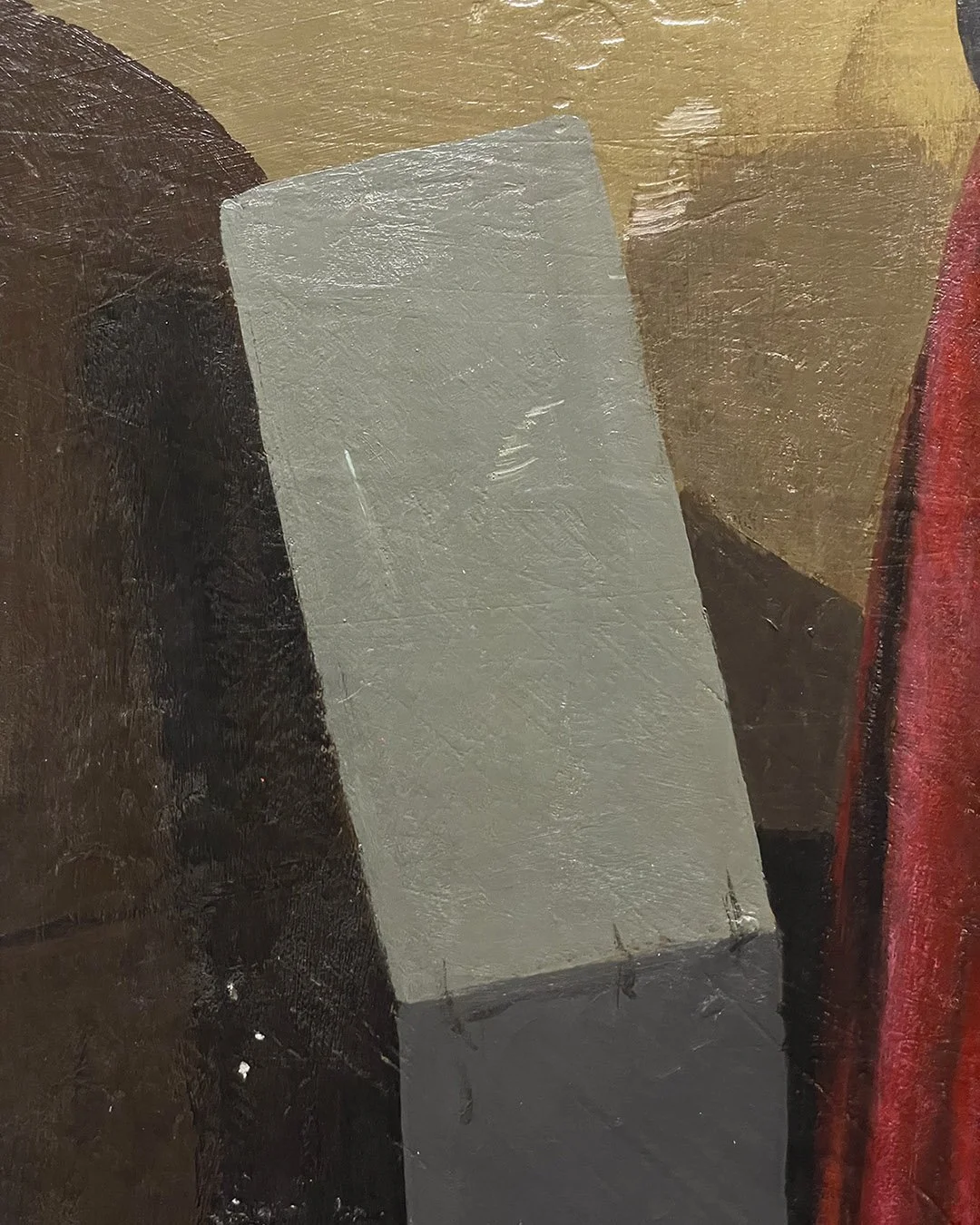
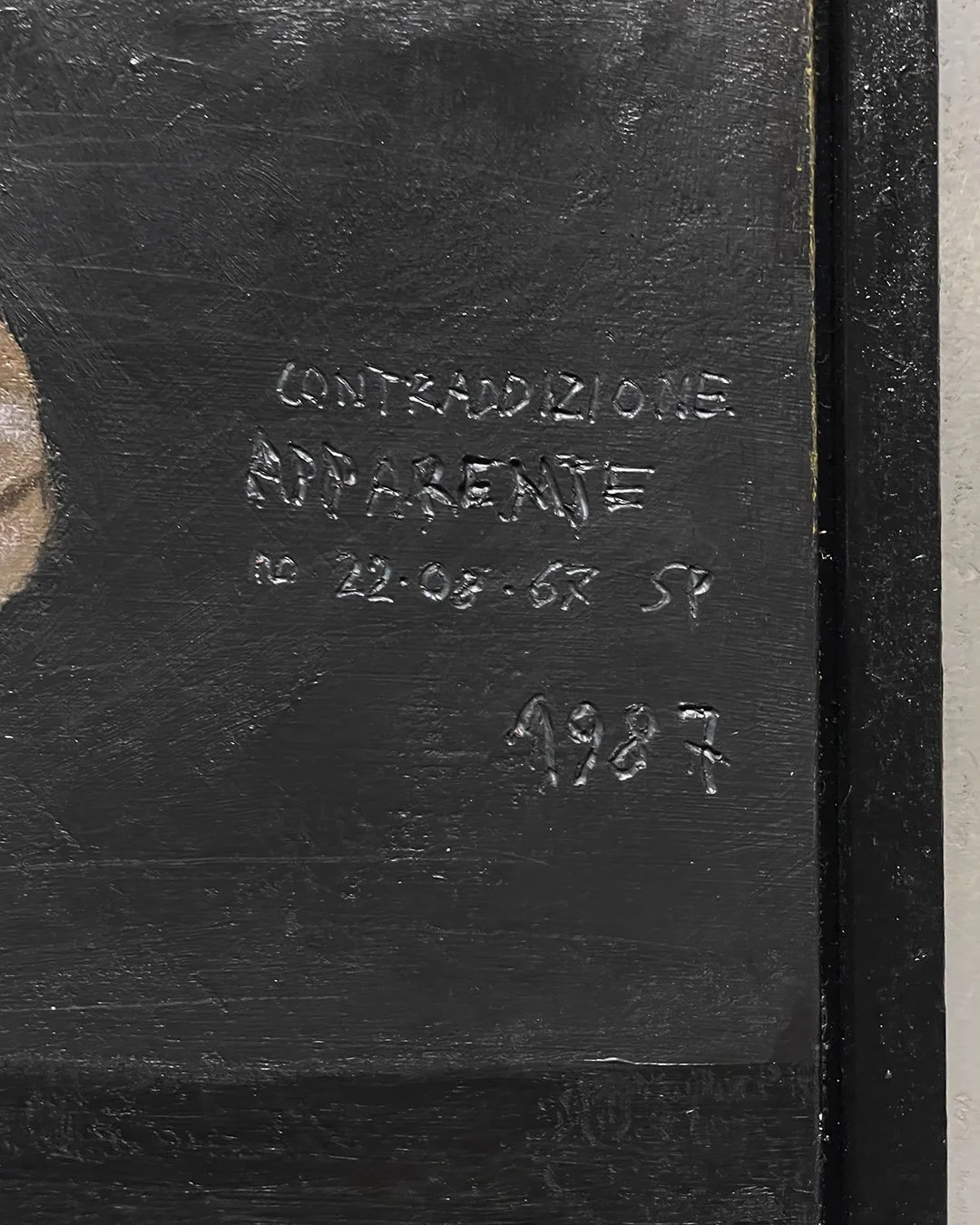
Apparent contradiction 2f. 1987©. Cm 40x30, tempera on wood.
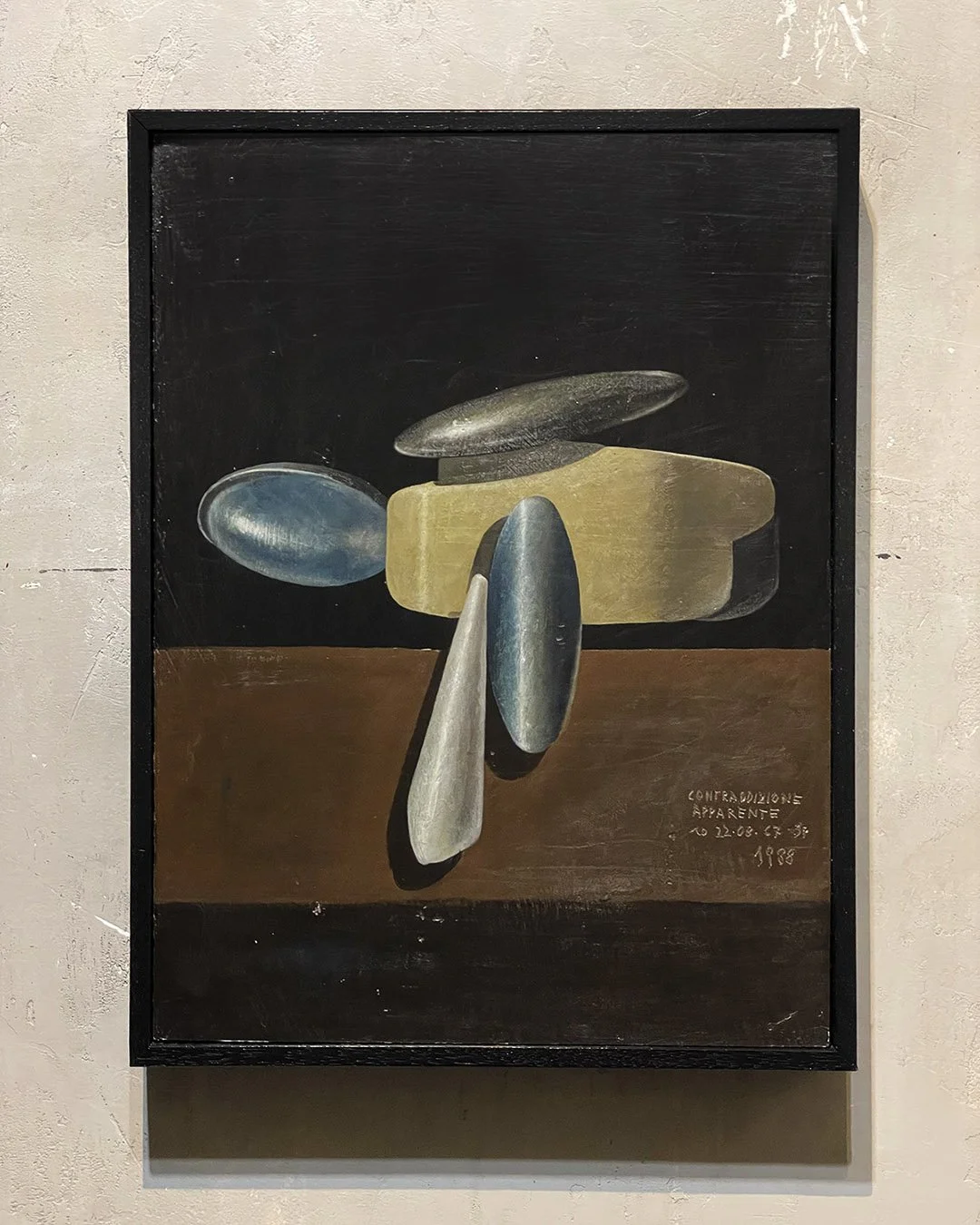
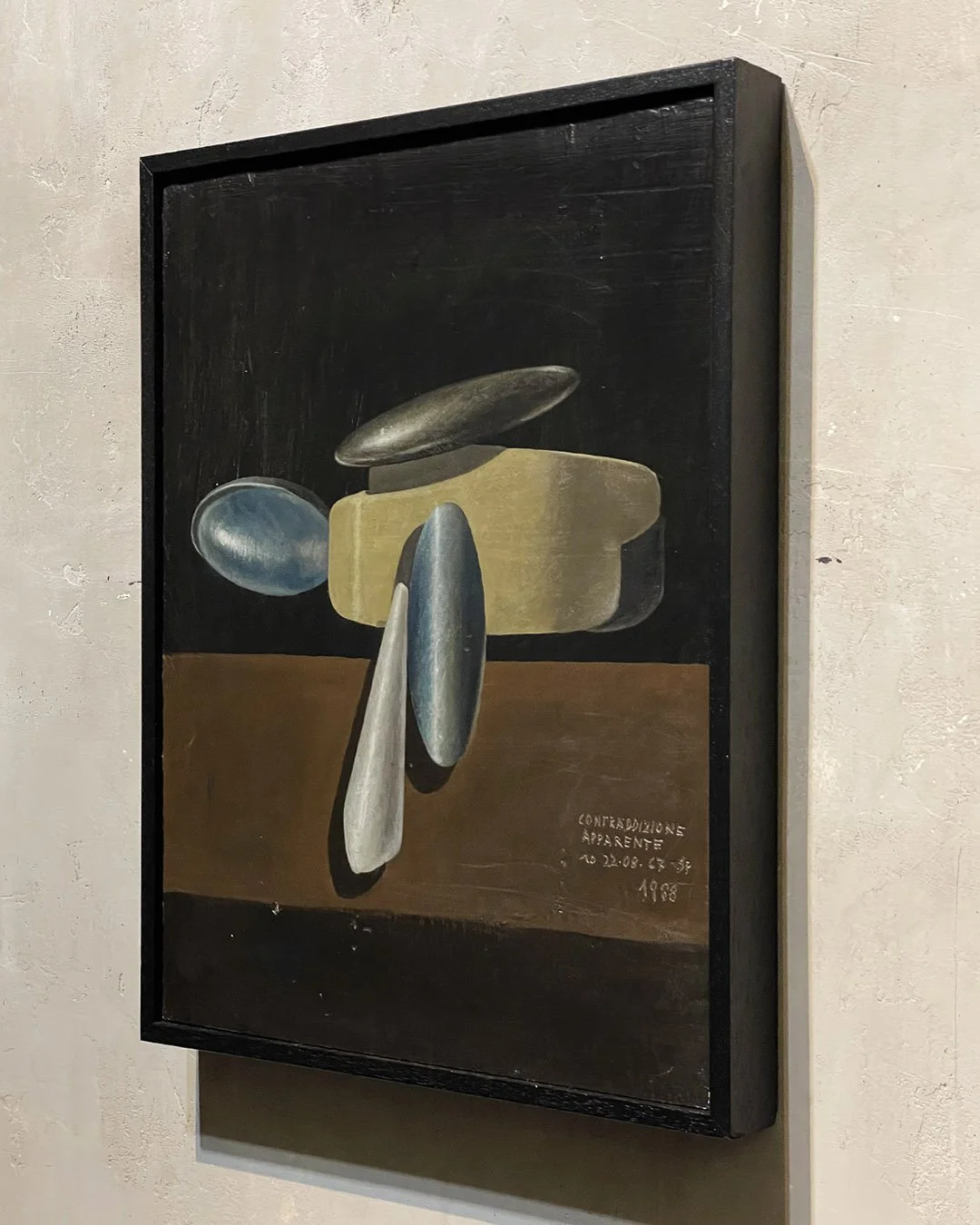
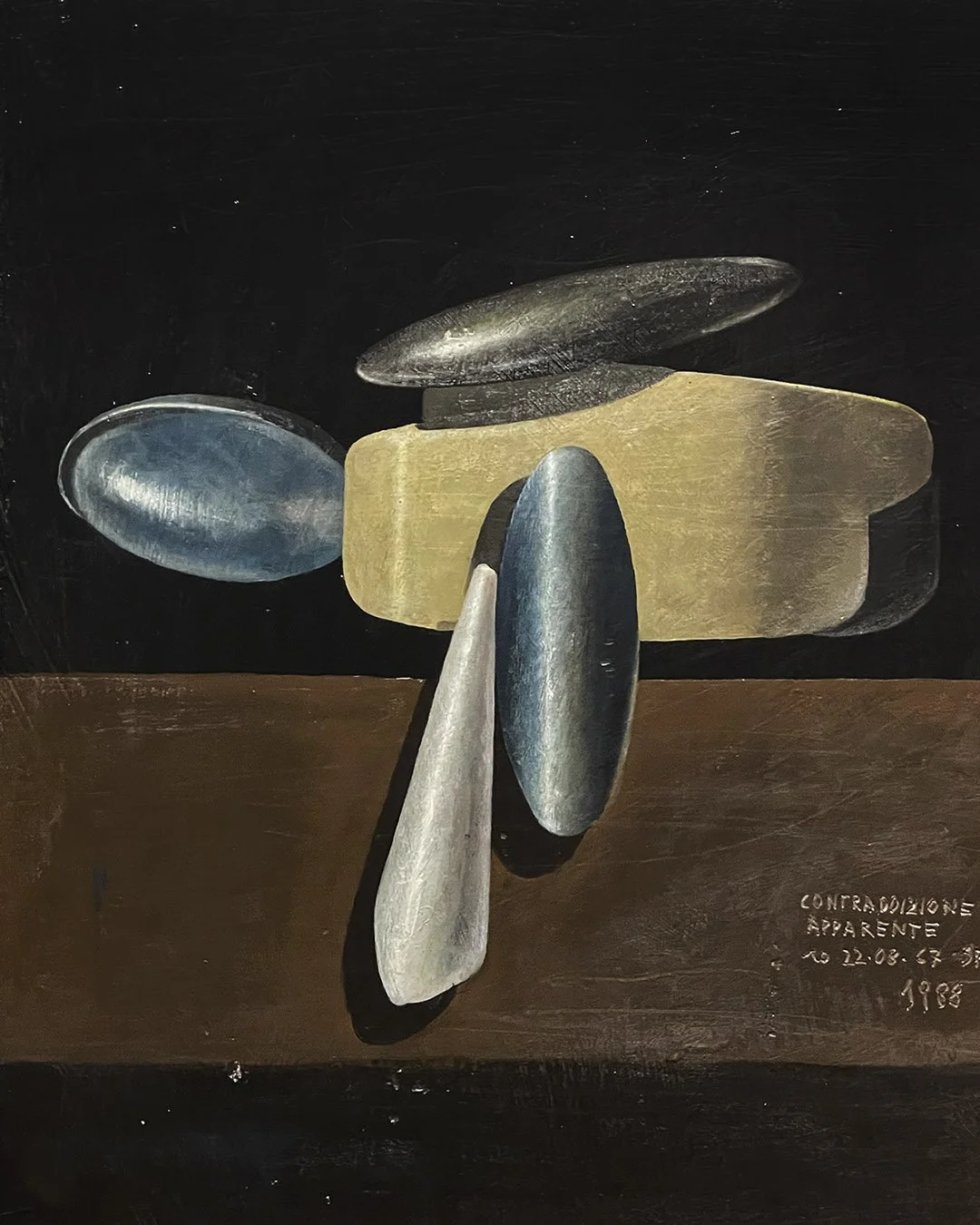
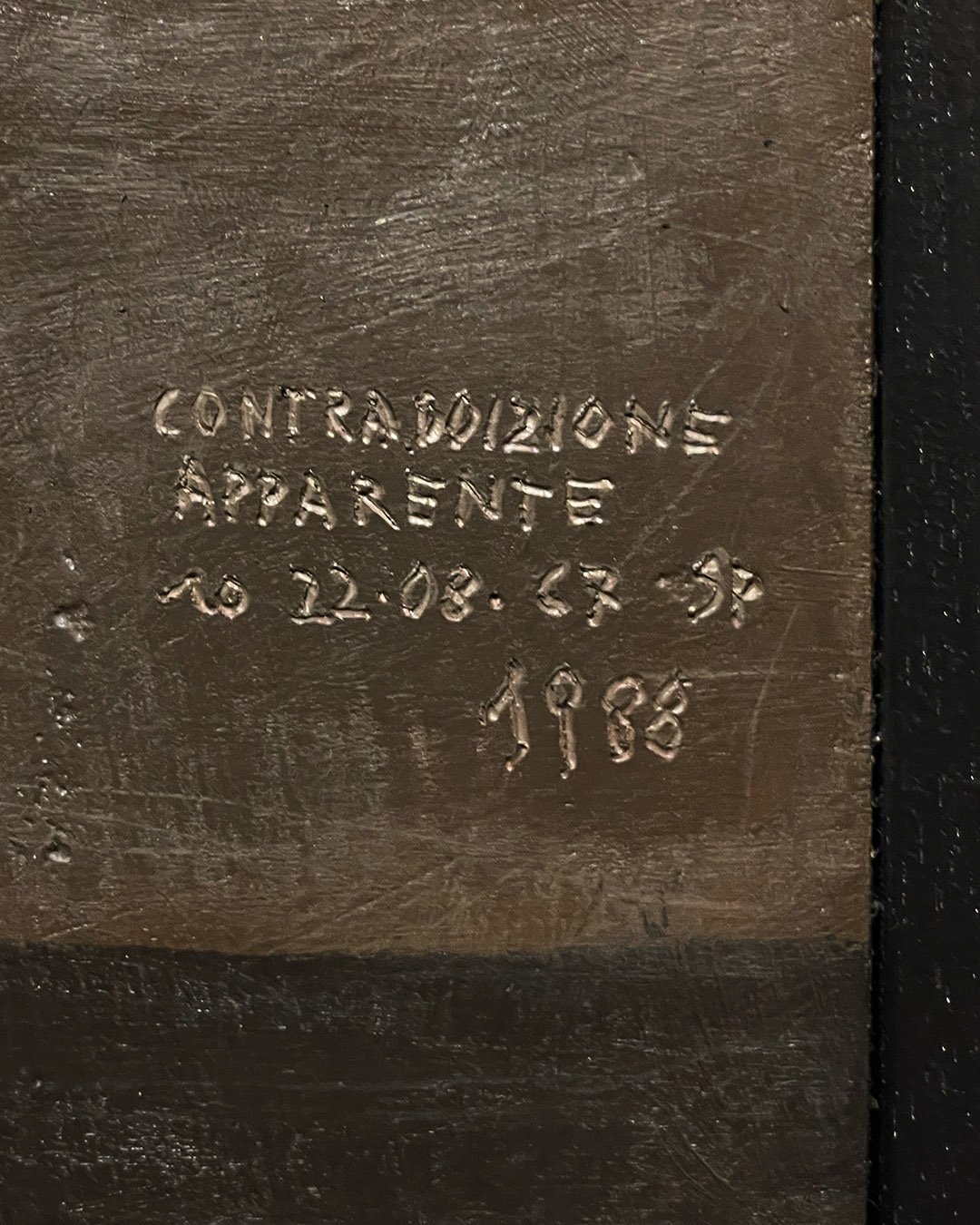
Apparent contradiction 4L. 1988©. Cm 40x30, tempera on wood.
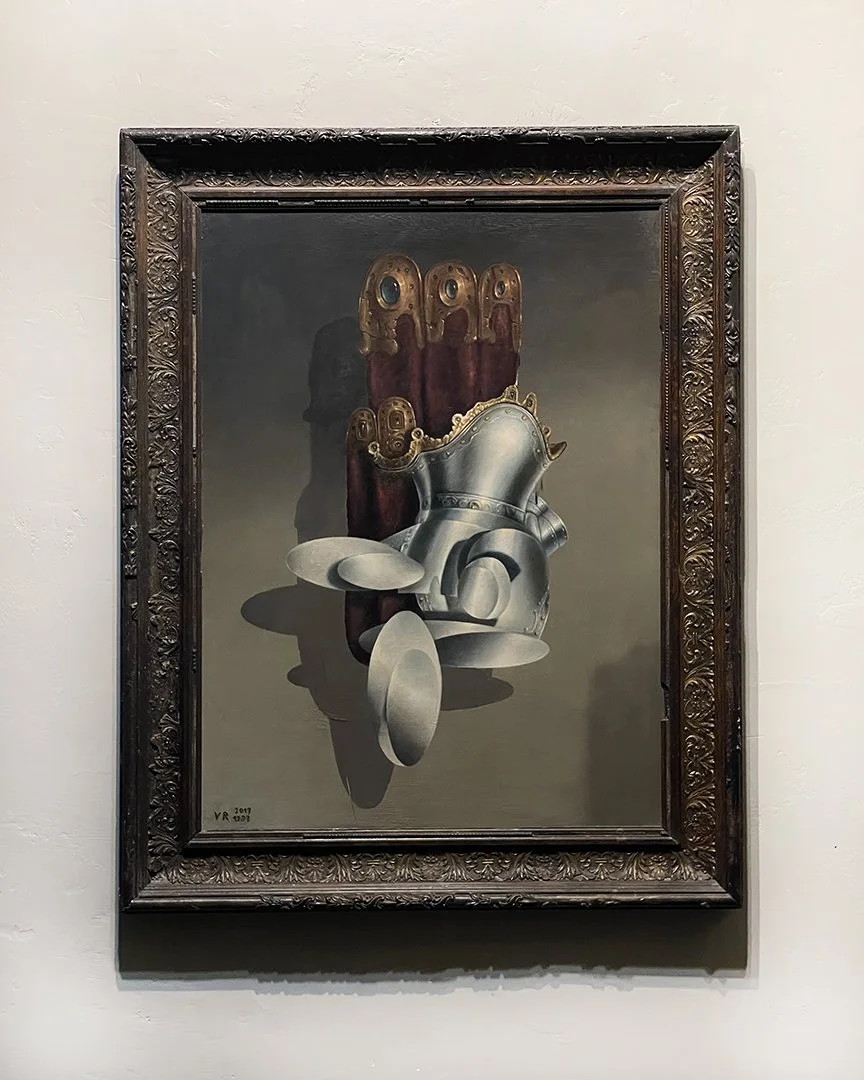
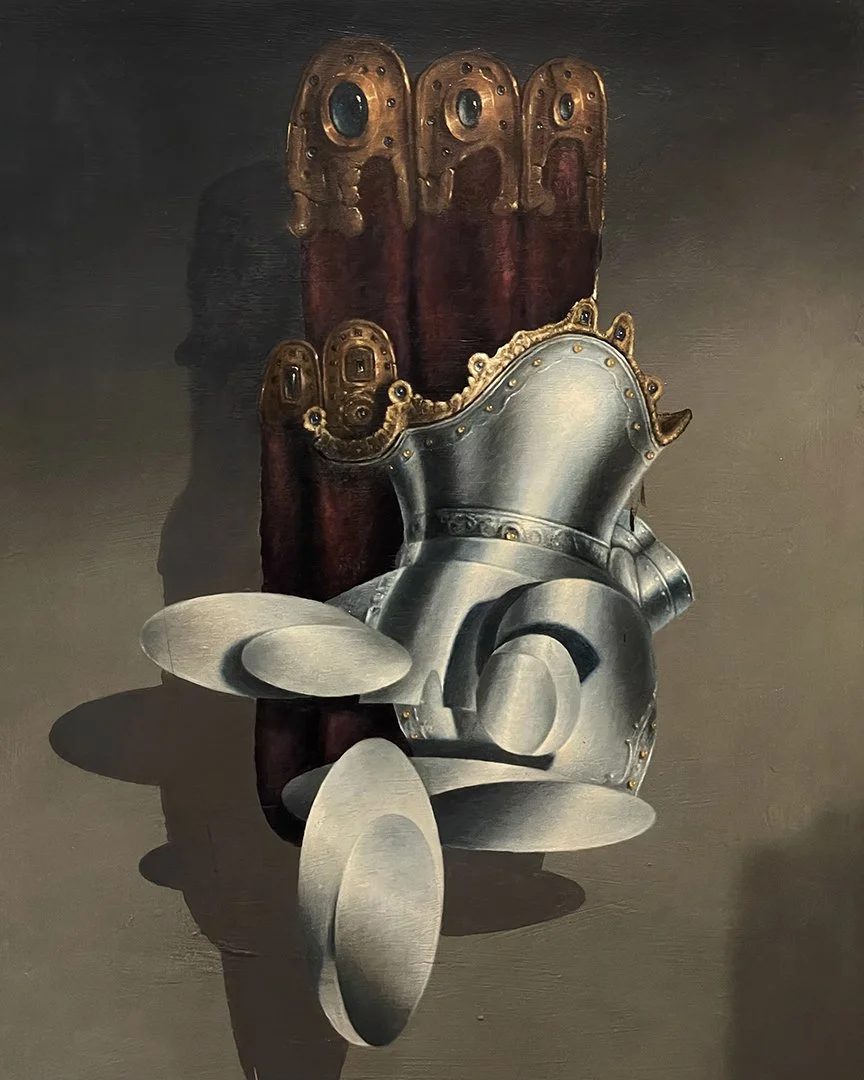
Aporia 9h. 1987–2019©. 80×60 cm, acrylic on aluminum.
Privacy Policy Image Licensing
All rights reserved Virgilio Rospigliosi 2023© Design by Lux Aeterna Multimedia