
Psychic Visual Archetypes: A Research Path between the Unconscious and Artistic Creation (1987)
Methodological Premise
This study documents an artistic research path begun in the 1980s, employing sensory deprivation techniques as a tool for investigating the deep structures of visual perception. The intent is not celebratory but analytical: to understand how sensory isolation can act as a catalyst for the emergence of psychic material otherwise inaccessible to ordinary consciousness. The starting point was the discovery of experiments conducted by the American neuroscientist John Lilly with the sensory deprivation tank. Lilly had demonstrated that the programmed absence of external stimuli produces a shift in perception toward internal dimensions of the psyche, making normally submerged contents observable. The artist, together with two collaborators, decided to build a rudimentary yet functional isolation tank to personally test these dynamics. The declared aim was neither therapeutic nor recreational, but cognitive: to explore atypical perceptual territories and to verify whether the induced visions could be traced back to and integrated within the "real world" of artistic production. The essential goal was to minimize cultural filters and aesthetic conventions in order to approach what may be called a "state of purity in the creative process."
The visual material emerging from the deprivation sessions is organized according to a tripartite classification reflecting progressive degrees of conscious elaboration.
Room A: The Register of the Immediate
Here converge the forms perceived immediately after the sessions, when the boundary between internal and external experience is still blurred. This is raw material, devoid of recognizable symbolic references, hovering at the limits of intelligibility. Not images in the proper sense, but signals — perceptual traces preceding linguistic and conceptual categorization. Their fundamental characteristic is the absence of cultural mediation.
Room B: Selection and Observation
What in the first phase was pure signal now becomes an object of study. The material is sifted, compared, and correlated. A process of recognition begins: certain forms recur, others appear as variations on a common core. This phase corresponds to what, in the psychology of perception, would be called “categorization”: the transition from undifferentiated flow to identified form. There is no intervention on an executive level; one merely observes and annotates.
Room C: Objectification
In the third room, the selected material is translated into a completed work. Here, memory becomes decisive: the recollection of forms perceived in the tank must remain clear enough to guide the hand, yet not so rigid as to hinder adaptation to the expressive medium. Objectification is not a simple transcription but a transformation: the subjective experience becomes a communicable artifact, intuition crystallizes into form.
Theoretical Issues
This method raises questions that go beyond individual artistic practice. By eliminating external inputs, sensory deprivation forces consciousness to confront its own autonomous productions. These productions are not arbitrary: they follow perceptual logics that can be studied. Freud identified in dreamwork specific mechanisms of condensation and displacement — processes through which unconscious material manifests while bypassing censorship. Sensory deprivation operates in an analogous but more radical way: it temporarily suspends the reality principle without waiting for sleep. The central problem then becomes that of translatability. There exist perceptual states that precede language and culture, yet their passage into artistic form necessarily alters them. The tripartite classification of the rooms reflects an acknowledgment of this inevitable mediation: from pure perception to communicable form, there is a process of selection and adaptation involving memory, technical skill, and aesthetic choice.
The artisanal construction of the tank, lacking standardized scientific controls, introduces variables that academic research would consider problematic. But this limit becomes a resource on the artistic plane: it allows experimentation free from rigid protocols, focused more on the quality of the experience than its statistical replicability. The thirty-year duration of the project is a significant factor. It is not an isolated experiment but a sustained practice that has produced an extensive corpus of materials. This temporal accumulation allows for the identification of recurrences, for the comparison of distant sessions, and for verifying whether certain forms reappear after years. The persistence of certain visual patterns over decades of work suggests that sensory deprivation does not produce random results but taps into stable layers of perceptual experience.
Toward a Phenomenology of Form
The psychic visual archetypes documented in this research represent primary forms of perception — structures emerging when consciousness confronts itself in the absence of external stimuli. They are neither cultural symbols nor learned aesthetic conventions, but configurations preceding the distinction between subject and object. Their objectification through painting, sculpture, installation, or video does not necessarily betray this primary nature: it fixes it into a stable form that enables observation and comparison. The distinction among the three rooms corresponds to actual stages of the cognitive process. In the first, the experience is immediate and indecipherable; in the second, it is recognized as significant material; in the third, it transforms into an autonomous object, separated from the experience that generated it. This movement from lived experience to objectification constitutes the theoretical core of the method: it demonstrates that the unconscious is not a formless chaos but a structured reality, accessible through specific techniques and translatable into communicable forms. Each deprivation session can reveal new configurations or variations of already known forms. The progressive accumulation of material constructs an increasingly detailed map of this inner landscape — a cartography of perception in its nascent state.
V R


Anatomical Study 3. (Visual Psychic Archetypes) 1998–2011©. Pastel, acrylic and marker on cardboard, analogue photography, resin, 40×50 cm.


Anatomical Study 2. (Visual Psychic Archetypes) 1998–2011©. Pastel, acrylic and marker on cardboard, analogue photography, resin, 40×50 cm.


Anatomical Study 1. (Visual Psychic Archetypes) 1998–2011©. Pastel, acrylic and marker on cardboard, analogue photography, resin, 50x40 cm.
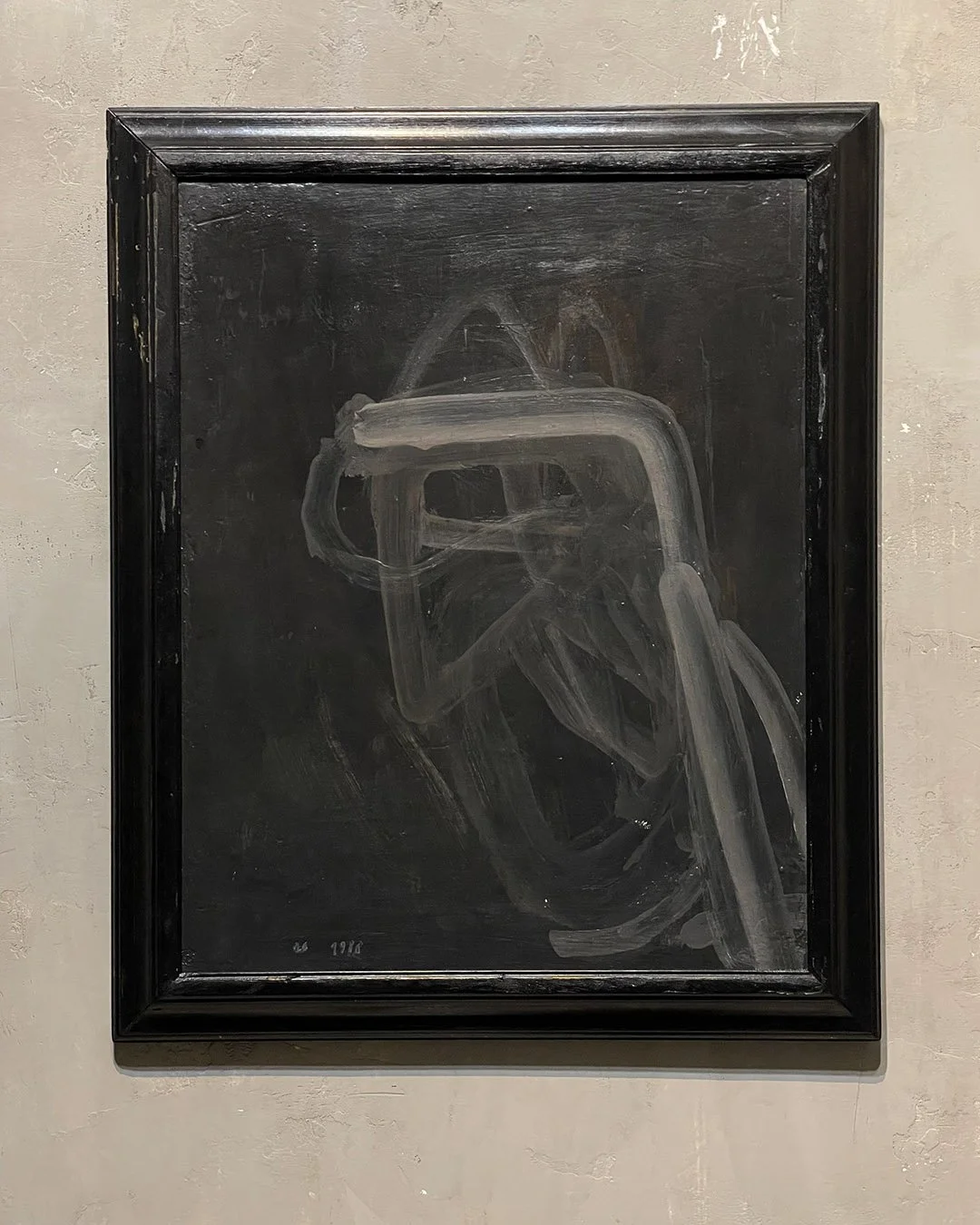

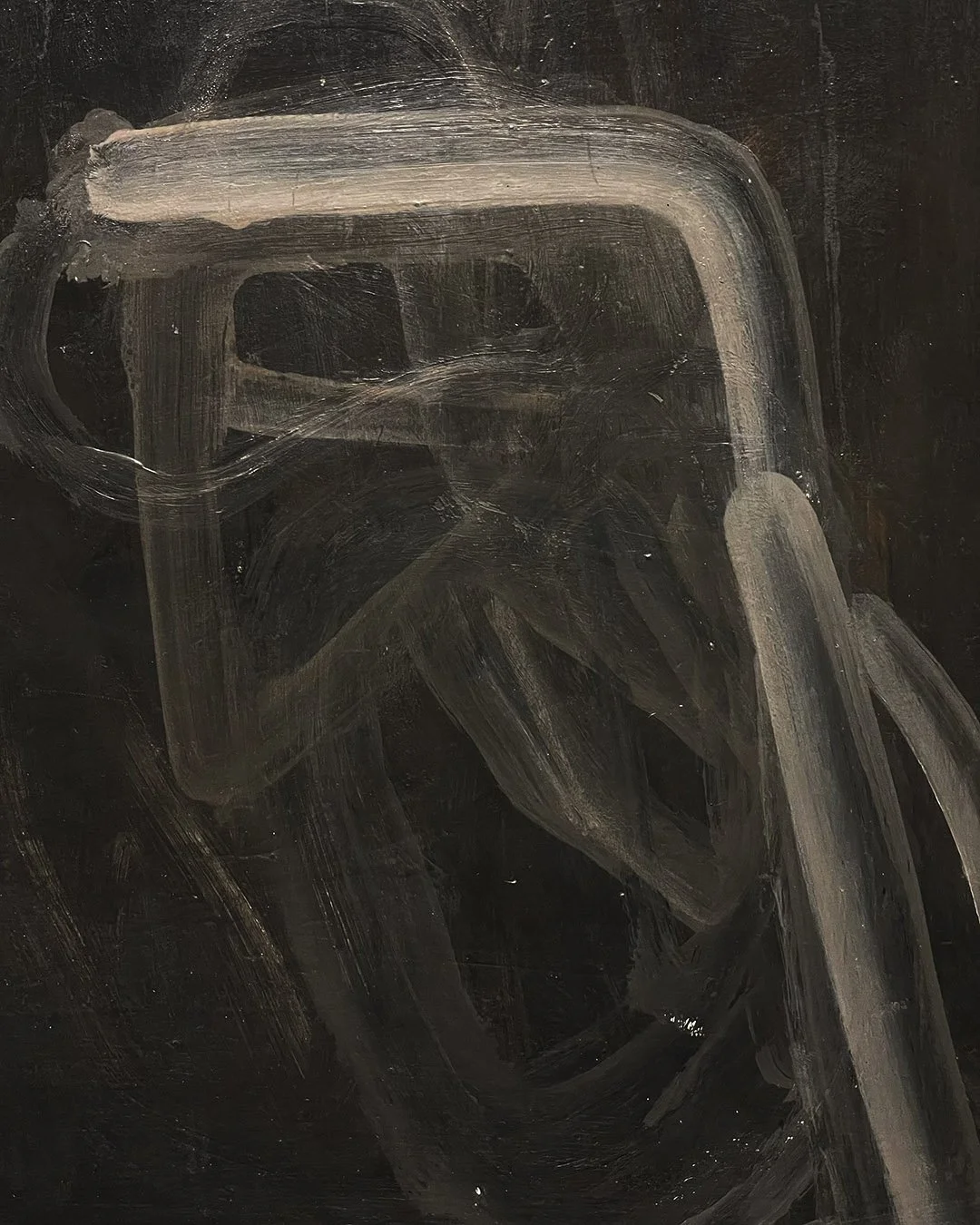

Man from an earlier period thinking of something that does not yet exist. (Psychic Visual Archetypes) 1988©. Tempera on wood, 50x40 cm.

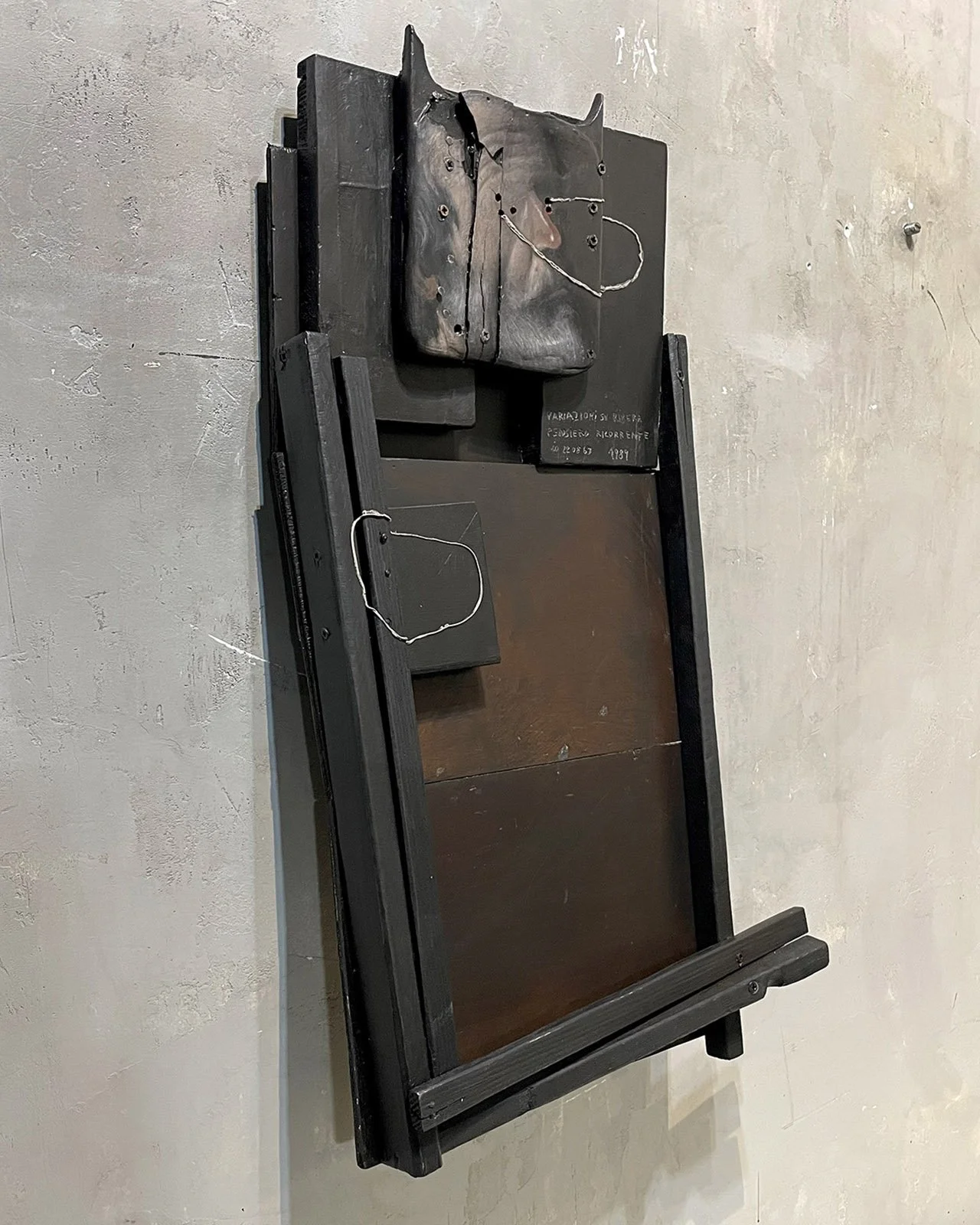


Variations on Ribera. (Visual Psychic Archetypes) 1989©. Tempera on wood, 65x40 cm.


Variations on Saint Sebastian by Jusepe de Ribera. (Visual Psychic Archetypes) 1988©. Tempera on wood, cotton thread, photography, cm 60x30.


Profession of Faith (Doubt is faith). (Visual Psychic Archetypes) 1989©. 60x35 cm, tempera on wood, paper.


Untitled 1 (Visual Psychic Archetypes). 1986©. 30x20 cm, tempera on canvas.


Snow in a state of entropy (Visual Psychic Archetypes). 1985©. Cm 120x75, tempera and enamel on wood.


Study for a Sleeping Man (Visual Psychic Archetypes). 1995©. Cm 125x70, acrylic and wax on wood.


The past predicts the future (Psychic Visual Archetypes). 1992©. Cm 48x28x30, acrylic on board, wood, iron wire.


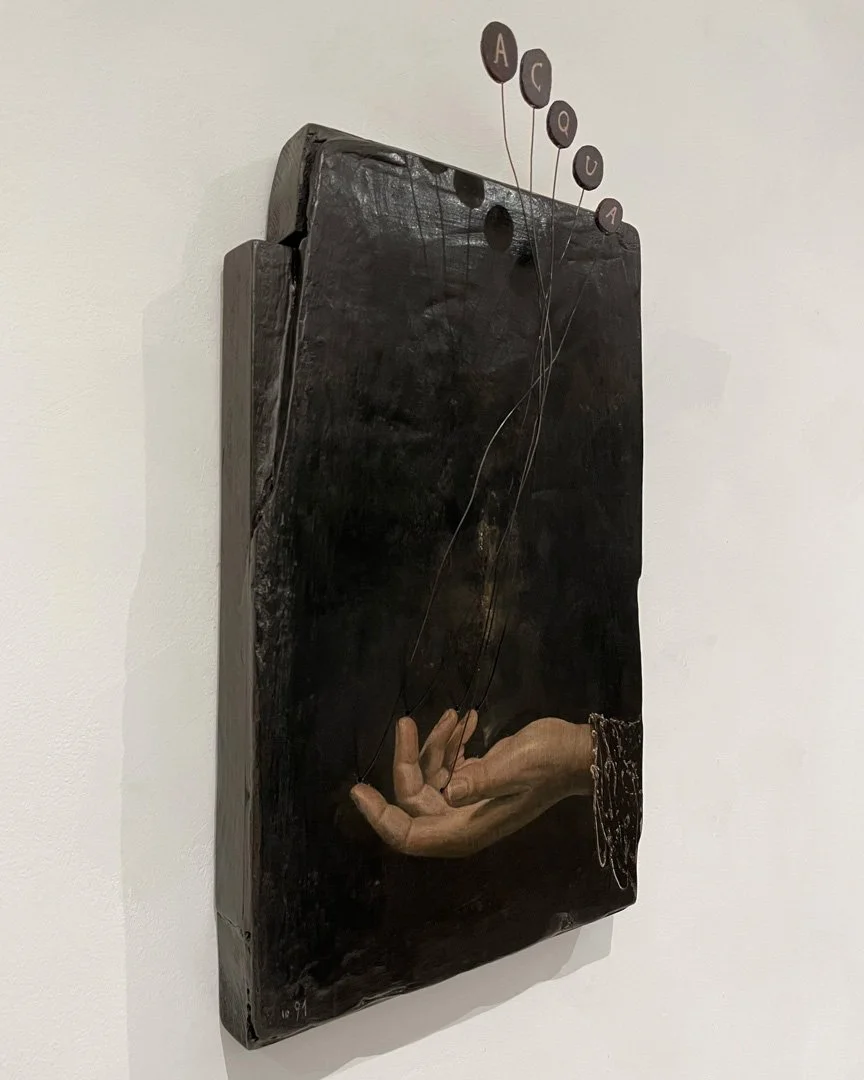


Doubt is faith - Purification (Visual Psychic Archetypes). 1991©. Cm 57x33x11, acrylic on board, wood, iron wire.
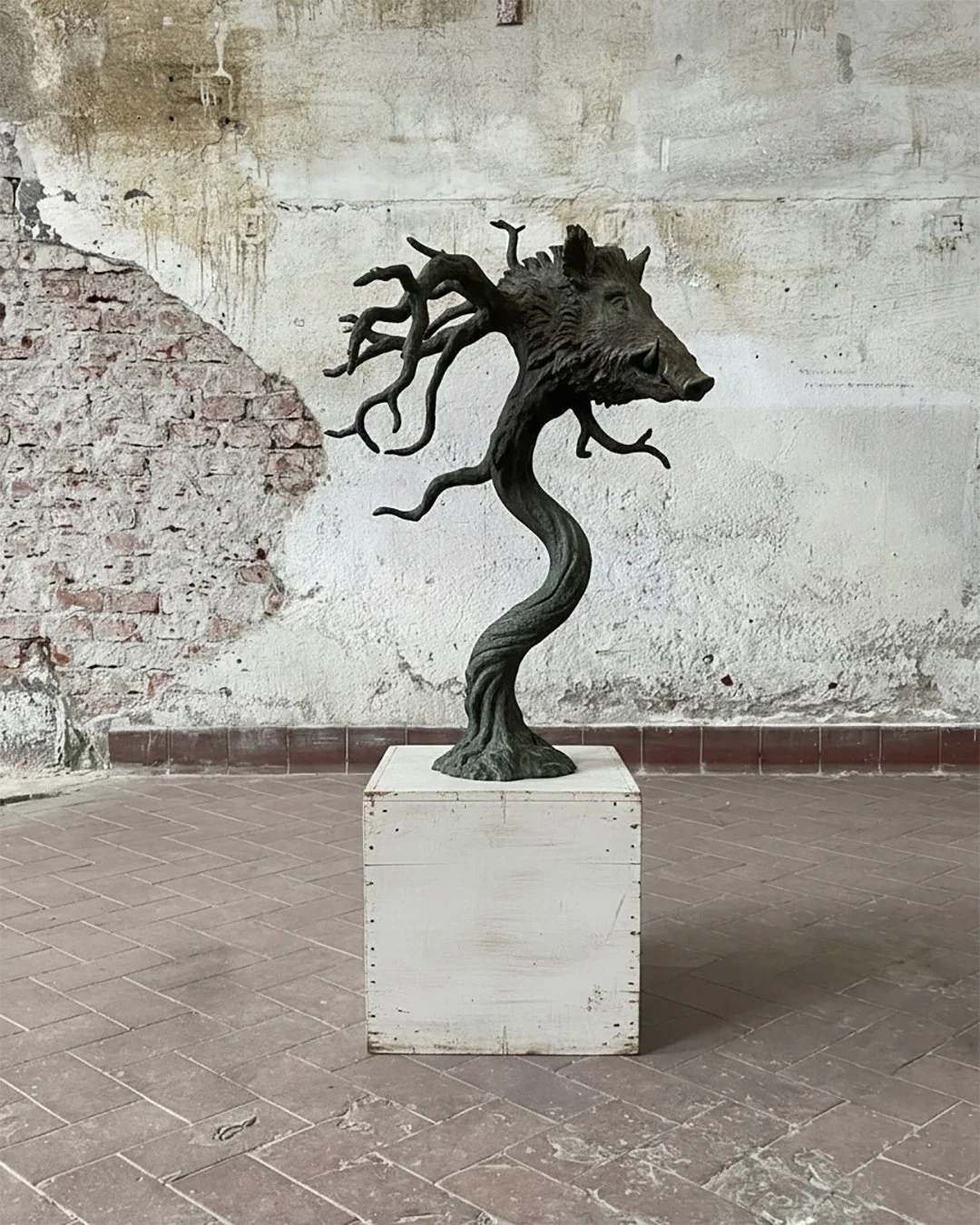
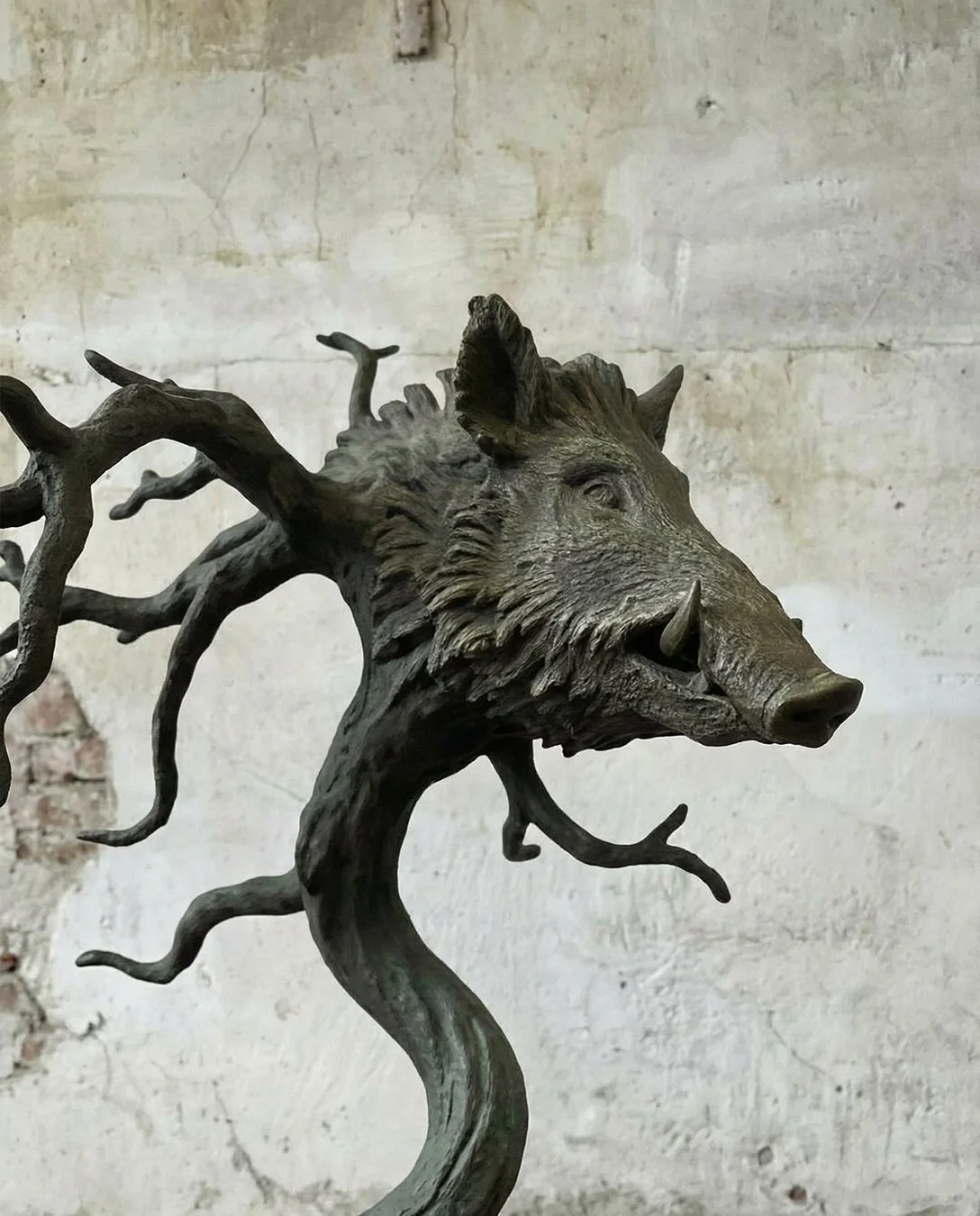
Evolutionary Theory (Psychic Visual Archetypes). 1999©. 125x65x60 cm, patinated wood.


Man who does not see colors and does not smell odors (Visual Psychic Archetypes). 1993©. Cm 40x28x16, acrylic on board, wood, iron wire.
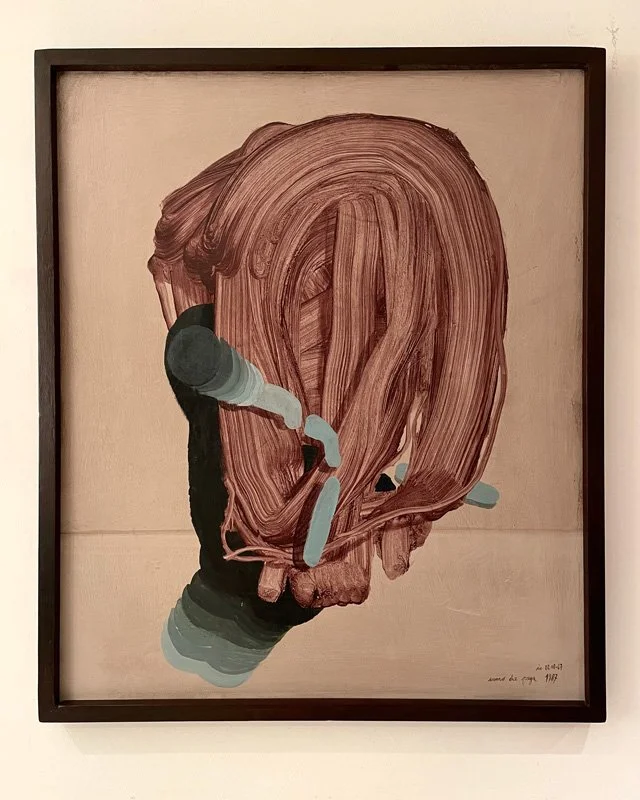


Man Praying (Visual Psychic Archetypes). 1987©. Cm 115x98 acrylic and enamel on wood.


Digital Prayer (Doubt is faith) (Visual Psychic Archetypes). 1991©. Cm 40x33x9, acrylic on board, wood, iron wire.


The sensitive reality (Doubt is faith) (Visual Psychic Archetypes). 1996©. Cm 74x54x10, acrylic on board, wood, iron wire.


State of Entropy (Psychic Visual Archetypes). 1987©. Cm 70x50, tempera and enamel on wood.

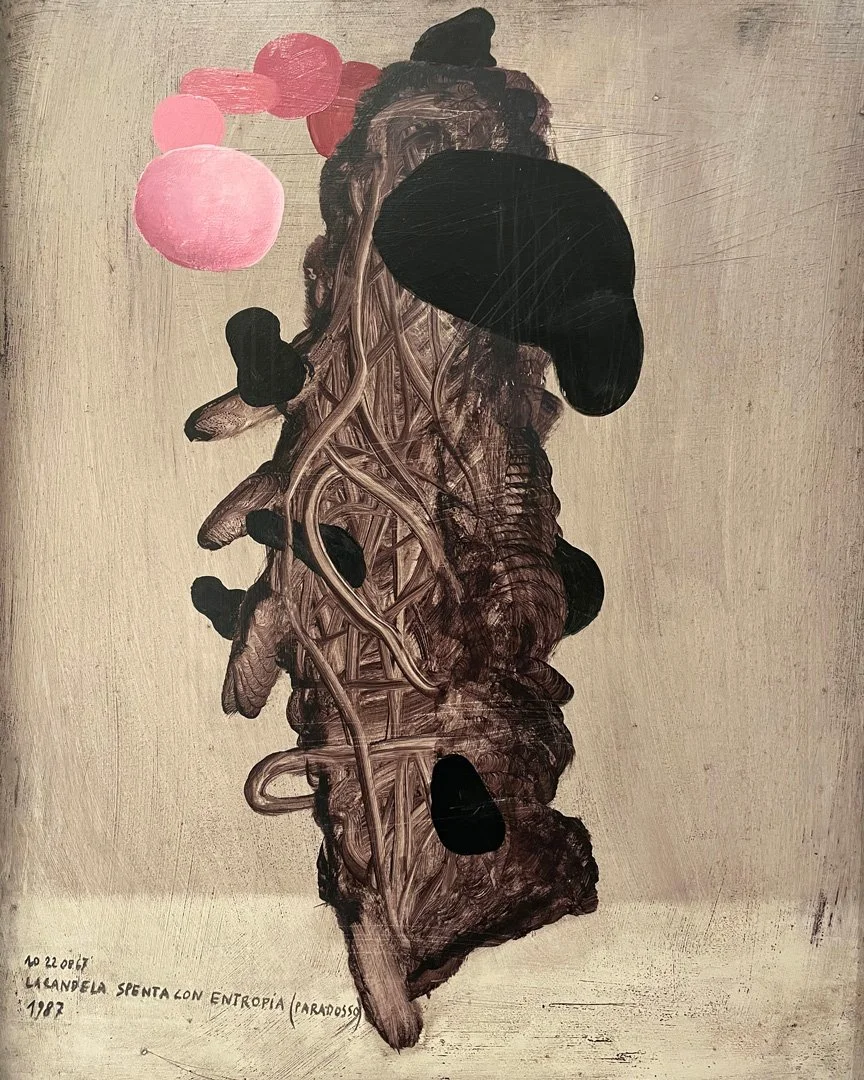


The extinguished candle with entropy (Paradox) (Visual Psychic Archetypes). 1987©. Cm 70x50, tempera and enamel on wood.


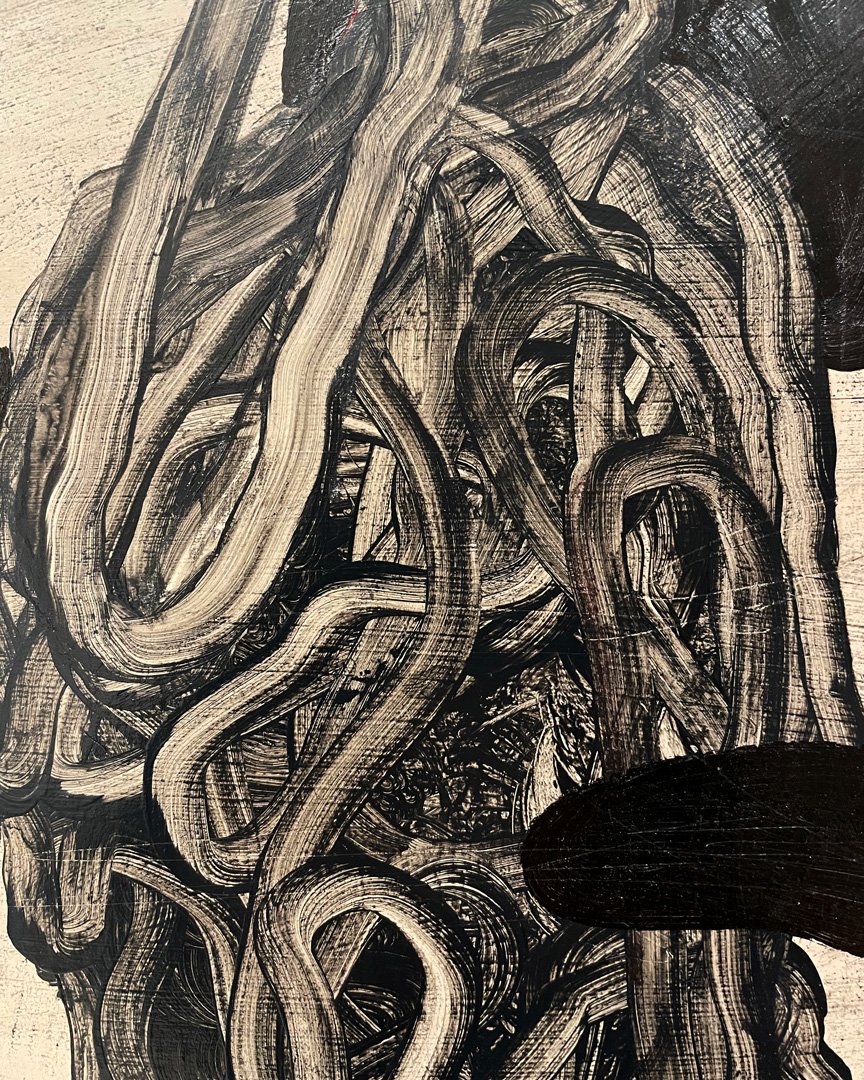


5 men at the sea in an entropic state (Visual Psychic Archetypes). 1987©. Cm 70x50, tempera and enamel on wood.


Variations on Jusepe de Ribera with cotton thread in the mouth (Doubt is faith) (Visual Psychic Archetypes). 1993©. Cm 123x50, acrylic on board, wood, porcelain.


Liquid metal. Study for an altarpiece of iron and mercury (Visual Psychic Archetypes). 1993© Cm 27x21, watercolor.
Psychic archetype (Visual Psychic Archetypes). 2017© Cm 60x100, acrylic and glue on board.


Study by situation (Visual Psychic Archetypes). 2001©. Cm 60x50, acrylic and nails on cardboard.


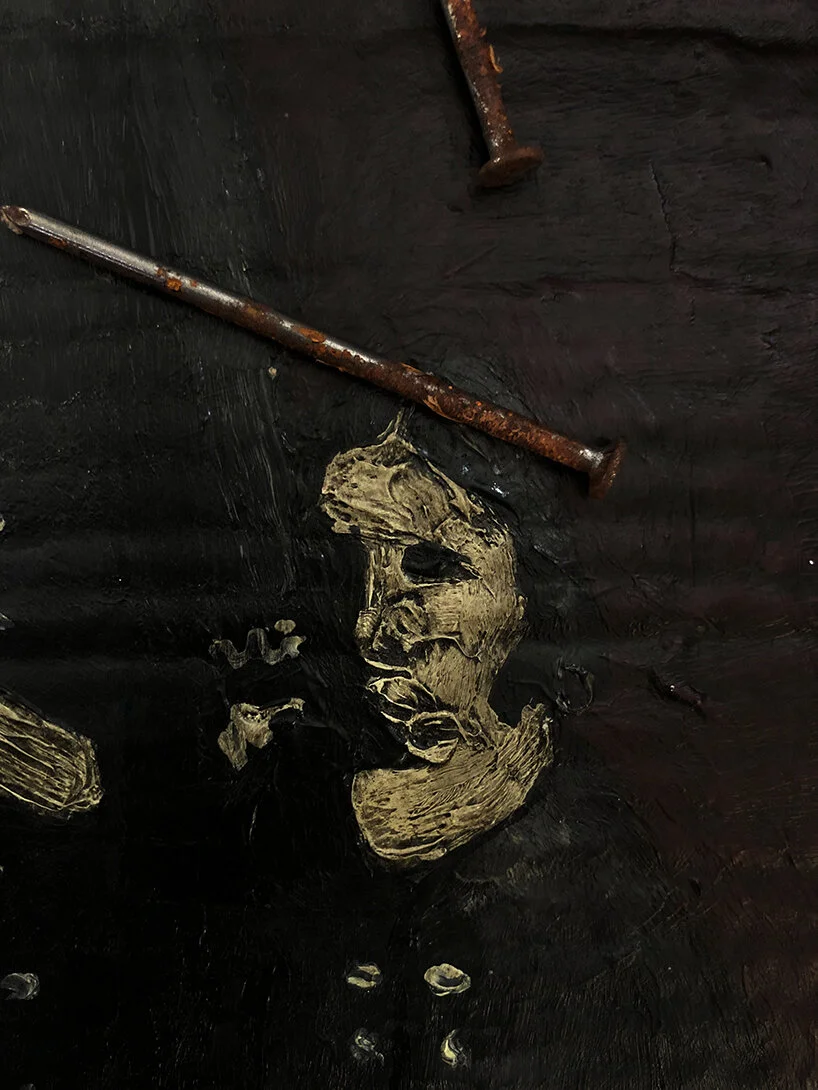


Study by situation b (Visual Psychic Archetypes). 2001©. Cm 60x50, acrylic and nails on cardboard.


Study on concentration (Visual Psychic Archetypes). 1996©. Cm 33x46, acrylic and wax on photographic paper applied to aluminum.


Landscape in profile (Visual Psychic Archetypes). 1995©. Cm 35x46, acrylic and wax on aluminum.


Anatomical detail (Visual Psychic Archetypes). 1996©. Cm 24x33, acrylic and wax on aluminum.


Horizontal Light (Psychic Visual Archetypes). 1995©. 20x30 cm, acrylic and bitumen on photographic paper.


Mirror legs - Repetition and difference (Visual Psychic Archetypes). 1995©. Acrylic and wax on analog photography applied to aluminum.
Molecular study n° 3 (Visual Psychic Archetypes). 1990©. Cm 70x50, acrylic on board.
Eternal return (Visual Psychic Archetypes). 2005©. Cm 22x15, b / w analogue photographic print, cotton thread on fabric.
Projection in a reed bed (Visual Psychic Archetypes). 1998©. Cm 30x40, acrylic and glue on formica.
Molecular study n° 20 (Visual Psychic Archetypes). 1990©. Cm 70x50, acrylic on board.
Mobile structure (Visual Psychic Archetypes). 1988©. Cm 80x60, acrylic and enamel on aluminum.
Study of a child on a broken bed (Visual Psychic Archetypes). 2000©. Cm30x40, oil and acrylic on cardboard.
Study for TV presenter (Visual Psychic Archetypes). 2002© cm 50x70 acrylic on cardboard.


Portrait of a man with an idea (Visual Psychic Archetypes). 2002©. Cm 33x30x9, acrylic on board, light.


Singularity (Visual Psychic Archetypes). 1994©. Cm 75x25, acrylic and wax on wood. Anatomical study (Visual Psychic Archetypes). 1989©. Cm 75x35, acrylic and oil on aluminum. Anatomical study (Visual Psychic Archetypes). 1990©. Cm 75x35, acrylic and oil on wood.


Rough sea d4 (Psychic Visual Archetypes). 1989©. Cm 20x30, acrylic on board. Rough sea f1. 1990©. Cm 30x20, acrylic and bitumen on board. Rough sea l2. 1990©. 20x30 cm, acrylic and bitumen on board. Study for roots. 1990 ©. Cm 70x50, acrylic on board.
Flower 1 (Visual Psychic Archetypes). 1989©. Cm 30x20, bitumen on board.
Fruit of the earth (Visual Psychic Archetypes). 1989©. Cm 70x35, bitumen and paper on board.


Studio for apartment (Visual Psychic Archetypes). 1996©. Acrylic, wax and nails on analog photography.


Anatomical study on a white wall (Visual Psychic Archetypes). 1996©. Cm 35x45, acrylic and wax on analogue photography.


Rough sea (Visual Psychic Archetypes). 1989©. Cm 45x40, acrylic on wood.


Distant Landscape (Visual Psychic Archetypes). 1996©. Cm 35x45, acrylic and wax on aluminum.


Metallic structure (Visual Psychic Archetypes). 1996 ©. Cm 35x80, acrylic and wax on aluminum.


Synthetic fruit g (Visual Psychic Archetypes). 1989©. Cm 60x50, acrylic and enamel on board. Synthetic fruit p (Visual Psychic Archetypes). 1990©. Cm 30x20, acrylic and enamel on board. Synthetic fruit s (Visual Psychic Archetypes). 1990©. Cm 50x60, acrylic and enamel on board. Synthetic fruit v (Visual Psychic Archetypes). 1990©. Cm 40x30, acrylic and enamel on wood.
Mobile structure (Visual Psychic Archetypes) 1988©. Cm 80x60, acrylic and oil on aluminum
Floating Structure (Visual Psychic Archetypes) 1989©. Cm 80x69, acrylic and oil on aluminum.


Virtual building (Archetipi Psichici Visivi). 1996©. Cm 38x12x20, reinforced concrete, acrylic. Prototype sculpture to be made, 5 meters tall.


Virtual Building 2 (Archetipi Psichici Visivi). 1996©. Cm 47x30x16, reinforced concrete. Prototype sculpture to be made, 5 meters tall.


Virtual Building 1 (Visual psychic archetypes). 1996©. Cm 45x12x18, reinforced concrete, iron. Prototype sculpture to be made, 5 meters tall.


Projected Landscape (Visual Psychic Archetypes) 1995©. Cm 29x23, acrylic and wax on aluminum.


Sacred Mountain (Visual Psychic Archetypes). 1997©. Cm 30x40, acrylic and wax on aluminum.


Portrait of a Seated Young Man (Visual Psychic Archetypes). 1997©. Acrylic and wax on photographic paper applied to aluminum.


Anatomical study (Visual Psychic Archetypes). 1996©. Cm 35x45, acrylic and wax on photographic paper applied to aluminum.


Study for reflection (Visual Psychic Archetypes), 1995©. 20x30 cm, acrylic, wax on analogue photography.


Drowsy Light (Visual Psychic Archetypes). 1995©. Cm 18x26, acrylic and wax on aluminum.


Twisted chest (Visual Psychic Archetypes). 1996©. Cm 50x60, Acrylic, wax and enamel on photographic paper applied on aluminum.


Study for a portrait of a man (Visual Psychic Archetypes). 2000©. Cm 120x147, acrylic on board, nylon, glass.
Portrait of girl in the mirror (Visual Psychic Archetypes). 1997©. Cm 35x90, acrylic on paper applied on aluminum.


Man Descending Stairs (Visual Psychic Archetypes). 1998©. Cm 55x85, acrylic and silicone on board.


Dove in a reed bed (Visual Psychic Archetypes). 1995©. Cm 16x20, acrylic, wax and nylon on aluminum.


Reflection on the window (Psychic Visual Archetypes). 1996©. Cm 25x29, acrylic and bitumen on aluminum.


Study for housewife (Visual Psychic Archetypes). 1996©. 20x17 cm, acrylic and wax on aluminum.


Shadow carried (Psychic Visual Archetypes). 1995©. Cm 25x30, acrylic and bitumen on aluminum.


Metal that goes around (Psychic Visual Archetypes). 1997©. Cm 40x40, acrylic on cardboard.


Anatomical study (Visual Psychic Archetypes). 1995©. Cm 30x20, acrylic and bitumen on aluminum


Inverted Portrait (Visual Psychic Archetypes). 1997©. Cm 40x39, acrylic on cardboard.


Physiological mass (Visual Psychic Archetypes). 1997©. Cm 40x40, acrylic on cardboard.


Paradoxical structure (Visual Psychic Archetypes). 1996©. Cm 35x40, acrylic and bitumen on aluminum.


Rough sea (Visual Psychic Archetypes). 1995©. Cm 10x20, acrylic and wax on aluminum.


Substrate Landscape (Visual Psychic Archetypes). 1997©. Cm 23x30, acrylic and wax on analogue photography.


Anatomical study (Visual Psychic Archetypes). 1995©. Cm 24x30, acrylic and wax on analogue photography.


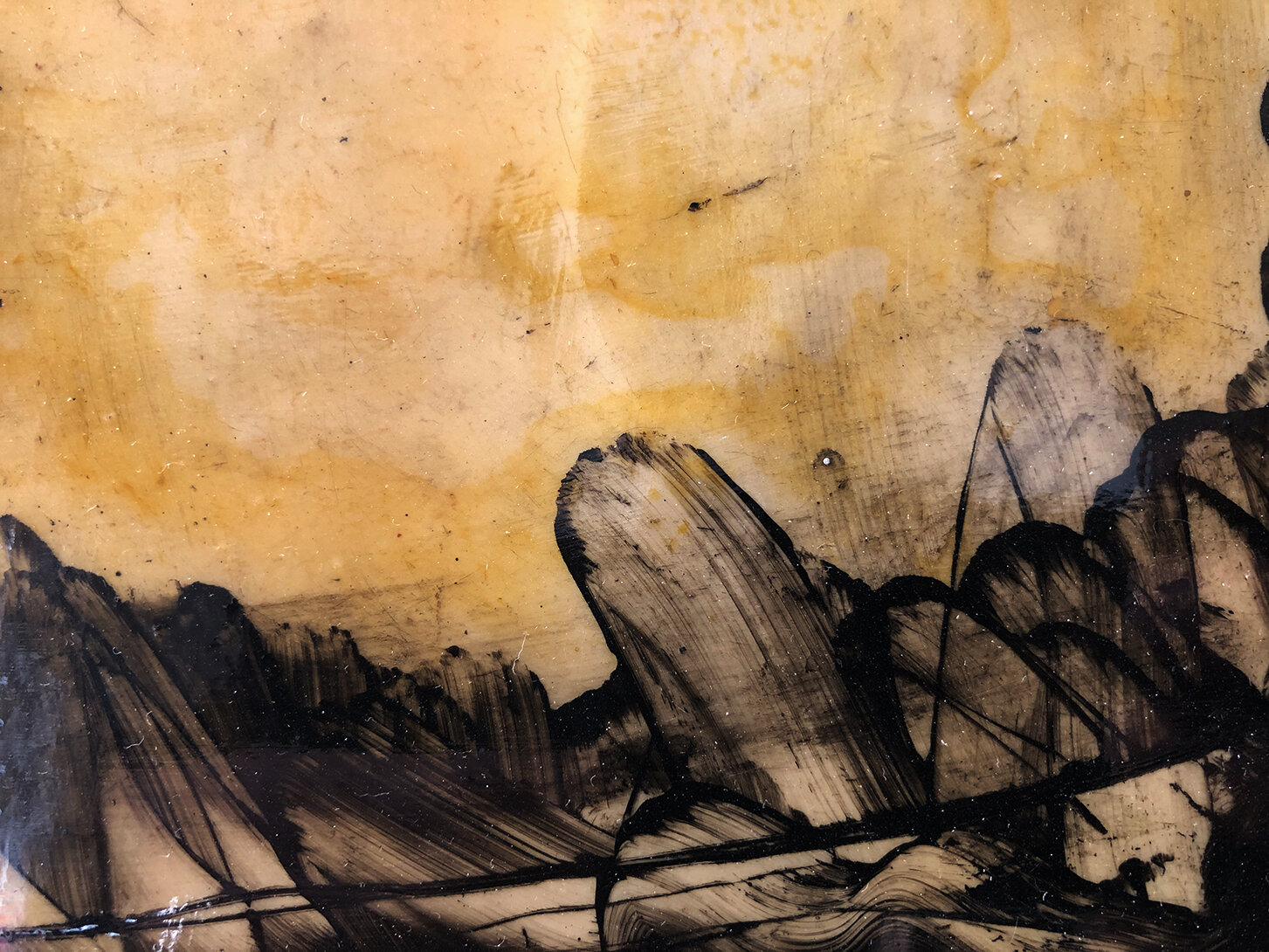

Study for reeds (Visual Psychic Archetypes). 1996©. Cm 23x36, acrylic and wax on analogue photography.


Fast enlightenment (Visual Psychic Archetypes). 1997©. Cm23x33, acrylic on aluminum.
Organic composition (Visual Psychic Archetypes). 1989©. Cm 50x60, bitumen on board
Heart (Visual Psychic Archetypes). 1991©. Cm 30x20, acrylic and bitumen on board.
Liver (Visual Psychic Archetypes). 1991©. Cm 30x20, acrylic and bitumen on board.
Psychography n° 3. 1995©. Cm 25x24, sectioned analog photography with scalpel.
Psychography n° 12. 1995©. Cm 35x45, sectioned analog photography with scalpel.
Psychography n° 22. 1995©. Cm 30x45, sectioned analog photography with scalpel.
Self-portrait behind glass. 2000©. Dimensions to be defined, analogue b / w print.
Portrait of lying girl. 2001©. Dimensions to be defined, analogue b / w print.
Study for underwater self-portrait. 2001©. Dimensions to be defined, analogue b / w print.
Study for crucifixion of fire a. 2001© . Dimensions to be defined, analogue b / w print.
Psychography n° 6. 1995© Cm 35x45, sectioned analogue photograph with scalpel.
Psychography n° 8. 1995©. Cm 40x50, sectioned analog photography with scalpel.
Psychography n° 15. 1995©. Cm 37x40, sectioned analog photography with scalpel.
White self-portrait. 2000©. Dimensions to be defined, analogue b / w print.
Self-portrait behind a window. 2000©. Dimensions to be defined, analogue b / w print.
Portrait of girl. 2001©. Dimensions to be defined, analogue b / w print.
Portrait of man. 2000©. Dimensions to be defined, analogue b / w print.
Study for fire crucifixion b. 2001©. Dimensions to be defined, analogue b / w print.
Isolation tank - Original scheme
John.C.Lilly - Programming and Metaprogramming in the Human Biocomputer: Theory and Experiments
Privacy Policy Image Licensing
All rights reserved Virgilio Rospigliosi 2023© Design by Lux Aeterna Multimedia